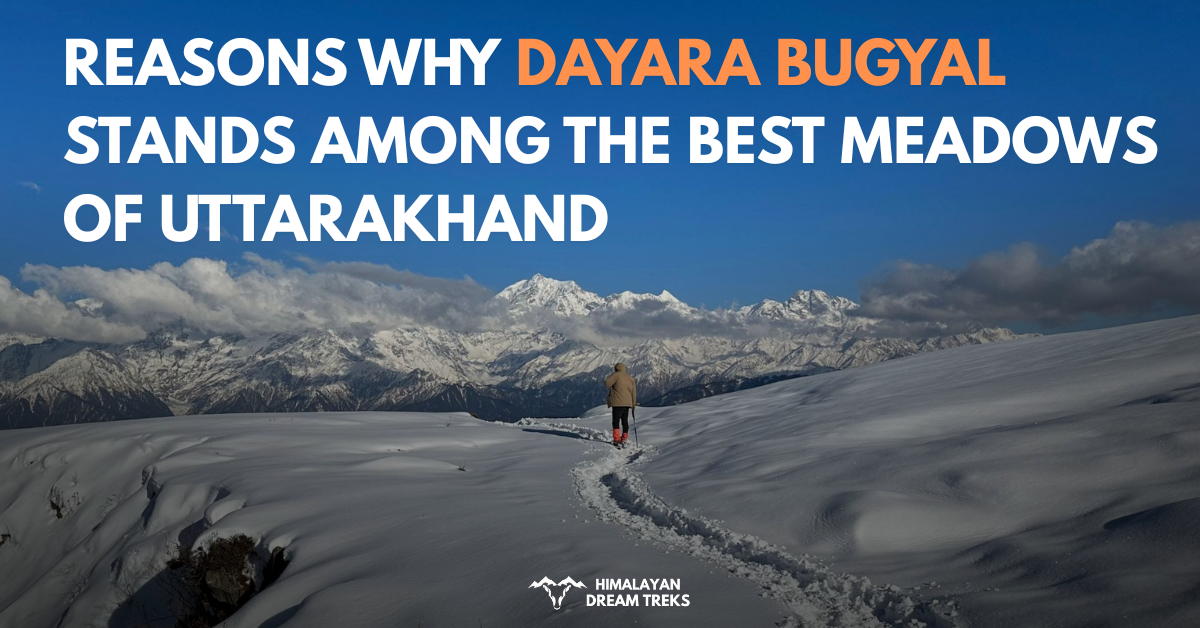
Dayara Bugyal is one of the most remarkable high-altitude meadows in Uttarakhand, known for its vast grasslands, open mountain landscapes, traditional pastoral culture, and dramatic views of the Garhwal Himalayas. Located in Uttarkashi district, the meadow sits at an altitude of roughly 3,400 metres and forms a landscape that changes significantly with the seasons.
What makes Dayara Bugyal special is not simply its beauty. Its character comes from the combination of open alpine grasslands, surrounding oak and rhododendron forests, traditional grazing grounds, Himalayan peaks, and nearby mountain villages such as Raithal. Unlike a destination that is defined by a single viewpoint or attraction, Dayara is an entire high-altitude landscape where nature, culture, and traditional mountain life exist together.
From green summer grasslands and autumn’s golden slopes to snow-covered winter meadows, Dayara Bugyal offers a different expression of the Himalayan landscape throughout the year. Its broad, gently rolling terrain also gives the meadow a distinctive character compared with many other high-altitude trekking destinations in Uttarakhand.
This combination of landscape, ecology, culture, and accessibility is what makes Dayara Bugyal stand out among the famous bugyals of Uttarakhand.
1. How the Alpine Landscape of Dayara Changes Through the Seasons
Dayara Bugyal is a landscape that changes dramatically throughout the year. The transformation is not limited to colour; temperature, vegetation, visibility, snow cover, and the overall character of the meadow change with each season.
During the warmer months, the grasslands develop shades of green and seasonal flowers appear across the meadow. The surrounding forests also become more vibrant, creating a strong contrast between the darker forested slopes and the open grasslands.
After the monsoon, the landscape gradually takes on warmer golden and brown tones. Clearer skies often improve visibility of the surrounding Himalayan peaks, while the grasslands develop a completely different character from their summer appearance.
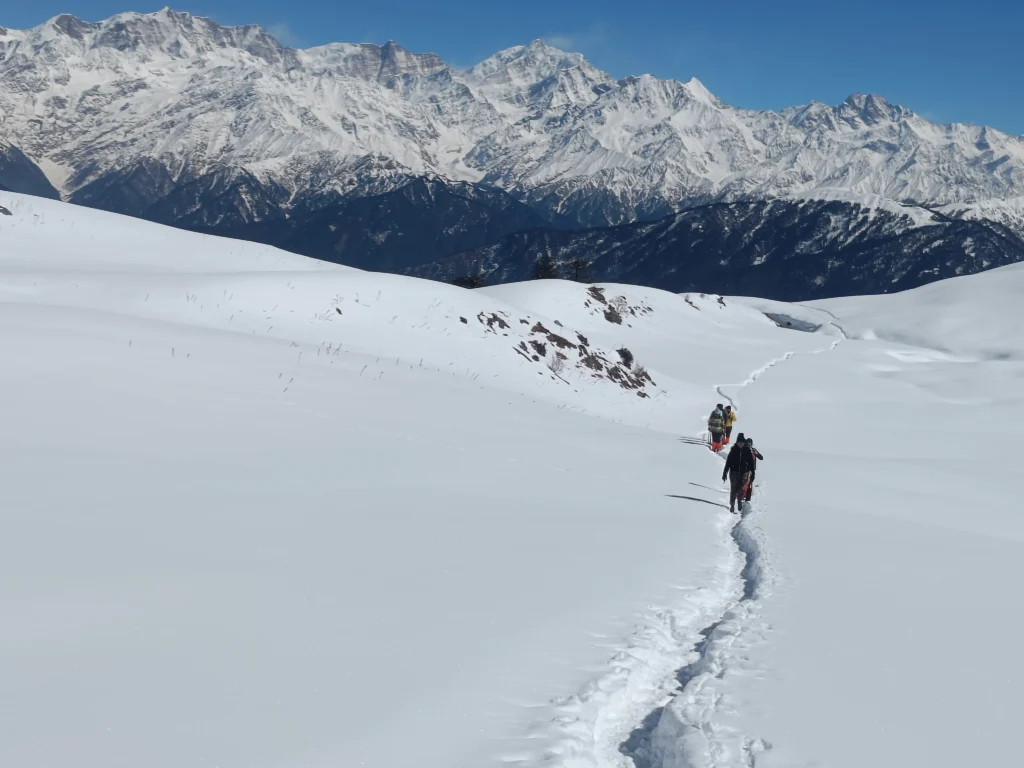
Winter brings the most dramatic transformation. Snow covers the open slopes and turns the familiar green meadow into a broad white landscape. The rolling terrain of the bugyal becomes especially striking when viewed against the darker forests and snow-covered Himalayan peaks in the distance. The same gentle slopes become perfect trails for snow trekking, making it one of the best winter trek destinations in Uttarakhand.
This seasonal transformation is one of Dayara Bugyal’s defining geographical features. The same landscape can look completely different depending on when it is visited.
2. A High-Altitude Meadow with a Relatively Gentle Terrain
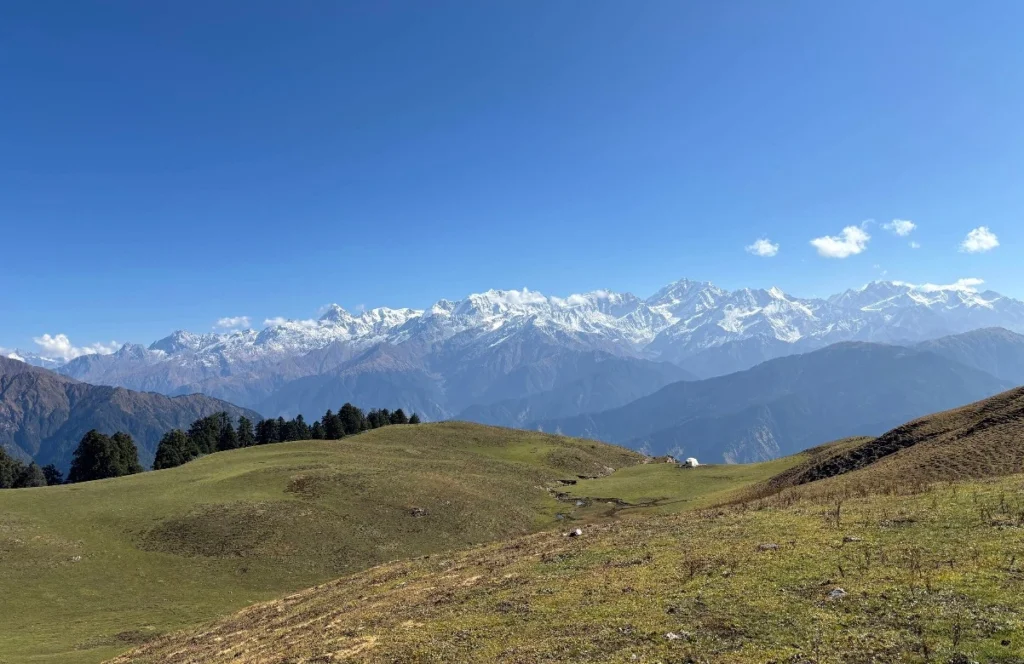
One of the defining physical features of Dayara Bugyal is its broad and relatively gentle terrain. Instead of being dominated by continuous steep climbs, large sections of the meadow consist of rolling grass-covered slopes and open ridgelines.
This terrain gives Dayara a different character from many high-altitude trekking routes where the landscape is shaped by narrow ridges, steep ascents, or rocky sections. The open nature of the meadow allows trekkers to experience the high Himalayas without the landscape feeling constantly confined by difficult terrain one reason Dayara has become such a well-known high-altitude trekking landscape.
If you are planning your first Himalayan trek our preparation guide for dayara bugyal cover fitness and readiness in detail.
3. An Open Viewpoint into the Garhwal Himalayas
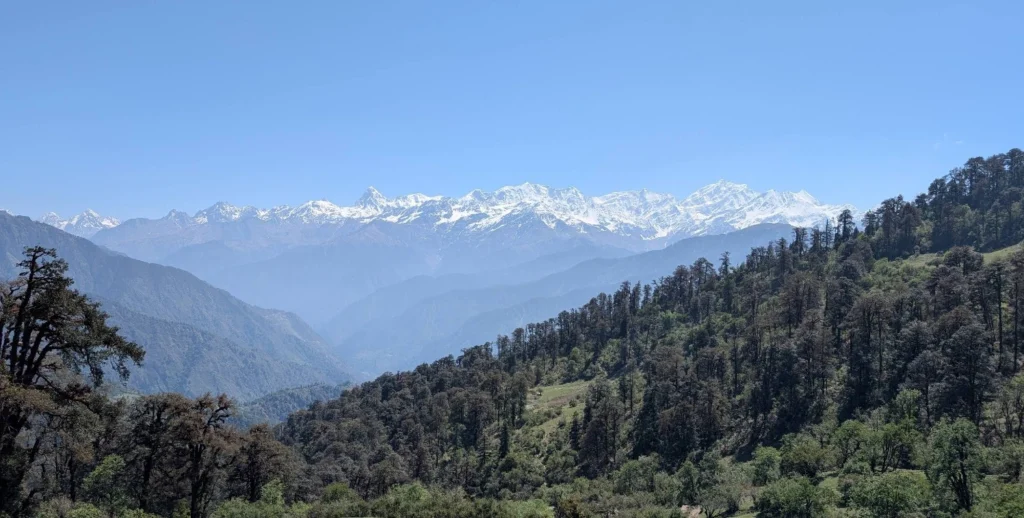
The openness of Dayara Bugyal is one of the main reasons its mountain views feel so expansive. Once the forest gives way to alpine grassland, there are fewer natural obstacles blocking the horizon, allowing the surrounding Himalayan ranges to become a major part of the landscape.
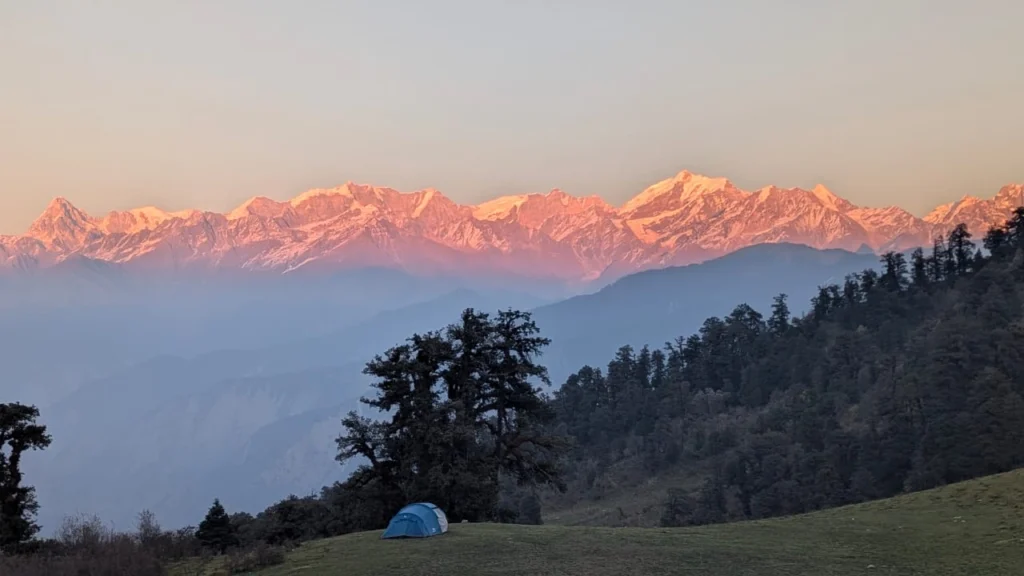
On clear days, sweeping views open up toward the Gangotri and Yamunotri ranges, visible from different points along the meadow and its higher ridges.
Dayara Top and Bakariya Top provide particularly broad perspectives because the landscape opens in multiple directions instead of viewing the mountains through a narrow valley or between trees, you experience the relationship between the meadow, surrounding ridges, deep valleys, and distant snow-covered peaks.
4. A Perfect Blend of Adventure and Peace
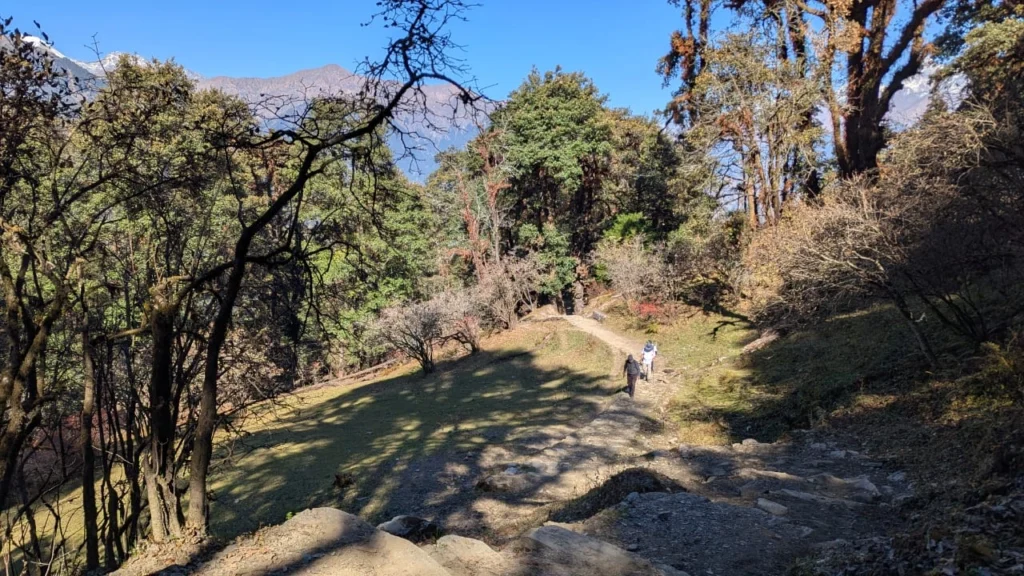
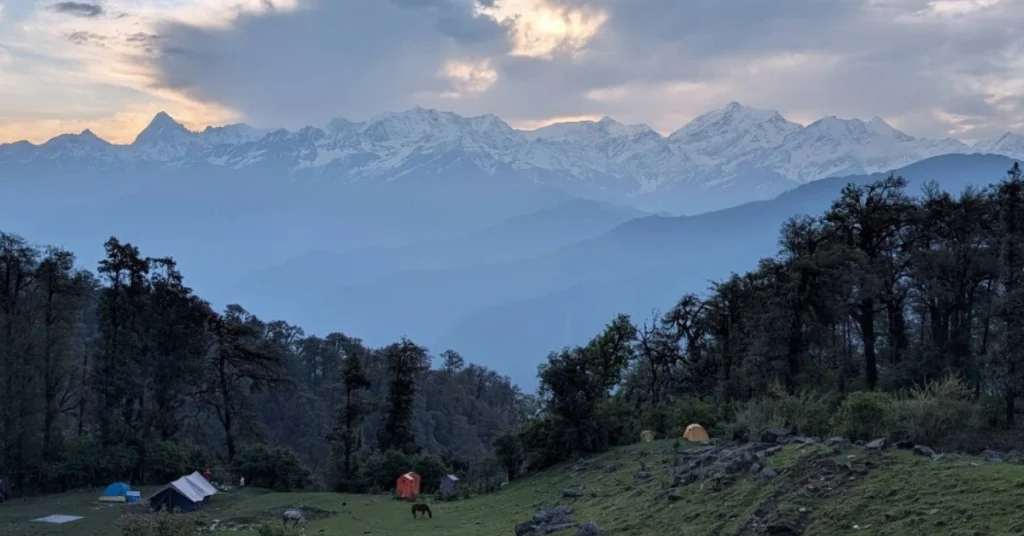
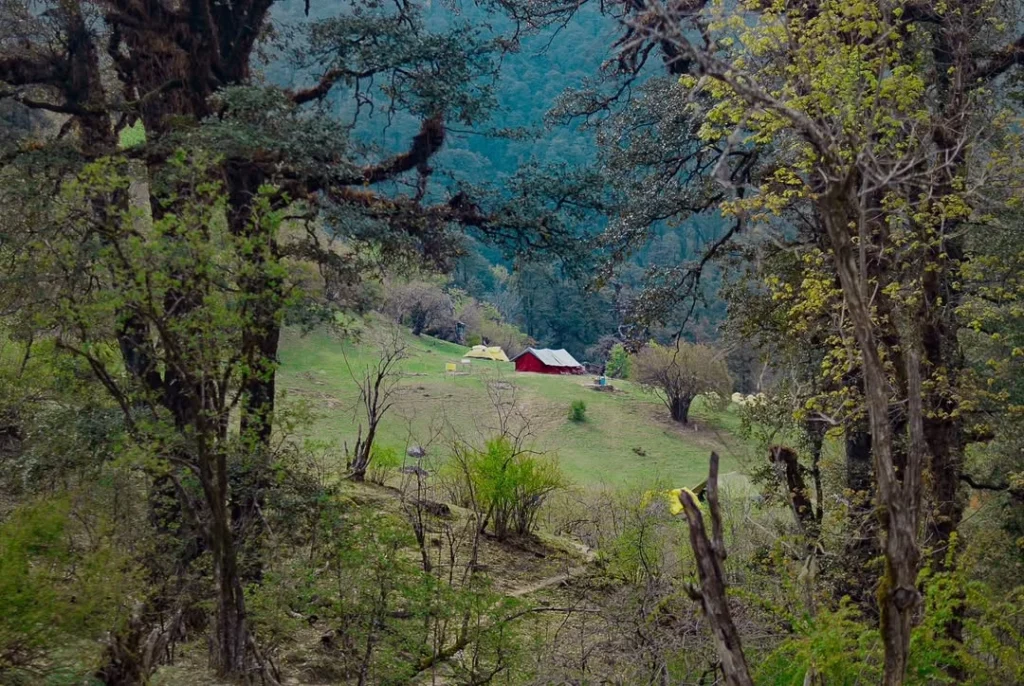
One of the most interesting aspects of the Dayara landscape is the transition from forest to open meadow. The lower sections of the route pass through Himalayan forests where oak, rhododendron, and other mountain vegetation create a shaded and enclosed environment. As the altitude increases, the density and height of the trees gradually decrease, and the landscape eventually opens into expansive grasslands where the sky becomes a much larger part of the view.
This forest-to-meadow transition is more than a scenic change it represents a shift between two distinct mountain environments, each supporting different forms of vegetation and wildlife.
5. Dayara Bugyal and the Pastoral Culture of the Himalayas
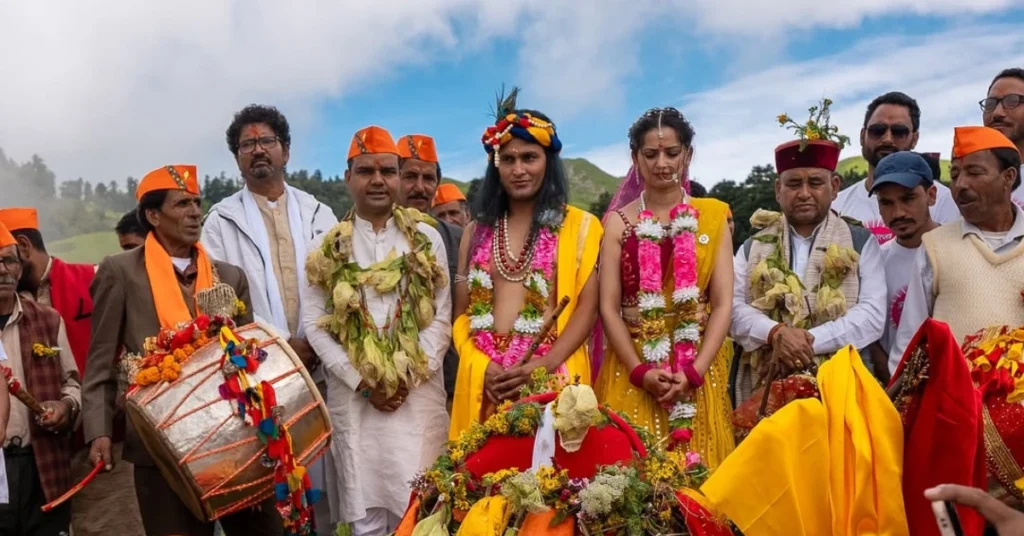
A bugyal has always been more than scenery these high-altitude grasslands have historically served as seasonal grazing ground for the livestock of nearby villages, tying the meadow directly to the livelihoods of the communities around it.
That relationship is most visible each August, when the meadow becomes the site of Anduri Utsav, the Butter Festival a local tradition thanking the mountain deities for a season of healthy grazing.
This pastoral connection gives Dayara a cultural identity that goes beyond trekking. The meadow isn’t simply a landscape to photograph, it has long been part of the living traditions of the communities around it.
6. The alpine ecology of dayara bugyal
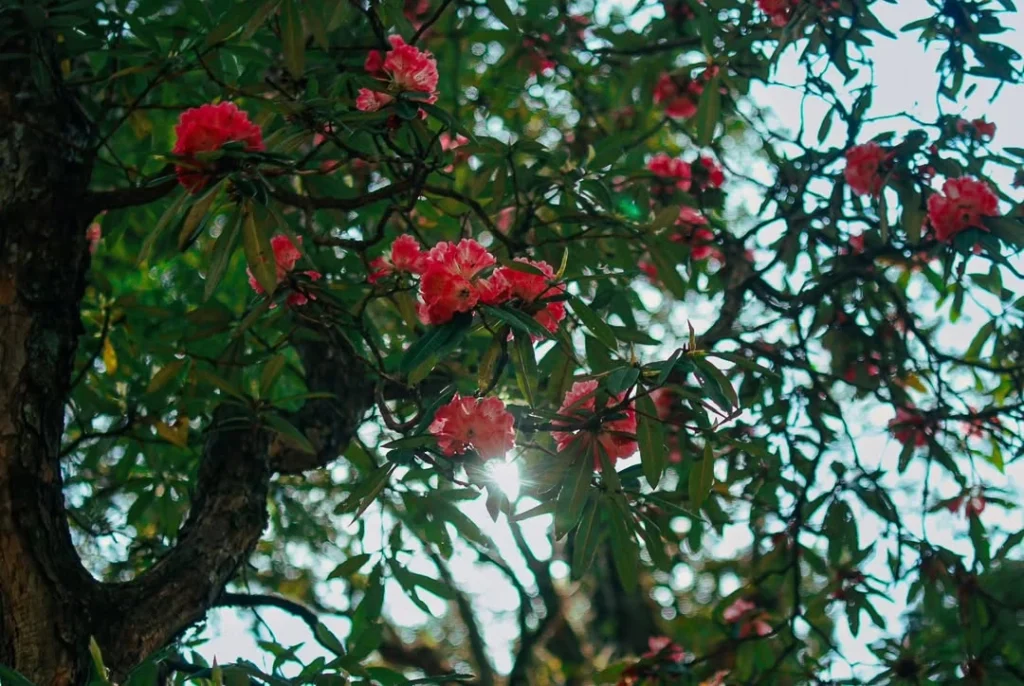
Dayara Bugyal sits within a fragile high-altitude ecosystem where forest, grassland, and seasonal weather are closely linked. Below the meadow, oak and rhododendron forests support a distinct set of vegetation and wildlife; above the treeline, the open grassland shifts to hardier alpine grasses, herbs, and seasonal flowering plants that can survive thinner soil and harsher exposure.
The boundary between forest and meadow is where this ecosystem is most active the transition zone that supports the widest range of birdlife, though larger wildlife sightings remain rare given the trail’s proximity to human settlement.
Because alpine grasslands recover slowly from disturbance, this ecological balance is also easily disrupted , a theme covered further below.
7. The village meadow connection: Raithal and Dayara
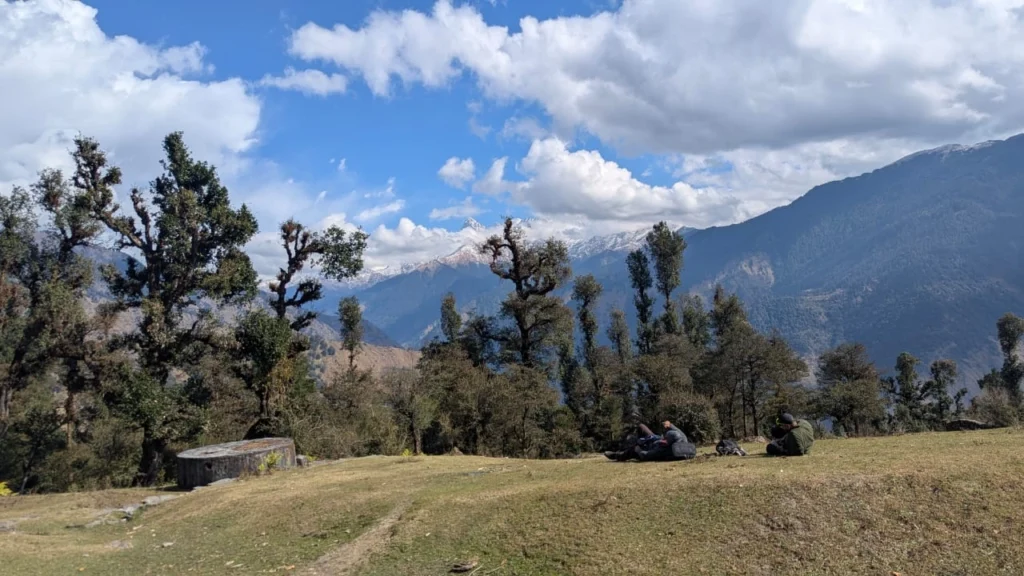
Dayara Bugyal can not really be separated from Raithal, the village most trekkers start from. The walk up from Raithal is a gradual shift from cultivated slopes and settled village life, through forest, and finally into open alpine grassland and that transition is part of what gives Dayara a stronger sense of place than a destination you’d simply drive up to.
Raithal itself carries its own share of Garhwali architecture, agriculture, and mountain hospitality worth spending time with before or after the trek our Raithal Village guide covers the village in full.
8. Why the Open Terrain Makes Dayara Distinctive in Winter
Winter changes the character of Dayara Bugyal more dramatically than almost any other season. Snow covers the grasslands, forest trails, ridges, and surrounding slopes, creating a continuous white landscape.
What makes the winter landscape particularly distinctive is the openness of the meadow. Snow-covered ridges can stretch across a wide horizon, while the darker forest below and high Himalayan peaks beyond create strong contrasts in the landscape. Winter reveals another side of Dayara Bugyal not simply as a snow trek, but as a high-altitude meadow whose entire geography is transformed by snow.
For Clothing, snow depth and winter preparation, see our Dayara in Winter guide.
9. Why the Meadow Needs Responsible Tourism
Dayara Bugyal’s open grasslands look sturdy, but alpine meadows are slow to recover from damage. The growing season at this altitude is short, and vegetation that gets trampled, burned, or buried under waste can take years to return to how it looked before.
A few things make a real difference: sticking to marked trails instead of cutting across open grass, carrying out all waste rather than burying or burning it, avoiding open fires directly on the meadow, and respecting the no-camping-on-the-meadow rule already in place to protect the ecosystem.
This matters beyond the trekking experience itself. Dayara’s meadows support grazing livestock and the livelihoods of nearby villages the same landscape that draws trekkers is also a working part of local life.
10. How Dayara Compares to Other Famous Bugyals
Uttarakhand is home to several well-known alpine meadows — Ali Bedni Bugyal, Gidara Bugyal, and Gorson Bugyal among them each with its own character and approach. Ali Bedni is typically trekked as part of the longer Roopkund trek, demanding more time and a higher fitness level. Gidara offers a similarly wild landscape but with a longer, less-maintained approach. Gorson Bugyal is not a standalone trek at all it is a scenic stop within the Kuari Pass route near Auli.
Dayara stands apart from all three by being genuinely accessible on its own: a short, well-marked 3–4 day trip that doesn’t require an expedition-level commitment or combining it with another trek. That combination of scale and accessibility is a large part of why it’s usually the first meadow trek most people do in Uttarakhand.
Final Thought
Dayara Bugyal is much more than a beautiful Himalayan trekking destination. Its real character lies in the relationship between its alpine grasslands, forests, Himalayan peaks, seasonal changes, and the mountain communities connected with the landscape.
The meadow offers a rare combination of scale and accessibility: wide open grasslands, dramatic mountain views, traditional villages below, and a landscape that transforms completely with the seasons. At the same time, its ecological and cultural importance makes responsible travel essential.
If you want to understand why Dayara Bugyal is regarded as one of Uttarakhand’s best meadows, the answer is not simply its scenery. It is the complete landscape the meadow, the mountains, the forests, the people, and the traditions that make Dayara what it is.

Leave a Comment