Dayara Bugyal is generally graded easy to moderate, but that single label hides a lot of variation. The actual difficulty on any given day depends on the distance covered, the gradient, the weather, and most of all the trekker’s own fitness level. Two people doing the exact same route can have completely different experiences: one finds Day 3 challenging but manageable, another finds it genuinely tough. Instead of relying only on the overall “easy-moderate” grade, it’s far more useful to break the trek down day by day and understand exactly what each stretch demands, so you know what you’re actually signing up for before you book.
Why Easy to Moderate Doesn’t Mean Uniformly Easy
A lot of trekkers read “easy to moderate” and assume the whole trek feels roughly the same throughout. In practice, Dayara Bugyal’s difficulty is front-loaded toward the back half of the itinerary the first couple of days ease you in, and the toughest single day comes right before the summit push. This is a common pattern across many Himalayan treks, but it catches beginners off guard on Dayara specifically because the first two days feel comfortable enough to create false confidence. Knowing this pattern in advance helps you pace your energy instead of pushing too hard early and feeling depleted when the route actually gets demanding.
Dayara Bugyal Difficulty Explained Day by Day
Day 1: No Trekking, Just Travel Fatigue (Dehradun to Raithal)
Purely a travel day around 8-9 hours by road via Uttarkashi. No trekking involved. The only physical demand is sitting through a long mountain drive on winding roads, which can itself be tiring or trigger motion sickness for some travelers. Most trekkers feel road fatigue rather than trekking fatigue on arrival worth getting a proper night’s rest here since Day 2 is where the trek begins.
Day 2: Where the Real Climb Begins (Raithal to Gui)
The trek properly begins here the journey of raithal to gui was begin, and this is where fitness starts to matter. The route climbs steadily through oak and rhododendron forest, gaining altitude gradually. Expect a few hours of continuous uphill walking on a well-defined trail no technical sections. For someone with reasonable base fitness, this day feels tiring but manageable; for someone with little walking habit, this is often the day that reveals whether they’ve prepared enough.
Day 3: The Toughest Day – Altitude Meets Distance (Gui to Summit and back to Gui)
This is the toughest day of the trek a round trip covering the most distance and altitude gain in a single day, since you climb to Dayara Top and return to the same Gui campsite rather than pushing onward to a new camp. The terrain isn’t technical, but the sheer duration climbing up, spending time at the top, then descending the same stretch back to Gui is what makes this day demanding. Thinner air near the top also slows your pace more than expected even with good fitness. This is the day that separates a trek that “feels easy” from one that “feels moderate,” and because it’s a there-and-back rather than onward progress, fatigue from the climb carries directly into the return leg with no rest in between.
Day 4: Trek from Gui to Raithal and Back to Dehradun (Gui to Raithal and back to Gui)
A descent day followed immediately by the return drive a long day combining trekking and travel. The Gui-to-Raithal descent is easier on the lungs but noticeably harder on the knees and thighs, especially with the previous day’s summit effort still in your legs. Once back at Raithal, the multi-hour drive back to Dehradun adds further fatigue on top of the physical descent this is often the most tiring single day of the whole trip precisely because it combines both trekking and travel exhaustion.
Winter conditions (typically December-February)
Snow changes the physical experience of the trek regardless of which day you are on, even though it does not change the official grade. Trails above Gui can be snow-covered, the pace slows down considerably as every step requires more care, and the final stretch to Bakariya Top often needs microspikes or crampons once the snow hardens. Cold temperatures also add fatigue on their own — staying warm burns energy that would otherwise go toward walking. This doesn’t make the trek unsuitable for beginners in winter, but it does mean winter trekkers should mentally prepare for a slower, more deliberate pace than summer trekkers. For full winter clothing and gear preparation, see our Dayara in Winter guide.
Common Difficulty Mistakes Trekkers Make
A few patterns show up again and again with trekkers who find Dayara harder than expected, even though the trek itself hasn’t changed:
- Underestimating Day 3 because Days 1-2 felt easy. The gentle start creates a false sense of security pace yourself with the knowledge that the hardest stretch is still ahead.
- Skipping incline-specific training. Flat walking and gym cardio don’t fully prepare your legs for sustained uphill walking the muscles used are genuinely different.
- Not accounting for altitude’s effect on pace. Even fit trekkers move slower at altitude than they expect based on their sea-level fitness; this isn’t a fitness failure, it’s physiology.
- Ignoring descent-day fatigue. Trekkers train for the climb and forget that the knees take a real beating on the way down, especially on Day 4 after summit-day fatigue has already set in.
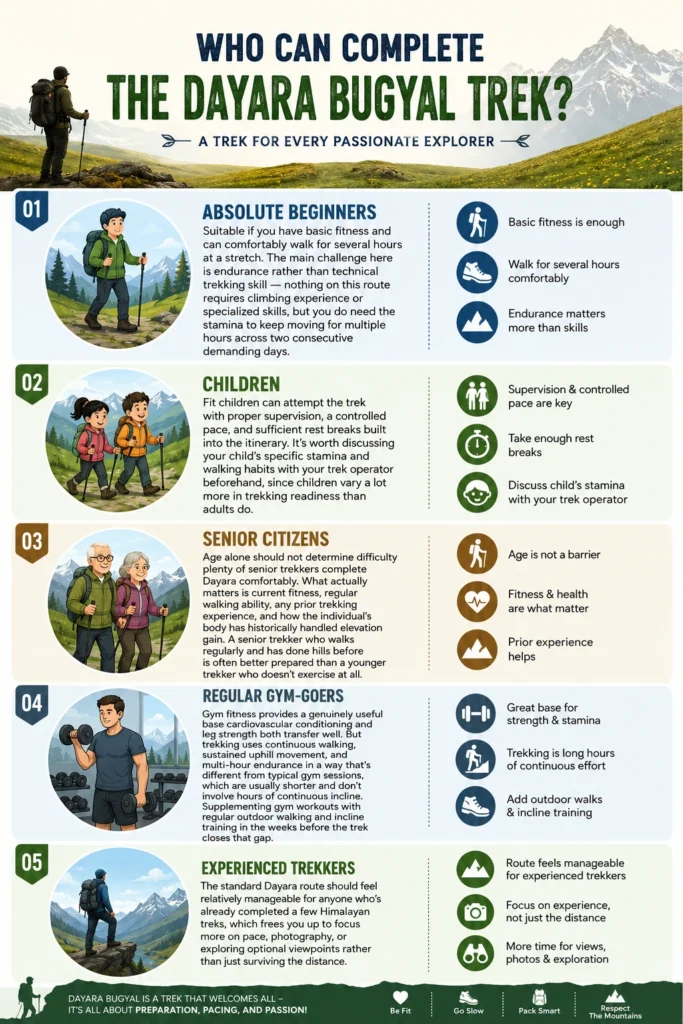
Who Can Complete the Dayara Bugyal Trek?
Absolute Beginners
Suitable if you have basic fitness and can comfortably walk for several hours at a stretch. The main challenge here is endurance rather than technical trekking skill — nothing on this route requires climbing experience or specialized skills, but you do need the stamina to keep moving for multiple hours across two consecutive demanding days.
Children
Fit children can attempt the trek with proper supervision, a controlled pace, and sufficient rest breaks built into the itinerary. It’s worth discussing your child’s specific stamina and walking habits with your trek operator beforehand, since children vary a lot more in trekking readiness than adults do.
Senior citizens
Age alone should not determine difficulty plenty of senior trekkers complete Dayara comfortably. What actually matters is current fitness, regular walking ability, any prior trekking experience, and how the individual’s body has historically handled elevation gain. A senior trekker who walks regularly and has done hills before is often better prepared than a younger trekker who doesn’t exercise at all.
Regular gym-goers
Gym fitness provides a genuinely useful base cardiovascular conditioning and leg strength both transfer well. But trekking uses continuous walking, sustained uphill movement, and multi-hour endurance in a way that’s different from typical gym sessions, which are usually shorter and don’t involve hours of continuous incline. Supplementing gym workouts with regular outdoor walking and incline training in the weeks before the trek closes that gap.
Experienced trekkers
The standard Dayara route should feel relatively manageable for anyone who’s already completed a few Himalayan treks, which frees you up to focus more on pace, photography, or exploring optional viewpoints rather than just surviving the distance.
Recommended fitness level
Dayara Bugyal does not require advanced technical skills, rock-climbing experience, or specialized mountaineering training but trekkers should have a reasonable level of cardiovascular endurance and leg strength going in. Regular walking, stair climbing, incline walking, and basic strength training in the weeks before the trek all help meaningfully with the uphill sections.
Our recommended benchmark is to be able to run (or briskly walk) 4.5–5 km in around 45 minutes, while also developing the ability to walk continuously for several hours without needing extended rest. This isn’t a strict requirement plenty of trekkers complete Dayara without hitting this exact benchmark but it’s a useful target that tends to translate well to comfort on Day 2 and Day 3 specifically.
(For a full, structured training and packing plan, see our preparation guide for beginners this section covers only the fitness benchmark relevant to difficulty.)
Difficult path for adventure seekers
Neither Dayara Bugyal nor we would disappoint anyone. If you are looking for some adventure, consider these routes. Inform us while booking so we can arrange things accordingly.
- Dayara Bugyal with Dodital circuit
- Dayara With Gidara Bugyal
- Dayara from Gorsali village with Bakria Top
- Most thrilling – Surya Top via Dayara and Devkund
Key Takeaways
Dayara Bugyal is easy, beginner-friendly and suitable for all age groups of people trek. But fitness level matters, not just for this trek but in general as well. A healthy body won’t hurt you or anyone. Enjoy your Trek with a fit body and feel the difference.


Leave a Comment