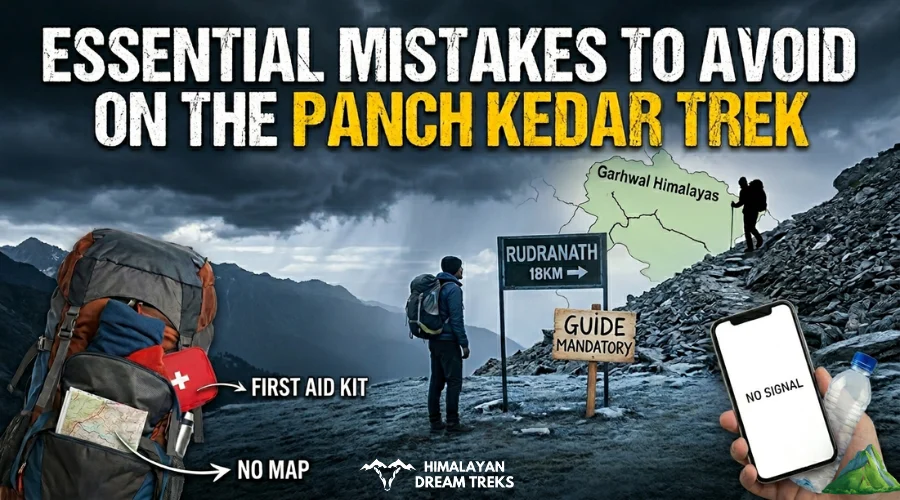
If you are planning the Panch Kedar Yatra, you will have the chance to visit the most spiritual temples of Lord Shiva Kedarnath, Tungnath, Rudranath, Madmaheshwar, and Kalpeshwar. This 12 day trek is an opportunity to learn about our culture and history. After covering each temple, you will find yourself a little closer to Lord Shiva.
No doubt, completing this circuit is an unforgettable experience, but avoiding certain mistakes can turn this sacred pilgrimage into a stressful one. If you are willing to do this trek with full dedication, this guide will share some mistakes to avoid during the journey.
Table of Contents
Mistake 1: Last-Minute Booking
Trekkers have this misconception that they can make last-minute bookings; however, the reality is that the odds are not in their favor. The temples of the Panch Kedar are open for a few months: May to June and then September to October, after the monsoon.
You will find limited arrangement options, especially at Rudranath and Madmaheshwar. In case you delay while making bookings, then you have to face the consequences, which are as follows:
- You’ll have to pay more than the actual amount for the trip.
- The quality of the guest house will be below average.
- The transport options will be limited.
To avoid these issues, it is better to book the trip in advance; doing so will not only help you save money but also secure proper resources from the beginning.
Mistake 2: Trekking with Wrong Footwear
When it comes to footwear, choosing shoes can make or break your trekking experience. One thing that is very important to know is that choosing the wrong footwear can lead to issues such as bruises, foot pain, slipping on rocky paths, and reduced stability on steep trails.
On the other hand, investing time and money in top-quality trekking shoes ensures that your feet are safe, pain-free, and comfortable as you climb one step at a time. Apart from that, the trekking shoes are made of waterproof material and provide full ankle support throughout.
Mistake 3: Neglecting Fitness Preparation
The Panch Kedar circuit demands high stamina, and if your stamina is not adequate, you might face problems even at moderate places. Some of the common issues include breathlessness, muscle cramps, and slow speed affecting the group.
To show what you are capable of, start by adding specific activities at least 4-6 weeks before the trek. It includes daily walking or jogging, stair climbing, and building leg strength with squats.
Remember not to stretch during pre-practice; otherwise, you might injure yourself. Make yourself fit enough to enjoy the spiritual journey rather than just survive it.
Mistake 4: Preparing an Incorrect Kit
Trekking in the high-altitude Garhwal range of the Himalayas demands layering not only for warmth but also for the correct combination of base layer, insulation, and waterproofing. Too many or too few items can create problems during the journey. Many trekkers wear cotton, which absorbs moisture and can harm their health when they get wet.
Another mistake is overpacking, which means filling a bag with unnecessary items that won’t be needed during the journey. Trekkers forget that extra weight will not only affect their speed but also their knees and lungs. An ideal Panch Kedar packing kit includes the following:
- Raincoat or poncho
- Powerbank
- First aid kit
- Layered clothing
Mistake 5: Energy and Nutrition Mismanagement
One fact you should know is that high-altitude trekking burns more energy than usual. This is why charging your body properly will keep you active throughout the trek. However, many trekkers believe that eating less or depending on packaged snacks will be enough.
But things get upside down when they start experiencing some symptoms like dizziness, low energy, and reduced endurance. They must create a healthy diet chart and follow it that includes
- Eat three meals (breakfast, lunch, and dinner) regularly before the trek starts.
- Always carry a small packet of dry fruits or energy bars during the trek.
Mistake 6: Underestimating Water Availability
Many trekkers assume that they will easily find water access during the Panch Kedar Yatra, especially in remote areas like Rudranath. In some areas water sources are limited, which makes strategizing water intake more important. Trekkers often carry too little or skip drinking water during the breaks. Making this mistake results in dehydration, low energy levels, and experiencing difficulty in adjusting to the environment.
Staying hydrated during the journey plays a vital role as it will help your body get adjusted to the high-altitude environment without any issues. The ability to manage water intake improves endurance, making the trek smoother and more enjoyable.
Mistake 7: Dependent on Digital Payments
During the spiritual journey, you will cross various remote villages where proper network connectivity is completely unavailable. Nowadays, digital payments have become quite common, making people dependent on them, whether it’s a small or big payment.
Talking about dhabas, lodges, and other service providers in the route, they prefer cash rather than UPI payments due to constant network issues. In any mishaps, the lack of cash also becomes one of the issues that affect the trek.
As a trekker, you must carry sufficient cash in your wallet, especially INR 500 in change, before the trek starts. This small step will ensure smooth payment processing and keep you stress-free, giving you the freedom to explore the temples and enjoy the vibes without any tension.
Mistake 8: Ignoring Temple’s Rules & Local Manners
Just like the Char Dham yatra, the Panch Kedar yatra holds the same spiritual significance for devotees. The five shrines of Lord Shiva hold deep religious significance for the local communities. They believe that ignoring the local customs can hurt Lord Shiva and disrupt the peaceful environment.
The prohibited rules include the following:
- Entering any shrine in short or ignoring the Aarti timings.
- Treating the temple as a photography background and inappropriate behavior with priests.
- Disrespecting the ritual while doing or attending the pooja.
Mistake 9: Unprepared for Weather and Schedule Delays
No doubt that the weather in the Garhwal region of the Himalayas changes within the blink of an eye. A clear morning doesn’t mean it will remain clear, as conditions can change to dense fog or thunderstorms within an hour. It especially occurs when you start trekking towards the higher temples on the trek.
Many trekkers make the mistake of booking their return flight or train to their hometown the day they are supposed to return. Sudden changes in the weather can disrupt their tight schedule, and they might lose money as well.
As a safety measure, they must include at least two extra days in their Panch Kedar itinerary, as this will reduce pressure, give them flexibility, and help them handle unexpected delays more calmly.
Mistake 10: Neglecting Acclimatisation Days
Without a doubt, the difficulty of this spiritual trek does not begin with the climbs but with the altitude. The five temples of Panch Kedar are located at different altitudes, such as Kedarnath, which stands at around 3,583 meters; Tungnath, which goes even higher at 3,680 meters; and Rudranath, which is close to 3,600 meters.
After trekking at these heights, the body needs to adjust to the environment, regardless of fitness level. The common mistake that many trekkers make is that they reach the starting point, spend the night in the mountains, and then start their journey from the base camp.
To avoid this mistake, you must take a full day of rest before starting the trek to let your body recover and replenish its energy. This small step can make a big difference by turning your journey from difficult to smoother. Apart from that, you must know the acclimatization process in the Himalaya forest range.
Conclusion
Summing up, the Panch Kedar circuit rewards those who come with pure hearts. With proper preparation, the right equipment, weather updates, and other considerations, this trek offers an experience one will never forget in their lifetime. If you are a trekker who wants to add another adventurous trek to their bucket list, then you must go for this one.
What are you waiting for? Pack your bags, and mark 2026 as your year of Panch Kedar experience. Book a customized trek plan and cover all the holy shrines with experienced trekkers.
Have questions or need quick help?
Connect with us directly on WhatsApp and start planning today!

Leave a Comment