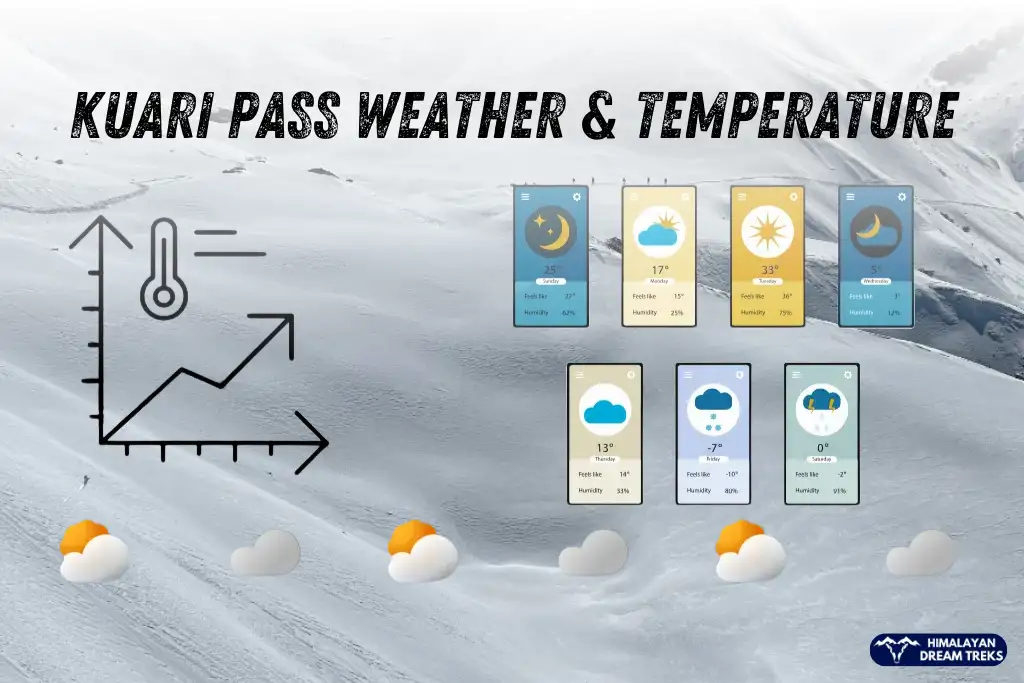
When people search for Kuari Pass, they usually picture long snow trails, open meadows, and wide views of Nanda Devi that feel unreal on a clear day. But behind every good trek experience here sits one quiet deciding factor: weather. Kuari Pass weather controls trail conditions, safety, packing needs, and even how enjoyable the trek feels on a daily basis.
Despite its approachable difficulty level, the weather here deserves respect. Kuari Pass temperatures drop quickly with altitude, snowfall can arrive without much warning in winter, and seasonal changes directly affect trail clarity and accessibility. Conditions in Chamoli, especially near Joshimath often feel manageable, but higher camps and the pass itself experience colder and more exposed weather.
Table of Contents
Why Kuari Pass Weather Matters More Than Most Trekkers Expect
Kuari Pass is often described as an easy to moderate trek, suitable for beginners with basic fitness. That description holds true only when weather conditions cooperate. Snow depth, wind chill, and night temperatures can change the difficulty level quickly.
A common mistake is checking the weather of Joshimath and assuming the same conditions on the trail. Due to altitude gain, temperatures drop steadily as you move higher. What feels cold but manageable near Joshimath can turn sharply freezing near the pass, especially after sunset.
Weather awareness helps you:
- Pack correct layers without overloading your backpack
- Judge trekking difficulty realistically
- Reduce risk of cold related issues
- Plan the best season based on your comfort level
Understanding Kuari Pass Temperature From Joshimath
Joshimath acts as the last major settlement before most Kuari Pass itineraries begin. While it offers a useful reference point, it does not represent actual conditions on the trek.
During winter, daytime temperatures in Joshimath may hover around a few degrees above zero. On the Kuari Pass trail, temperatures often remain lower due to exposure and altitude. Nights are significantly colder, especially in open camps.
This temperature gap explains why trekkers feel surprised by cold even when town level forecasts seem reasonable. Always treat Joshimath weather as a baseline, not a final indicator.
Today’s Weather Forecast for Kuari Pass
Many trekkers look for current updates on Kuari Pass temperatures, especially regarding snowfall, before starting the trek. While daily forecasts provide a general idea, they should be interpreted carefully.
Today’s Weather and 7-Day Forecast for Kuari Pass Base Camp (Dhak Village):
Kuari Pass Base (Dhak Village) Current WeatherHigh altitude weather changes quickly due to western disturbances moving across the Himalayas. Snowfall, cloud cover, and wind strength can shift within hours. Forecasts usually mention:
- Expected snowfall or snow showers
- Day and night temperature range
- Humidity levels
- Chances of rain or snow
Humidity often remains high in winter, especially during snowfall spells. Cloudy skies combined with wind can make temperatures feel colder than actual readings.
For accurate short term planning, check forecasts that cover nearby high altitude areas like Auli and upper Joshimath, then assume slightly colder conditions for the pass itself.
Kuari Pass Weather Next 15 Days: How to Read It Correctly
A 15 day forecast helps with planning windows, not daily certainty. Beyond 5 to 6 days, mountain weather predictions become trend based rather than precise.
Here is how to understand Kuari Pass weather for next 15 days wisely:
- Look for snowfall patterns rather than exact dates
- Observe temperature trends, rising or falling
- Note repeated western disturbance signals
- Avoid relying on single day predictions far ahead
The IMD also updates the weather forecast for Uttarakhand regularly, with region-specific mentions. Referring to these updates can help in understanding the approximate weather conditions for the coming days.
Monthly Weather Overview of Kuari Pass
January
Max / Min Temperature: around 4°C / -8°C
Weather: Covered with snow
January represents peak winter. The entire trail usually remains snowbound. Heavy woolens, insulated jackets, and snow boots are essential. Trek routes may become unclear after fresh snowfall, making trekking more strenuous.
February
Max / Min Temperature: around 5°C / -7°C
Weather: Covered with snow
Kuari Pass temperature in February remains low, with continued chances of snowfall. Snow depth often stabilizes, but cold persists throughout the day. Conditions suit trekkers seeking a proper winter experience.
March
Max / Min Temperature: around 7°C / -4°C
Weather: Snow begins melting
Snow starts to melt gradually, especially on sun facing sections. Some shaded stretches still hold snow, which can make trail navigation tricky. Days feel more comfortable compared to peak winter.
April
Max / Min Temperature: around 9°C / -1°C
Weather: Pleasant and clear
April marks the shift toward spring. Days remain pleasant, though mornings and nights stay cold. Light woolens work well, and trail conditions improve steadily.
May
Max / Min Temperature: around 10°C / 4°C
Weather: Pleasant and clear
May offers stable weather and clear skies. Snow largely disappears from most sections. This month suits trekkers who prefer comfort over snow landscapes.
June
Max / Min Temperature: around 11°C / 5°C
Weather: Pleasant and clear
June stays cool and comfortable at higher altitudes. Days remain ideal for trekking, though afternoons may feel warmer during clear spells.
July
Max / Min Temperature: around 11°C / 6°C
Weather: Heavy rains
Monsoon begins. Rain increases risk of slippery trails and landslides on approach roads. Trekking is generally discouraged during this period.
August
Max / Min Temperature: around 10°C / 6°C
Weather: Heavy rains
August continues the monsoon pattern. Cloud cover reduces visibility, and safety risks remain high.
September
Max / Min Temperature: around 9°C / 4°C
Weather: Cloudy with occasional rain
Post monsoon conditions begin. Landscapes turn green, and rainfall reduces gradually toward the end of the month.
October
Max / Min Temperature: around 7°C / -2°C
Weather: Cloudy and pleasant
October is one of the best months for Kuari Pass. Stable weather, clear views, and comfortable trekking conditions make it popular.
November
Max / Min Temperature: around 5°C / -5°C
Weather: Pleasant and clear
Cold increases steadily. Late November may see early snowfall. Nights feel sharply cold.
December
Max / Min Temperature: around 3°C / -7°C
Weather: Chances of snowfall
Kuari Pass temperature drops quickly in December. Snowfall usually begins by mid to late month, marking the start of winter trekking season.
Kuari Pass Temperature in Winter: What to Expect
Winter spans from December to March. During this time, Kuari pass temperature stays mostly below comfort levels without proper gear.
Daytime temperatures may hover near freezing. Nights can fall well below zero. Wind chill increases cold exposure, especially near ridgelines and open camps.
Snowfall timing varies yearly, but January and February usually offer the most consistent snow cover. This period suits trekkers who want snow landscapes and do not mind physical challenges.
Kuari Pass Snowfall Time Explained Simply
The snowfall time at Kuari Pass typically begins in December and continues through February. Occasional snowfall may extend into early March depending on western disturbances.
Snowfall does not always mean continuous snowstorms. Often it arrives in short but intense spells, followed by clear skies. Fresh snow can make trails look stunning but also increases trekking effort.
Best Time to Visit Kuari Pass Based on Weather
- For snow lovers: January to February
- For balanced snow and comfort: March
- For easy trekking: April to June
- For clear views and crisp air: October to November
Avoid monsoon months due to safety concerns.
Final Thoughts
Kuari Pass weather is not unpredictable chaos. It follows clear seasonal patterns shaped by altitude, western disturbances, and Himalayan geography. When you understand these patterns, planning becomes easier and trekking feels less stressful.
Instead of chasing exact temperature of Kuari Pass, focus on trends, seasonality, and preparedness. That mindset keeps you safer and lets you enjoy the trek for what it is: a quiet, rewarding Himalayan walk that demands respect for weather more than bravado.

Leave a Comment