The Himalayas have always inspired travellers be it families, explorers or someone who’s just spiritual.
But the way people experience the mountains is changing. For many years, the trekking industry was dominated by mass group departures. While these fixed-date treks were affordable and convenient, they also brought problems: overcrowded trails, soil erosion, strain on fragile meadows and a compromised experience for trekkers.
Today, the shift is clear. Travellers want private, flexible, personalised experiences. This is where customised treks come in.
Customised or private treks are now rising as the strongest trend in Himalayan tourism. They offer freedom, better safety, deeper local engagement, and a more sustainable impact on the mountains.
Backed by market data, changes in traveller behaviour, and the push for responsible tourism, customised treks are becoming the future of Himalayan travel.
Table of Contents
What Is a Customised Trek?
A customised trek, also called a private trek, is a personalised Himalayan journey designed fully around your group’s needs. Instead of joining a fixed schedule with strangers, you trek only with your people, family, friends, special-interest group, or just yourself.
You can also customise literally anything and everything that you want
- Like Duration (extend or shorten the itinerary)
- Campsite stays (extra days at a favourite location just because you loved it)
- Activities like yoga, because you don’t want to miss it even while being on a vacation
- Meals (Jain, vegan, gluten-free) so you don’t have to compromise on your diet.
- Transport and accommodation type
Why Customised Treks Are Becoming Popular?
Many possible reasons, but let’s look at a few
1. Experience Over Standardisation: Modern travellers value personalisation more than fixed itineraries. They prefer intentional travel, privacy and memory-making to crowded group experiences.
2. Rising Demand for Wellness & Slow Travel: People want mindfulness, nature therapy and slower days not rushed itineraries.
3. Flexible Pacing for Different Fitness Levels: Custom treks allow:
- More acclimatisation days
- Shorter walking hours
- Extra days at your preferred campsite
- Off beat trails that no one do
This makes trekking more accessible for kids, seniors, first-timers, differently-abled travellers, and someone who is experienced trekker.
4. Sustainability + Low Impact: Smaller groups create lower environmental pressure on fragile trails, meadows, and campsites.
5. Keep the crowd decentralised: Custom treks naturally distribute smaller groups across multiple trails, reducing pressure on any single route and helping preserve the environment. When large crowds are funnelled onto one popular trail, it leads to soil erosion, habitat disturbance, and long-term damage that becomes difficult to reverse.
The Himalaya Tourism Boom
The Himalaya vacations tourism market is undergoing strong growth due to:
- Rising disposable incomes
- Interest in adventure & wellness tourism
- Digital discovery through Instagram & travel apps
- Improved air & road connectivity
- Government push for sustainable mountain tourism
Key Numbers
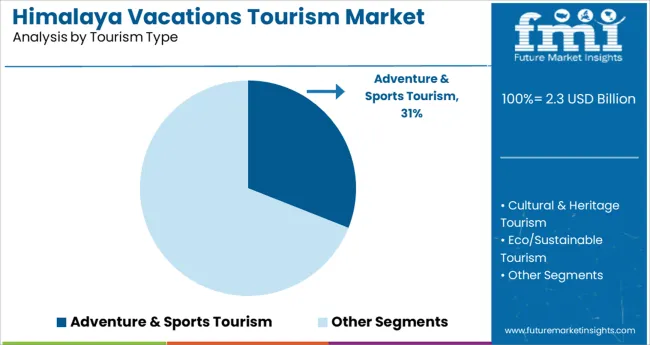
Market value in 2025: USD 2.3 Billion
Forecast for 2035: USD 3.8 Billion
CAGR: ~5% expected across the next decade
Adventure & Sports Tourism dominates with 31% market share (2025)
Younger travellers, especially 15-25 and 26-35 age groups are driving demand for nature, trekking, fitness and personalised itineraries.
Segments Shaping Customised Trek Demand
- Adventure & sports tourism: Treks, passes, expeditions, climbs, rafting which gives adrenaline rush
- Eco-sustainable tourism: Conscious travellers, low-impact experiences
- Cultural & heritage tourism: Homestays, village tours, festivals
- Research teams that want to study the Himalayas
- Online booking continues to dominate due to convenience and transparency
This segmentation makes customised treks a powerful product offering.
The Traveller Psychology Behind Customised Treks
1) Desire for Privacy: Many travellers prefer trekking only with people they know.
2) Personal Milestones: Custom treks or tours are sometimes chosen for:
- Anniversaries
- Birthdays
- Family celebrations
- Group reunions
- Corporate offsites
3) Dietary Safety
Special diets (gluten-free, vegan, Jain) are easier to manage on private treks so people don’t have to compromise even while on vacation.
Mass group departures cannot provide this level of detail.
Environmental Problems With Group Treks
Research by environmental science journals shows serious impact from high footfall:
a) Soil Erosion & Trail Widening: Heavy traffic creates parallel trails, deep ruts, and loose soil. Over time, water flow patterns change and vegetation fails to regenerate.
b) Meadow Degradation: Himalayan meadows (bugyals) are extremely fragile. Overcrowding and camping lead to:
- Trampled grass
- Soil compaction
- Reduced biodiversity
This is why states like Uttarakhand introduced meadow camping restrictions.
c) Waste Management Challenges: Large groups generate more waste, food packets, plastic, and wet waste, making cleanup difficult.
d) Wildlife Disturbance: Noisy, crowded treks disrupt natural habitats.
e) Poor Experience for Trekkers: Peak seasons at popular trails often look like tourist queues, not mountain solitude. Customised treks solve many of these issues by controlling group size and impact.
Economic Benefits of Custom Treks- Especially for Local Communities
i) Tourism Leakage Problem: A big portion of tourism money often flows out of local Himalayan communities because:
- Most big hotels are owned by outsiders
- Supplies come from cities
- Guides are outsourced
- Homestays are underused
ii) Customised Treks Reduce Leakage: Private treks allow operators to integrate:
- Local homestays
- Village cooks
- Local mule owners
- Village based guides
- Locally sourced meals
- Locally run transport
This improves local income circulation, strengthens communities, and builds long-term sustainability.
Advantages of Customised Treks
- Personalised Itinerary: Stay extra days at favourite spots. Adjust pace for better acclimatisation on high-altitude trails like Goecha La, Auden’s, EBC.
- Flexibility in Dates: Trek on your schedule, seasons, festivals, birthdays, or long weekends.
- Case-Specific Support
- More guides, more porters, or safety extensions can be added depending on group profile.
- Enhanced Comfort
- Special Interest Focus
Disadvantages of Customised Treks
We wouldn’t really call it a disadvantage because better things do come at a cost
- Higher Cost for Smaller Groups: Private treks for 2–3 people can cost 2–3× more because:
- Mule and guide costs are not shared
- Transport remains the same regardless of group size
- Special services add cost
- Limited Interaction With New People
Some trekkers enjoy meeting strangers. Private treks limit this aspect.
To Conclude
Customised treks are not just a better alternative; they represent the future of responsible Himalayan tourism.
As travellers seek more meaningful mountain experiences, personalised itineraries become the perfect solution. They reduce ecological pressure, support local communities, offer unmatched comfort, and deliver a richer connection with the Himalayas.
With the Himalayan tourism market growing steadily and adventure tourism becoming the largest segment, customised treks are set to become the default choice for modern travellers who value sustainability, flexibility, privacy, and premium quality.
For travellers and operators alike, the shift is clear: The future of Himalayan trekking is personalised.
If you are still confused between a group departure and a private trek, then read this blog.
FAQs
Are customised treks more expensive? Yes, especially for very small groups. However, for groups of 6–10, prices often match standard departures.
Is a customised trek safer? Yes. You can adjust pace, add acclimatisation days, bring more guides, and reduce crowd-related risks.
Do customised treks help local communities? Absolutely. They use homestays, mule owners, local guides and village cooks ensuring revenue stays in the valley.

Leave a Comment