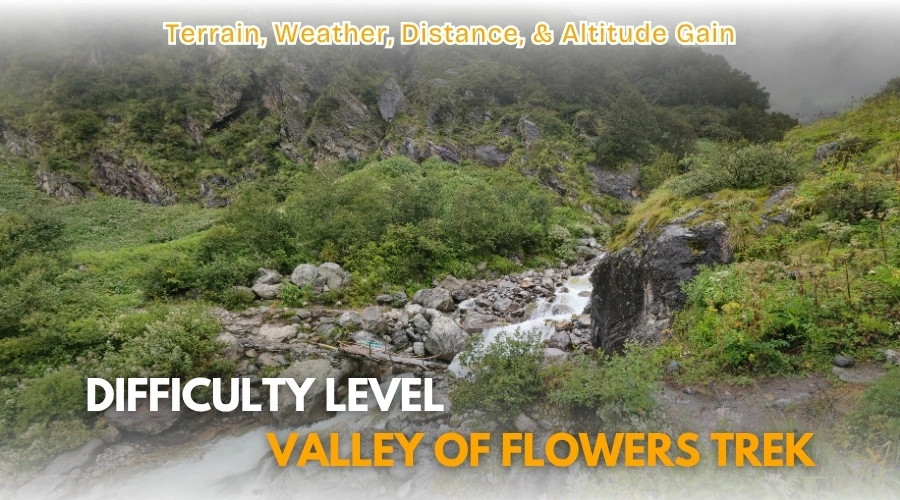
A UNESCO World Heritage site, the Valley of Flowers National Park promises you an adventure of a lifetime with its ethereal blooms and Himalayan beauty. Its well-marked forest trails, rolling meadows, and elevation of about 3,200 m (10,498 ft) make it the perfect trekking destination for tourists of all experience levels. Combined with the sacred visit to Hemkund Sahib, the Valley of Flowers trek poses a moderate difficulty to its visitors.
What’s more? You get to experience monsoon trekking in the Himalayas, featuring the rare species of flora on this heavenly trek. This guide breaks down the exact difficulty of each trail section altitude, distance, terrain so you know exactly what fitness level is needed before you go.
Table of Contents
Valley of Flowers Trek Difficulty: An Overview
Considered a moderate trek, the Valley of Flowers Trek is well-suited for reasonably fit trekkers. This is because the trek does not feature any technical sections, but the overall altitude gain, walking distance, trail conditions, and weather may pose significant challenges. Let us break down all these factors that you must consider before planning the Valley of Flowers trek:
Altitude Gain
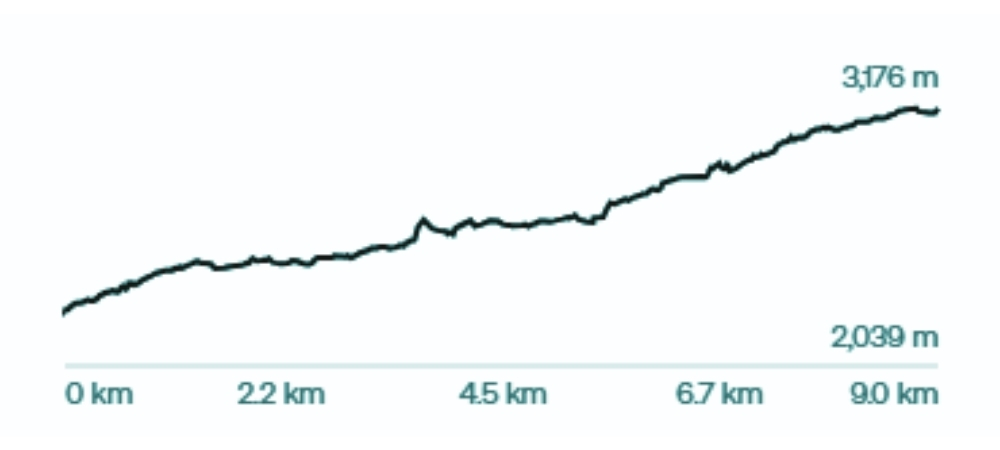
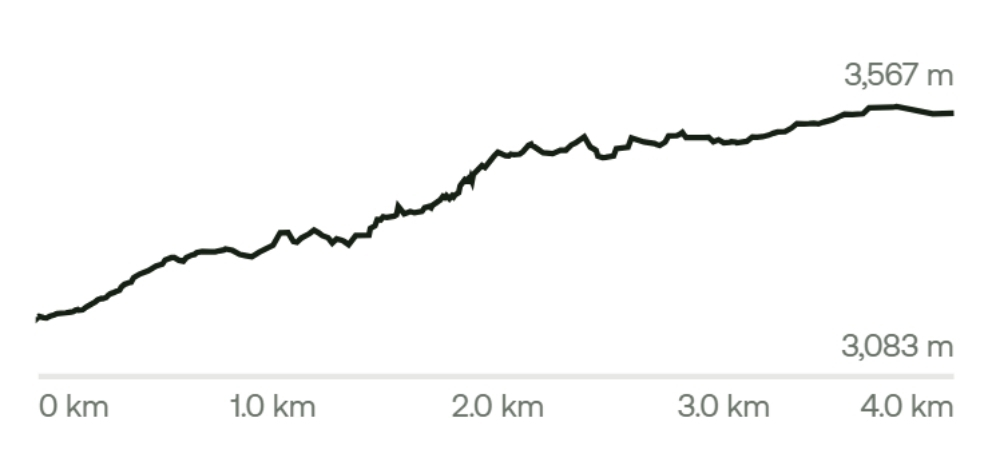
The trek starts from Govindghat, which sits at an elevation of around 5,827 ft. You will face a gradually rising gradient from here to Ghangaria, climbing to 10,614 ft. From here, the trail becomes slightly steeper inside theValley of Flowers National Park, with the valley floor’s altitude ranging from 10,500 ft to 11,550 ft.
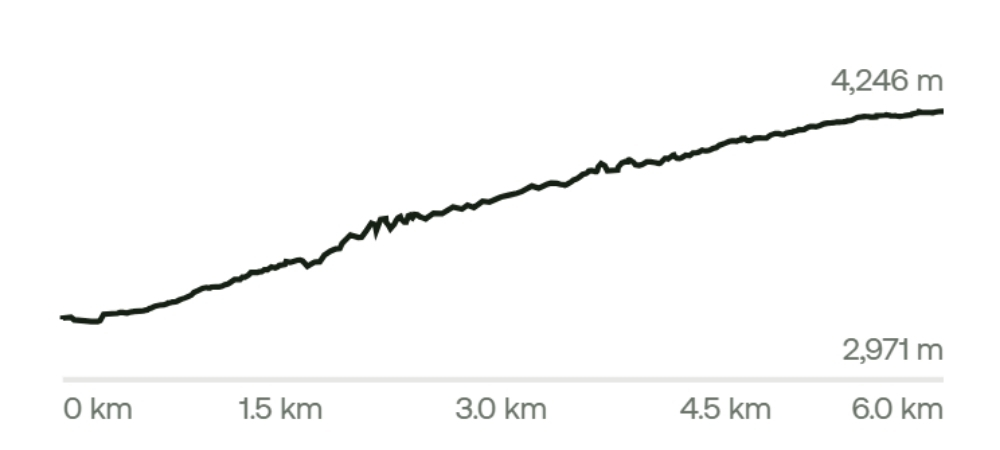
The overall altitude gain is moderate from Ghangaria to the Valley of Flowers. However, if you are planning to attempt the Hemkund Sahib trek, you may face a comparatively challenging altitude gain. The climb from 10,614 ft at Ghangaria to the Hemkund Valley at 14,203 ft is steep and is suitable for physically fit trekkers.
Walking Distance
Another factor that adds to the overall difficulty of the trek is its total walking distance of around 40 km, which you will be covering in 4 days. On the second day itself, you will cover roughly 9 km from Poolna to Ghangaria, which is easy due to the moderate gradient. The trek to the Valley of Flowers and back to Ghangaria on day 3 is about 7-8 km on a rugged but well-laid path.
On the fourth day, the trek to Hemkund Sahib takes a round trip of about 12 km with a steep ascent, which may pose a challenge if you are a beginner. Therefore, you will be hiking every day for about 4-9 km (5-8 hours per day), which is easy to moderate, but the uphill sections and unpredictable rain may slow down your pace.
Terrain And Trail Conditions
The trails inside the Valley are mostly well-marked with rugged stone-paved paths. However, due to heavy rainfall during monsoon, they may get blocked, or you may find flooded river streams on the trails that may make it risky. The trail sections within the flat meadows are easy to traverse but may get muddy and slippery post unpredictable rain. Overall, the trail conditions are moderate, but you must cross them carefully to avoid any injuries.
Weather And Temperature
This trek is a monsoon trek as its floral varieties display full bloom during this season. Although this is the peak tourist season, the trails become very risky during this time. You will face unpredictable heavy rainfall or thunderstorms in the afternoon, making the temperatures drop in the evening and at night. Therefore, we recommend that you trek with a guide to ensure your safety.
During summer and autumn, you will find a rather calmer weather with pleasant trekking conditions during the day. However, the blooms are fewer during these seasons.
Ready to book? Check out our complete Valley of Flowers Trek package with itinerary, dates, and cost.
Other Factors That Make the Valley of Flowers Challenging
There are other factors that make the trek moderate-to-difficult apart from the ones listed above. These include:
Hemkund Sahib Trek
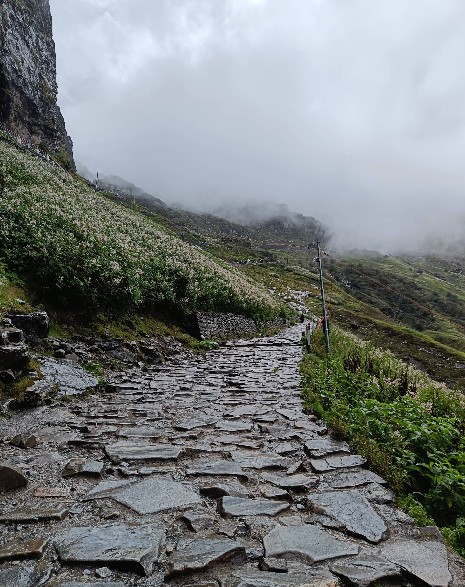
Most travellers plan a pilgrimage visit to the Hemkund Sahib Gurudwara along with the Valley of Flowers trek. The trek to this world’s highest Gurudwara involves a 6 km one-way trek through a steep gradient, gaining about 4,196 ft from Ghangaria within a short walking distance. To cover this section without any hassle, you must be physically fit and acclimatise properly before taking on its adventure.
Crossing River Streams
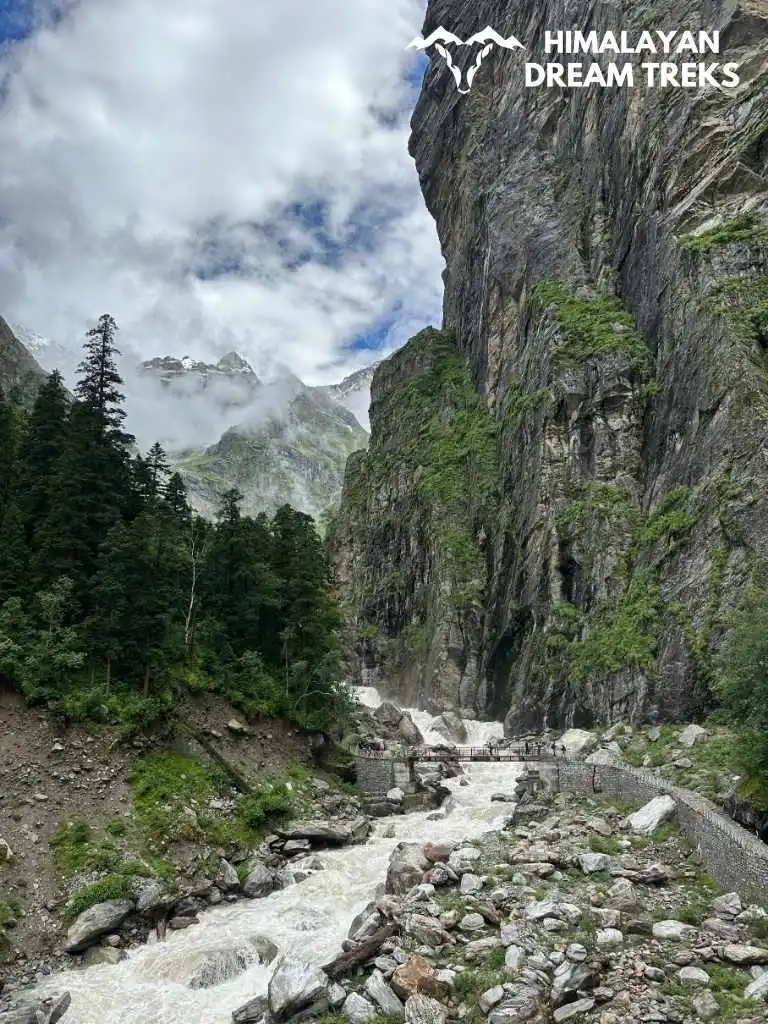
The trek follows the Pushpawati River and includes a few stream crossings. While crossing from Poolna to Ghangaria, the trail stays along the river until mid-way, and you will then cross a bridge to the opposite bank. Inside the Valley, there are two wooden footbridges over streams (one about 1 km in, another before the valley opens). These crossings are easy in good weather, but after heavy rain, they can become slippery or prone to mudslides, so you must take extra precautions.
Trekking Through the Forest
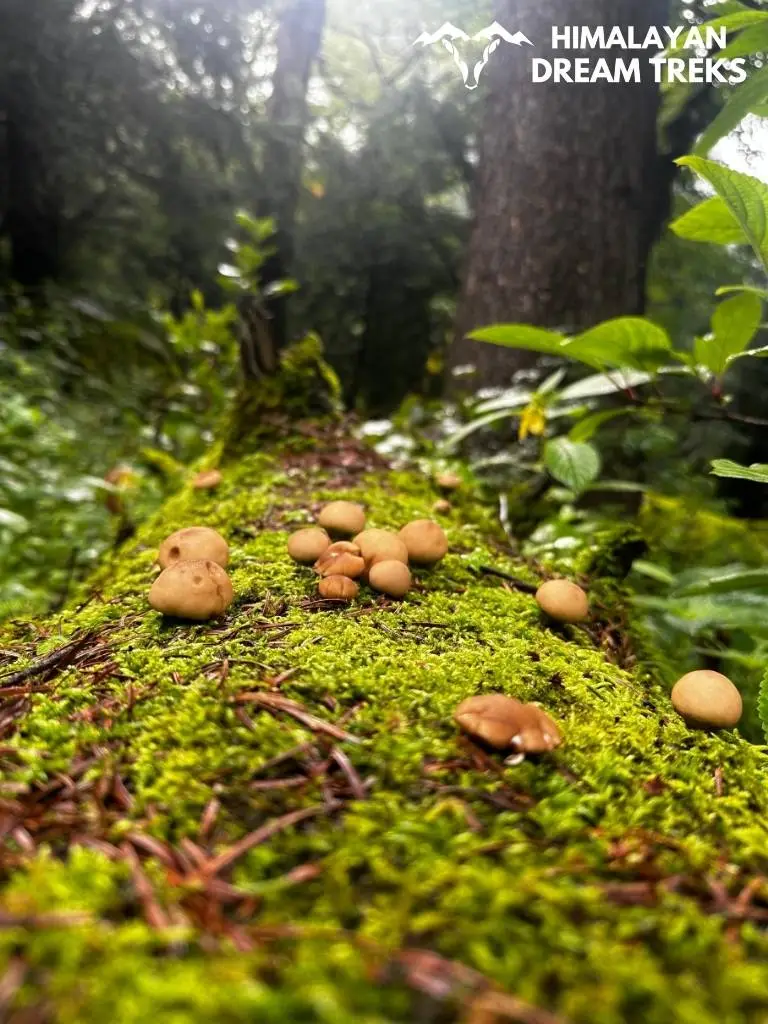
Much of the trek goes through dense pine, deodar, and cedar forests. The first 2 to 3 km of the Valley trail also climbs steeply through a very thick forest. These forest sections are shady and scenic, but can be humid and muddy after rain. The roots and leaf litter underfoot can hide obstacles, so watch your footing.
Important Health and Safety Tips
In addition to physical and mental fitness, consider these safe trekking tips to take on the moderate difficulty of the Valley of Flowers trek:
- If you experience symptoms of altitude sickness (headache, nausea, dizziness), stop climbing and rest or descend. Spend a rest day in Joshimath, Govindghat, or Ghangaria rather than continuing your trek without acclimatisation.
- Keep your body hydrated throughout the trek using ORS or rehydration salts to prevent electrolyte loss, especially on the uphill Hemkund Sahib trek.
- This is a protected national park, so avoid littering the trails. Do not stray from marked trails or damage plants, and avoid making noises. The valley’s ecosystem is fragile, and following these rules helps preserve it.
- At the forest entry point (near the park gate), you must show a valid photo ID (passport or Aadhaar). Permits are required for the national park, so keep your ID and permit papers handy.
- Trek with at least one companion or a guide. If you are trekking solo, inform your family or friends about your itinerary and expected schedule. Try to plan this trek with a group to make sure help is available if someone falls sick or is injured.
- Keep a safe distance from animals like bears or deer, and never feed them. Store food securely overnight so that it does not attract animals.
- The Mobile phone network is patchy after Ghangaria. Therefore, inform family or authorities of your plan before departure. Also, carry a power bank so that your phone remains charged throughout the trek.
- The steep sections and the stony pathways strain your knees and ankles, so take the help of trekking poles for assistance. Try to navigate downhill trails with careful footing to avoid slipping.
- Before embarking on the trek, check the weather forecast and the best time to do the Valley of Flowers Trek.
Prepare Well For The Best Trekking Experience
This trek is easy to moderate and rewarding if attempted with proper preparation. This means you must train your body, acclimate your lungs, and respect the mountain environment. Always follow safety guidelines (no littering, stay on the trail, and avoid disturbing the valley’s fragile ecosystem) and plan a day-by-day pace to avoid rushing higher too quickly.
Leave a Comment