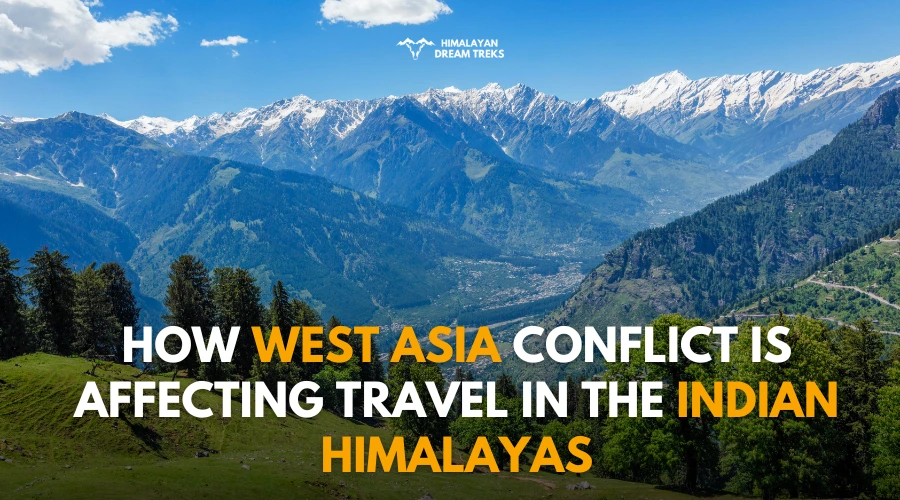
The US–Iran conflict may be unfolding thousands of miles from the snow‑capped peaks of the Indian Himalayas, but its sharp shock has been felt here too. In Uttarakhand, the trekking season builds. Snow begins to recede from high passes, expedition gear is unpacked, permits are processed, and by late February, the rhythm of the mountains starts to return.
Routes leading to Gangotri, Yamunotri, and beyond begin to see the first wave of international trekkers, mountaineers, and long-haul adventure travellers. In 2026, that rhythm altered due to the West Asia conflict.
The Spark That Started the Avalanche
Early 2026, US–Israeli military strikes on Iran ignited a retaliatory chain reaction across the Middle East. Missile exchanges followed. Gulf airspace was closed. Over 23,000 flights were cancelled across the region in the days that followed. For India, a nation whose aviation arteries run directly through the Middle East, with more than 40 per cent of its long-haul international connectivity flowing through Dubai, Doha, and Abu Dhabi, the disruption was immediate and severe.
The Ministry of Civil Aviation reported that Indian carriers, which once operated 300 to 350 flights a day to the Middle East, were flying just 80 to 90 after hostilities erupted.
A report by the PHD Chamber of Commerce and Industry (PHDCCI) estimated that India’s inbound tourist traffic had fallen by up to 20 per cent in 2026. “Tourism is the first sector to feel the impact of global unrest. We saw this during the Russia–Ukraine war, but the recent West Asia conflict has completely altered travel dynamics,” mentioned Rajan Sehgal, Co-Chair, Tourism & Hospitality Committee.
Impact on Uttarakhand’s Adventure Tourism:
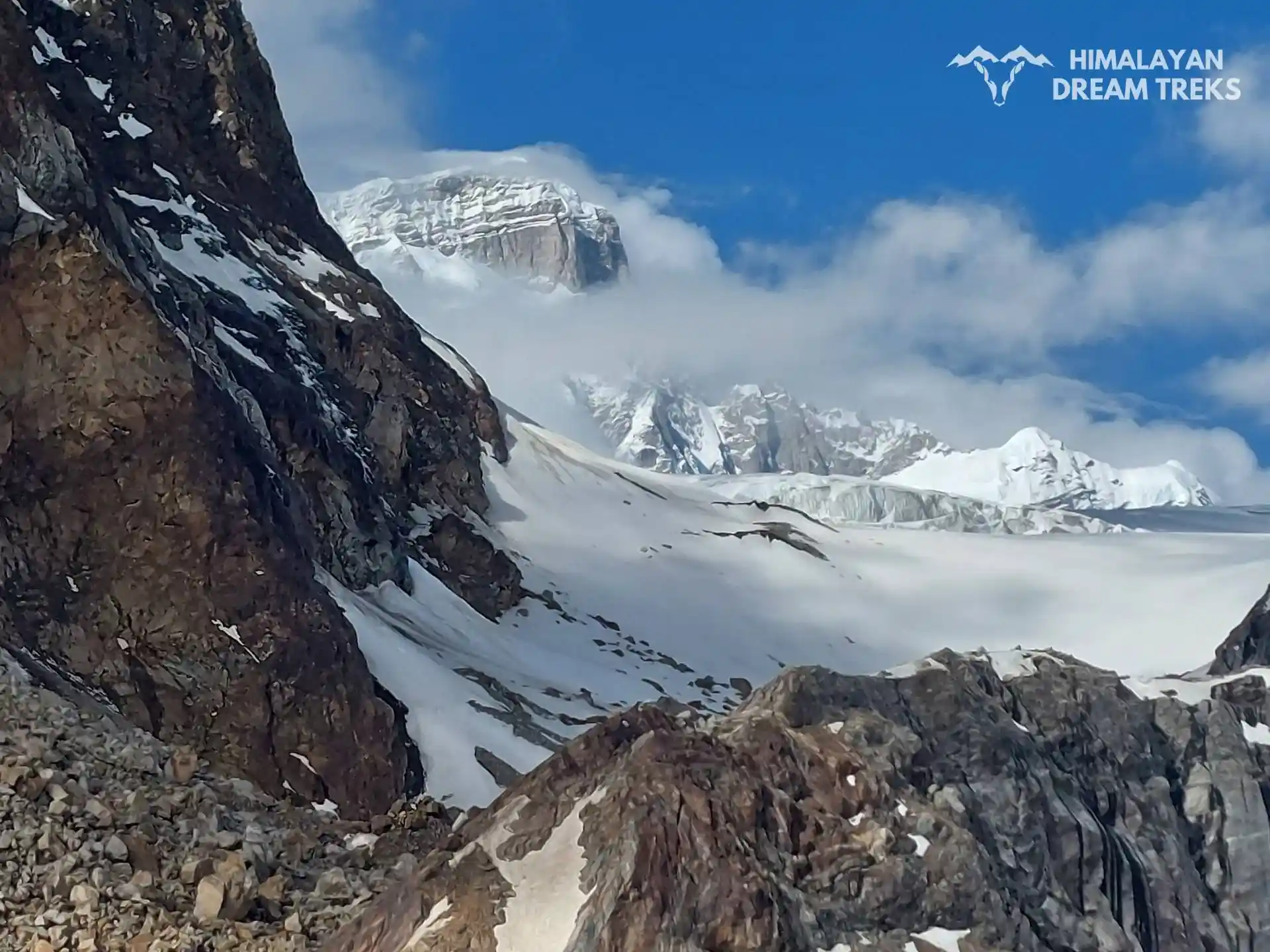
If Himachal Pradesh is feeling the absence of backpackers, Uttarakhand has seen a decline in the organised foreign trekking and mountaineering groups from its slopes. And the timing could not be worse.
“There has been a major reduction in new bookings, down 20-25% after airspace closures became uncertain,” says Ravi Gosain, President, Indian Association of Tour Operators (IATO),
Apart from the geopolitical tensions itself, the rising airfare cost has added to the folly.
Uttarkashi, the Himalayan district considered the trekking gateway to iconic routes like Kedarkantha, Dayara Bugyal, Kedartal, Gaumukh Tapovan, and Har Ki Dun, was on its most promising season in years. The Uttarakhand government had just opened 83 new Himalayan peaks for trekking and mountaineering, a milestone intended to cement the state as a premier global adventure destination.
That ambition has been overtaken by the recent war events creating uncertainty. Uttarkashi usually sees a surge in the number of bookings from foreign groups starting March. But this year, no new bookings have been confirmed, and cancellations have been seen.
Jayendra Rana, president of the Garhwal Mountaineering Trekking Association, noted that most foreign trekkers who usually come from the United States, Europe and the UK, and Europe’ have not made bookings this year, yet, given the West Asia conflict. He further mentioned, “More than 10,000 foreigners visit Uttarkashi every year for trekking and mountaineering. Once foreign climbers arrive, Indian trekkers also follow in large numbers. This year, the war has created deep uncertainty across both segments.”
The economic stakes are significant. Uttarakhand’s trekking economy is not merely about foreign enthusiasts, it sustains a dense ecosystem of local guides, porters, equipment rental shops, homestay owners, and food suppliers along the trail corridors.
Further, the LPG crisis has impacted the supplies on the Char Dham Yatra, with the Tourism Department projecting a requirement of 9 lakh gas cylinders for the period spanning April to November.
The Silver Lining: Domestic Tourism Finds Its Way
Amidst the disruption, India’s domestic tourists, deterred from international travel by skyrocketing airfares and geopolitical anxiety, are turning inward. Hill stations in Himachal Pradesh, Uttarakhand, Ladakh, and the Northeast are witnessing measurable surges in bookings. Anand Srinivasan, co-founder and CCO of Akasa Air, confirmed the airline was expanding domestic network capacity by 22 per cent for summer 2026, “aligning capacity with evolving demand patterns.”
What Lies Ahead
A tentative ceasefire was announced on April 8, 2026, but aviation normalcy remains uncertain. Gulf hub operations are restarting, but booking windows remain compressed, travel confidence is fragile, and fuel costs stay elevated. Recovery in the Himalayas’ foreign trekking and backpacker segment could take a full season or more.
The geopolitical situations and tensions and once again showed no mountain is truly an island.

Leave a Comment