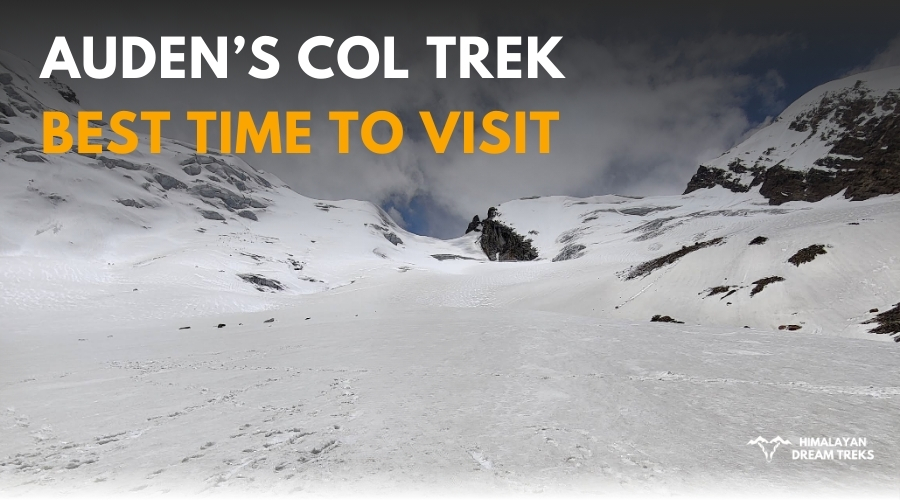
Auden’s Col is one of the most dangerous passes in the Garhwal Himalayas of Uttarakhand, as it crosses the highly crevassed Khatling Glacier. The pass lies at 5,490 m (18,012 ft) and connects the ridge coming from Gangotri III on the northwest with the ridge from Jogin I on the east. Weather, snow, and glacier conditions at this elevation change quickly, and for this reason, it holds a prominent place among the most difficult treks in India. For any expedition here understanding the best time is important. Stable days, visible crevasses and firm snow reduce risk, support steady movement and keep the team focused on a slow safe approach. For this route the most suitable windows are May to June and September to October. In these periods the pass, the Khatling Glacier and the long glacier sections are more manageable and the landscape from forest trails near Gangotri to vast snowfields above stays clear enough to move with care.
Best Time For Auden’s Col
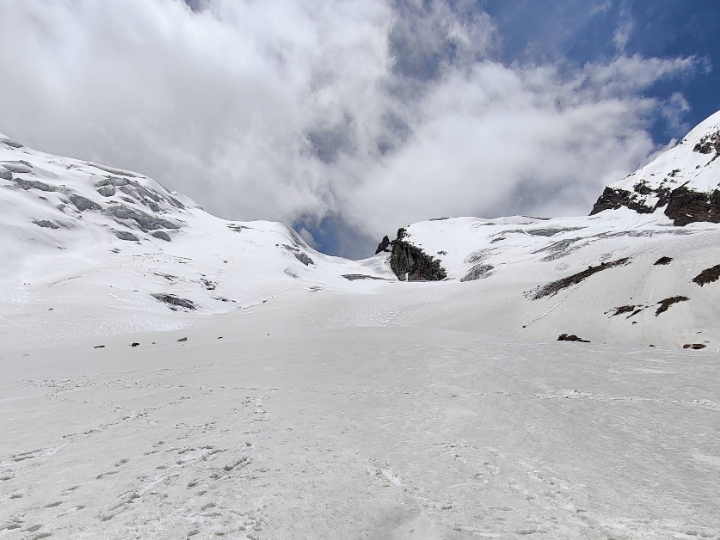
On Auden’s Col, difficulty comes from altitude, crevasses, steep ascents, thin ice, and long moraine and scree sections. Picking the right season helps with all of these. The best time to do the Auden’s Col is from late May to June and again from September to early October, when the weather is more favorable, the trail is accessible, snow levels are lower, and visibility is better. This wonderful time to enjoy the region ensures fewer storms, a stable atmosphere, and less snow, which allows trekkers to move more safely across the Col and the Khatling side. When the snow is less and hard and the cracks are exposed, it is easier to find safe lines on the pass and glacier. Sub-zero temperatures remain, but fewer storms and clearer skies help with navigation. A stable weather window allows planned acclimatization days, measured altitude gain, and a calm pace between Gangotri, Rudugaira, the Col, Khatling Zero Point, and beyond. With clear conditions, the team can set fixed ropes where needed, move over boulders without rush, test thin ice, and cross tricky sections with ropes and an experienced guide. In short, the right season does not make Auden’s Col easy, but it lowers exposure and keeps the expedition controlled.
Auden’s Col in Possible Season
Trek in Summer (May to June)
Summer offers the most favorable conditions for Auden’s Col. There is less chance of rainfall and fresh snow. Sub-zero nights continue near the Col but days often stay clear with temperature ranging from 5–10°C. Residual snow appears at base camps near Gangotri and Rudugaira Valley while the Khatling side still holds large snowy areas. The thawed snow reveals many crevasses so the dangerous sections are more visible. Moraine and scree are present yet firm footing is more likely. With fewer storms the team can move in a slow organized way: forest trails near Gangotri, scree and loose boulders to Rudugaira Base Camp, the steep climb to the Col base and a steady push to the summit on a vast expanse of snow. The descent toward Khatling Glacier remains serious but a clear line to the zero point and careful rappels help keep the route within control. Alpine greenery in the lower sections and small Himalayan villages on exit add calm scenery without changing the core nature of this high-altitude corridor.
Trek in Autumn (September to October)
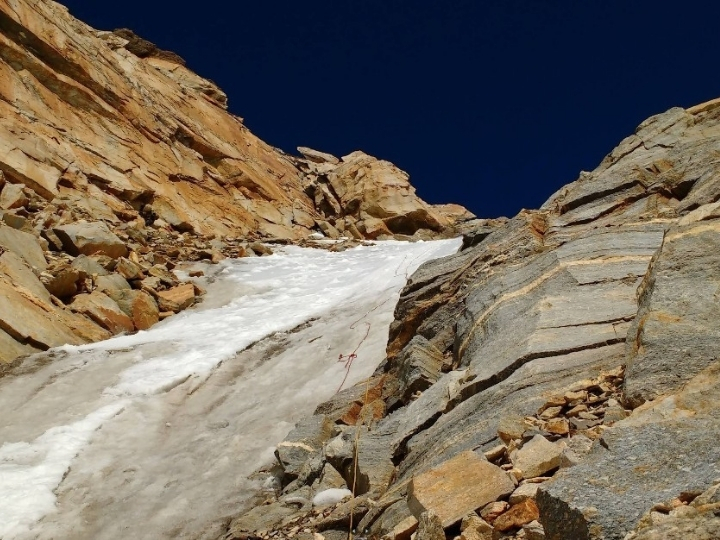
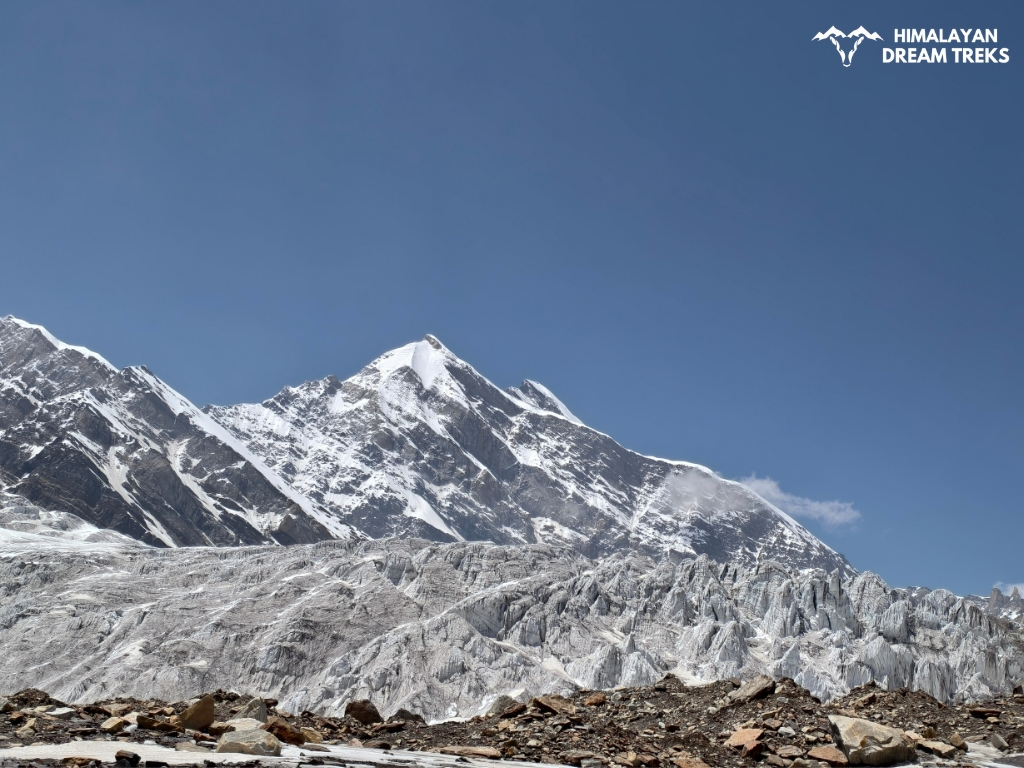
Autumn brings comfortable weather, visible crevasses and the onset of winter. October may have occasional snowfall yet storms are fewer than in monsoon. Typical temperatures range from 0–10°C during the day and drop below freezing at night. The snow on the Col and on Khatling is often firm. Knee-deep snow can appear after a snowstorm so rope work and testing with care remain vital. Brown hues in the Gangotri region and the Bhilangana Valley give clear open views of the Jogin and Gangotri ranges under calm skies. The route still includes steep ascents, near vertical sections on snow, loose moraine and big crevasses on the Khatling side. With stable days the team can hold a slow pace, manage altitude gain and keep safe positions while moving on ridges and snowfields. For seasoned trekkers who seek a winter-like feel without full winter risk this window is the right balance.

Not Recommended Windows
- Monsoon (July to August): unpredictable rain on rocky and glacial terrain, slippery moraine and scree, landslides, mudslides, avalanches and sub-zero nights make it life threatening.
- Winter (November to April): extremely harsh weather, frequent snowfall, trails blocked, soft snow masking crevasses and the Gangotri National Park side closed. Auden’s Col is not possible in winter.
Appropriate Packing of Clothing for the Trek
Auden’s Col demands careful packing for cold, snow and storms. The aim is warmth, dryness and safe movement over snow, ice, moraine and scree.
Core layers and warmth
- Wear four layers of thermals and warm clothing at high camps
- Carry a down-like warm layer for sub-zero nights near the Col and on the Khatling side
- Keep yourself hydrated and have energy-dense food to avoid weakness
Shells and rain protection
- Carry a raincoat and a rain cover for your backpack in summer and autumn as weather near Auden’s Col remains very unpredictable
- Choose water resistant shoes for snowfields and slush
Footwear and traction
- Wear good quality trekking boots preferably with spikes for snowy and icy sections
- Along moraine and scree be extra mindful of footing and stance, move carefully over loose boulders
Sun and skin protection
- Carry sunscreen and a hat to avoid sunburn from the glaring sun on snowfields
Safety and glacier travel
- Ensure that you navigate crevasse sections with focus and with the help of a rope
- When walking over thin ice on glaciers make sure it is strong enough to carry your weight, test and move with a rope team
- Fixed ropes may be needed on near vertical sections, climb with an experienced guide and a physically fit team
Pacing and acclimatization
- Add proper pauses and acclimatization days between Gangotri, Rudugaira Base Camp, Auden’s Col base, the summit and Khatling Zero Point
- Attempt the expedition when the snow is less and hard and the cracks are exposed
Key Takeaways on Best Time
- Summer (May–June): less rainfall and fresh snow, residual snow near base camps, thawed snow reveals crevasses on Khatling, clearer days for steady movement
- Autumn (September–October): comfortable weather, visible crevasses, onset of winter, occasional snowfall, firm snow helps careful glacier travel
- Avoid monsoon and winter: storms, landslides, avalanches, blocked trails, soft snow masking crevasses and closures make the trek unsafe or not possible
Choosing either May to June or September to October, keeping a slow pace, moving with an experienced guide and a rope team and wearing the right layers and water resistant shoes help bring this tough but rewarding expedition within reach. The views of the Jogin and Gangotri ranges, the vast Khatling Bamak riddled with crevasses, the Bhilangana Valley, Masar Tal and Vasuki Tal all come together in a calm organized way when the season is right and the team climbs with care.
Happy Journey!

Leave a Comment