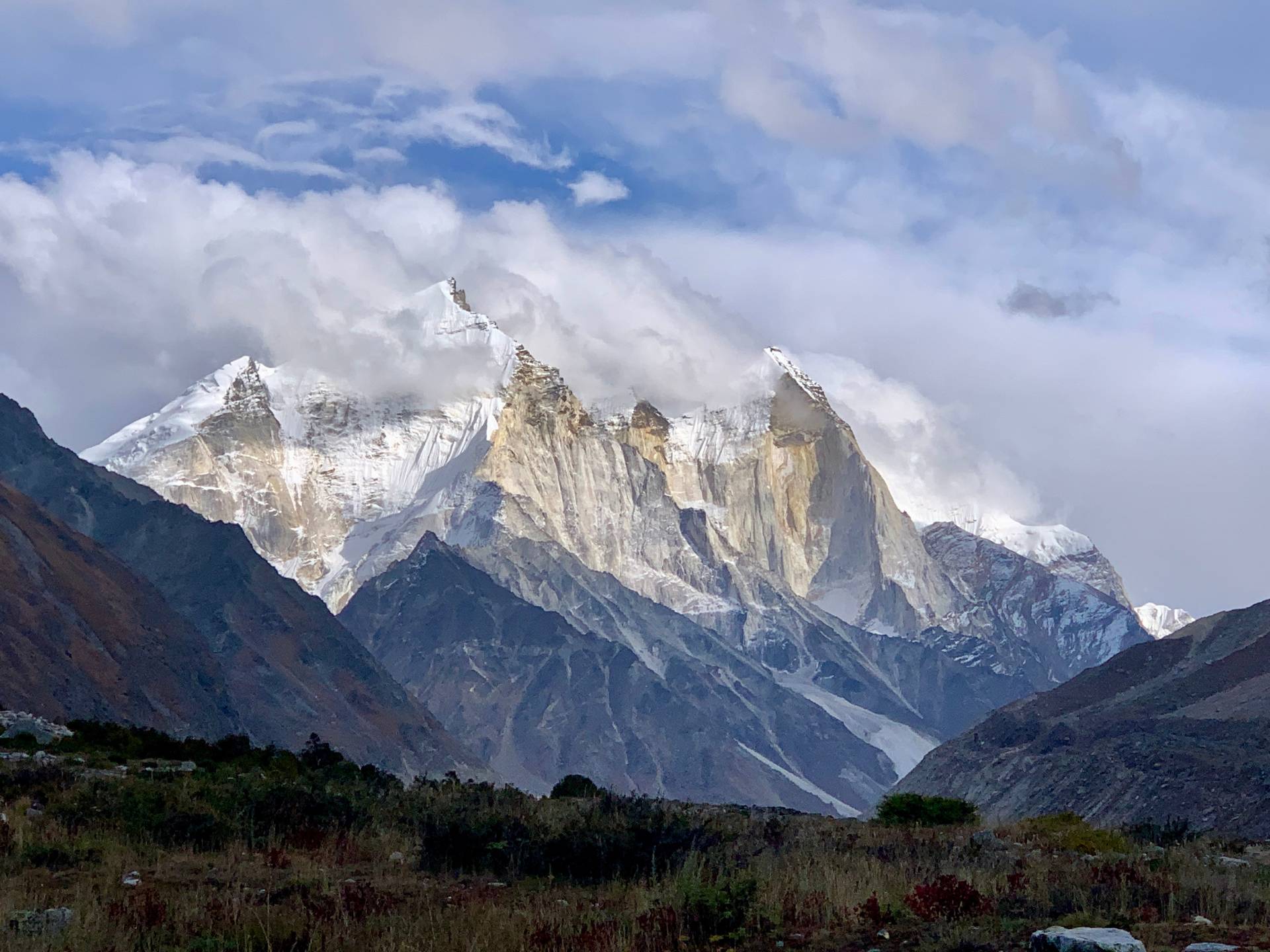
As you cross streams, chirbasa and bhojbasa, the Bhagirathi Massif rises like a sculpted wall of ice and stone, set deep in the Gangotri region of Uttarakhand, India.
Located around 30.77°N, 79.03°E, these three iconic peaks – Bhagirathi I, II, and III form one of the most dramatic skylines in the entire Garhwal Himalaya.
As you move closer, their personalities come alive. Bhagirathi I, standing tall at 6,856 meters, is known for its bold, technical terrain, while Bhagirathi II and III offer routes that, though slightly more forgiving, still demand solid skills and steady nerves.
Table of Contents
Climbing History
The Bhagirathi Massif includes several major peaks, notably Bhagirathi Parbat I (6,856 m), Bhagirathi Parbat II (6,512 m), and Bhagirathi Parbat III (6,454 m).
- Bhagirathi II: First climbed in 1933 by Austrians Edi Ellmauthaler and Toni Messner. In 1997, a documented expedition by the South Calcutta Trekkers Association (SCTA) charted a route from Uttarkashi → Gangotri → Nandanvan → Base Camp → Camp I → Camp II → Summit Camp and finally the summit. Over the decades, Bhagirathi II has become one of the more accessible (relatively speaking) among the trio, though still demanding and is widely offered by organized expeditions.
- Bhagirathi III: Its first ascent was also in 1933 by British mountaineers Colin Kirkus and Charles Warren via the southeast ridge. Since then, it has seen various climbs, including a bold ascent of its overhanging west face in 1990 by Janez Jeglic and Silvo Karo. More recently, in September 2015, a team led by Debabrata Mukherjee successfully summited via the north ridge.
- Bhagirathi I: The highest of the group, 6,856 m, was first conquered by a Japanese expedition in 1980 via the southeast ridge. A subsequent attempt in 1983 by a British team via the west ridge reached the summit, though tragically, one of the climbers died during descent.
When to Climb & Best Seasons
Timing matters; the climate, glacier conditions, and weather windows in the Garhwal Himalayas govern when you can mount a successful climb. Generally, the best windows for attempting a Bhagirathi expedition are:
- Late spring / early summer: May to June, snow is still stable, glacier travel is feasible, and weather tends to be more predictable.
- Post-monsoon autumn: September to October, when skies clear after the monsoon, visibility improves, and the trails become safer.
Avoid monsoon months (July–August) due to unpredictable weather, avalanche risk, and difficult glacier conditions.
Typical Duration and Itinerary
Depending on the peak you target and the pace, a full Bhagirathi expedition can span a significant amount of time, from base-camp climbs to summit pushes. Here’s a typical structure (especially for Bhagirathi II), which is the most frequently climbed:
Sample itinerary for Bhagirathi II:
- Day 1: Arrival at base city (e.g. Delhi/Rishikesh/Dehradun)
- Day 2: Transfer to Uttarkashi → proceed to Gangotri (approx. 3,048 m)
- Base Camp → Advance Base Camp → Camp I → Camp II → Summit Camp → Summit (6,512 m)
- Descent via the same route → Return to Gangotri → Uttarkashi → base city
- Total Duration: Typically 20–23 days (depending on acclimatization, weather, and pace).
If you aim for Bhagirathi I, packages tend to be slightly longer, up to 28 days / 27 nights, owing to tougher terrain, technical climbing, and the need for careful acclimatization.
Budget & Cost Range
Cost varies depending on services, season, included amenities (guides, porters, equipment, food, permits), and whether you begin from Delhi / Rishikesh / Dehradun or from Uttarkashi directly. Here’s a rough breakdown (as per recent expedition packages):
- For Bhagirathi II: Some operators quote around ₹200,000 per person.
- Alternative budget packages may start from ₹90,000 per person, but these may have minimal inclusions (basic logistics, minimal comforts) and assume you start from Uttarkashi/Gangotri.
- Typical package durations: 20 to 23 days for Bhagirathi II; up to 28 days for Bhagirathi I.
Expect additional costs for travel to and from base city (Delhi/Rishikesh/Dehradun), permits, rescue/insurance, personal gear, tips, and any extra acclimatization days.
Typical Route & Map Overview
- Start point: Often from Gangotri town (about 3,048 m), reached via road from Uttarkashi.
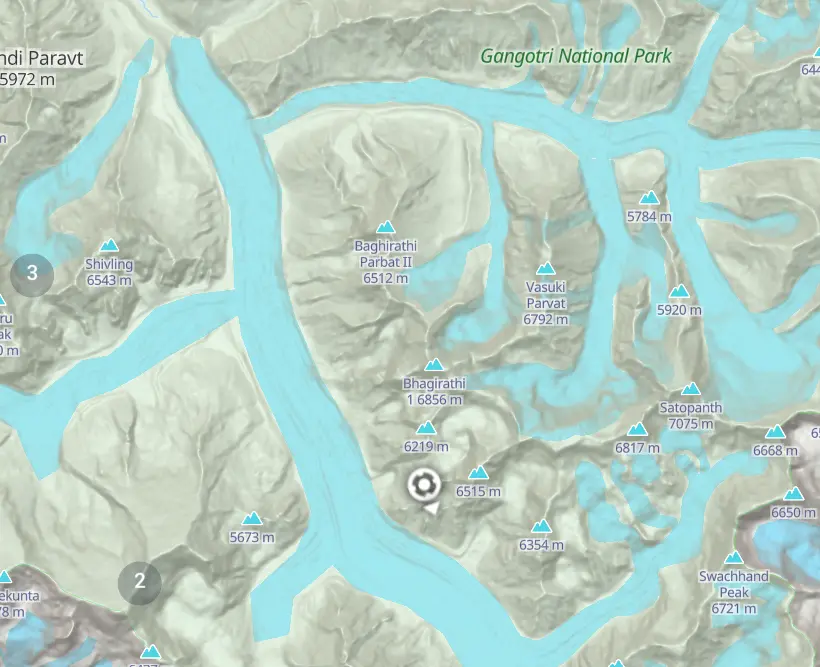
- Trek route: Gangotri → Bhojbasa → Gaumukh (snout of the glacier) → Nandanvan Base Camp (4,300–4,400 m) → advance camps → Summit.
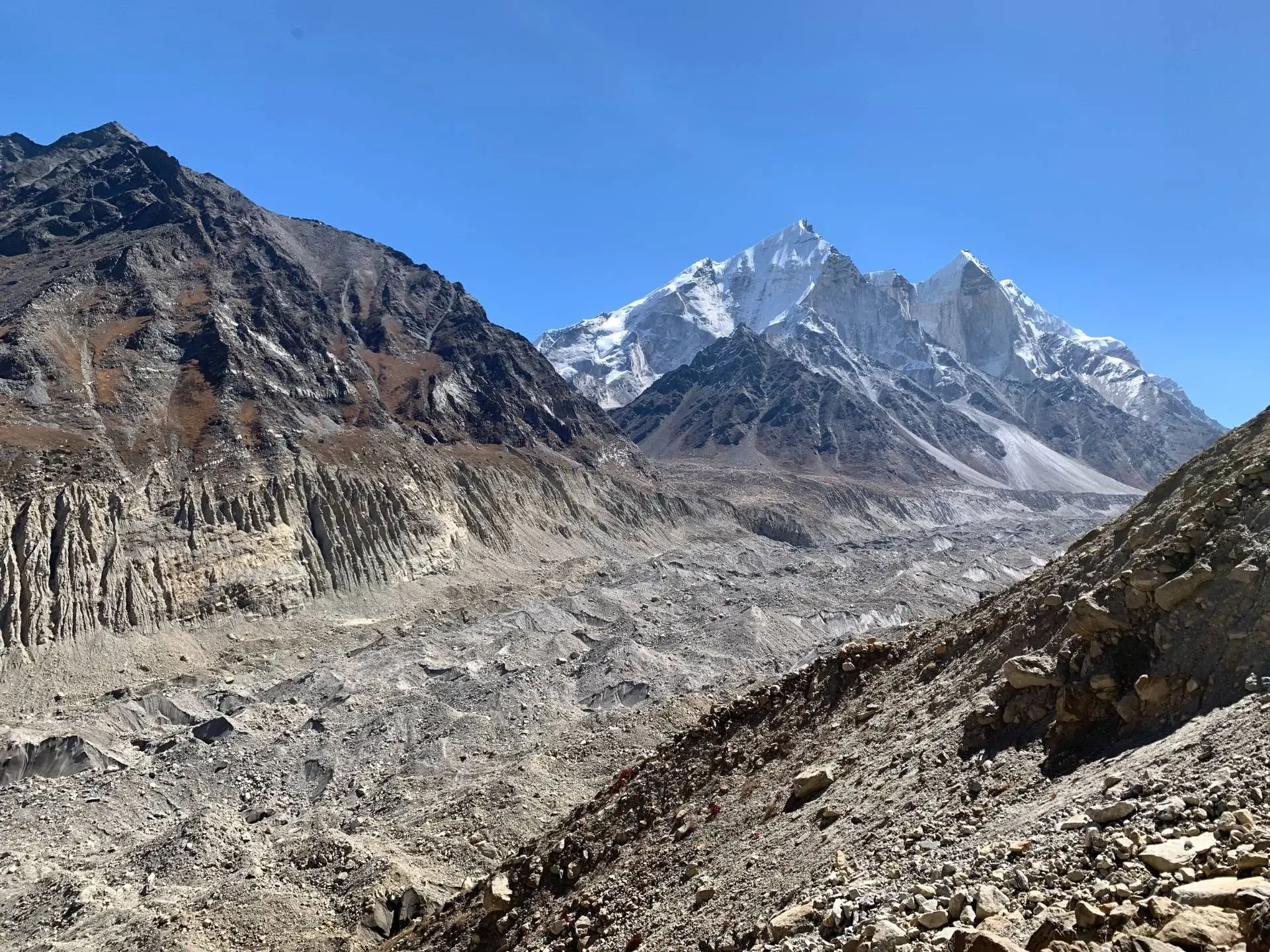
- The massif is flanked by glaciers: to the east lies the Vasuki Glacier, to the west the mighty Gangotri Glacier, and to the north the Chaturangi Glacier.
- The river that emerges from the snout of Gangotri Glacier is the ancient and holy Bhagirathi River, the headstream of the Ganga.
This route offers a dramatic progression from dense Himalayan valley forests, across glacier-fed terrain and meadows at base camp, to steep snow and ice slopes on the final ascent.
What you should prepare/expect:
Prior mountaineering or high-altitude trekking experience — high altitude, glacier navigation, snow/ice climbing, crevasse negotiation, altitude acclimatization.
Appropriate gear: glacier boots, crampons, ice axes, ropes, harnesses, cold-weather sleeping bags, layered clothing.
Physical fitness and perseverance — expect long days, steep climbs, shifting terrain, and unpredictable mountain weather.
Time commitment — at least 20–23 days for Bhagirathi II, possibly longer for tougher peaks like Bhagirathi I.
Why Climbing Bhagirathi Is Worth It
- Alpine grandeur & natural beauty: soaring Himalayan ridges, glaciers, glacial meadows, and Himalayan panoramas that few regions can match.
- Spiritual & mythological significance: you are ascending the peaks above the birthplace of the Bhagirathi (ultimately Ganga), the river that holds deep sacred meaning in Hindu tradition. The massif’s name itself is a tribute to the legendary King Bhagiratha.
- The challenge & personal transformation: reaching over 6,500 metres demands physical endurance, mental resilience, and humility before nature: many climbers describe such journeys as life-changing.
- Remote, off-beaten wilderness: unlike more commercial expeditions, Bhagirathi expeditions take you into remote glacial valleys, far from the usual crowd: ideal for serious adventurers.
Wrapping Up
As you step back from the icy winds and towering summits, you realize the Bhagirathi Peaks offer more than just a climb; they challenge you to rise beyond your limits.
Here, every ridge tests your resolve, every glacier deepens your awe, and every dawn reminds you why you came. You walk away stronger, humbled, and forever changed by the silence and power of the high Himalayas.
If your heart still beats for adventure, the Bhagirathi giants are waiting, and now, you know the path that leads to them!

Leave a Comment