Kunjapuri Temple Trek Overview
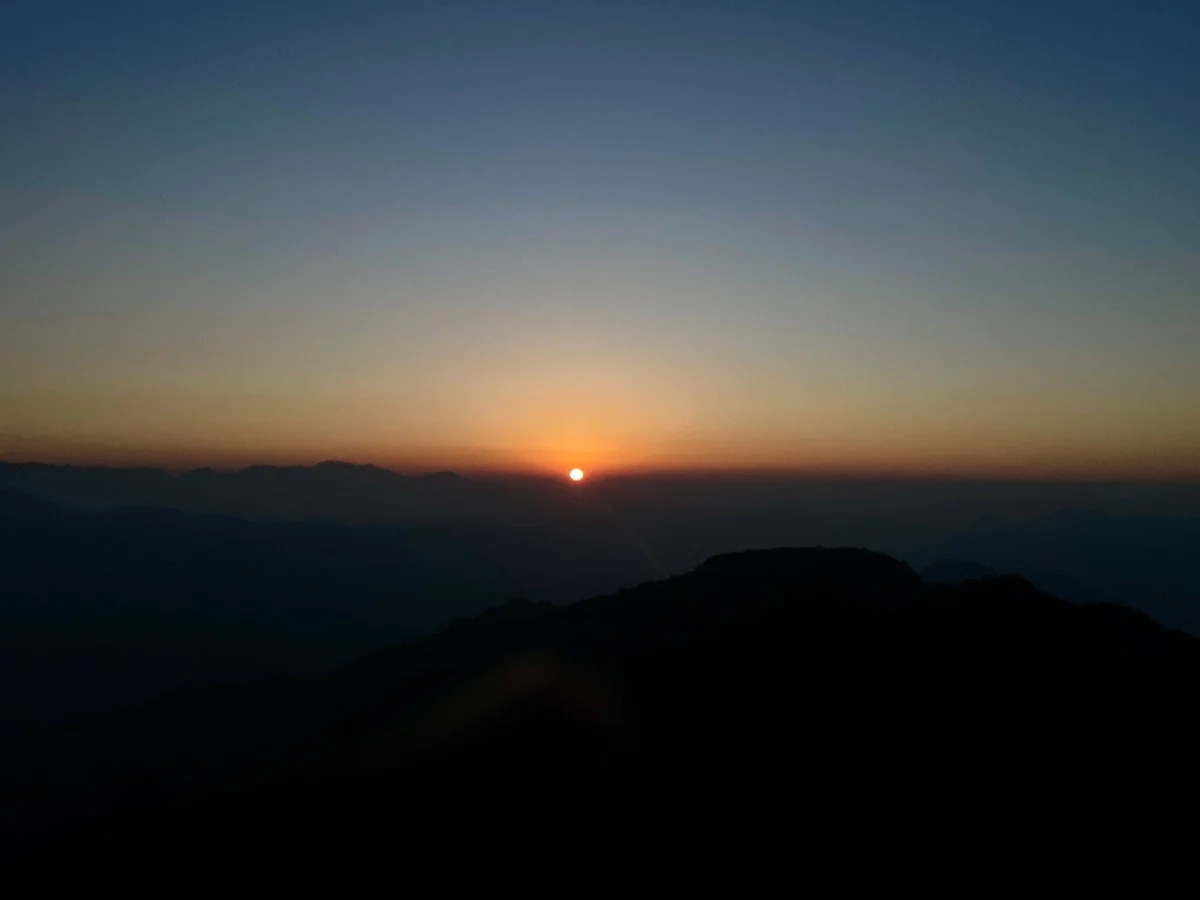
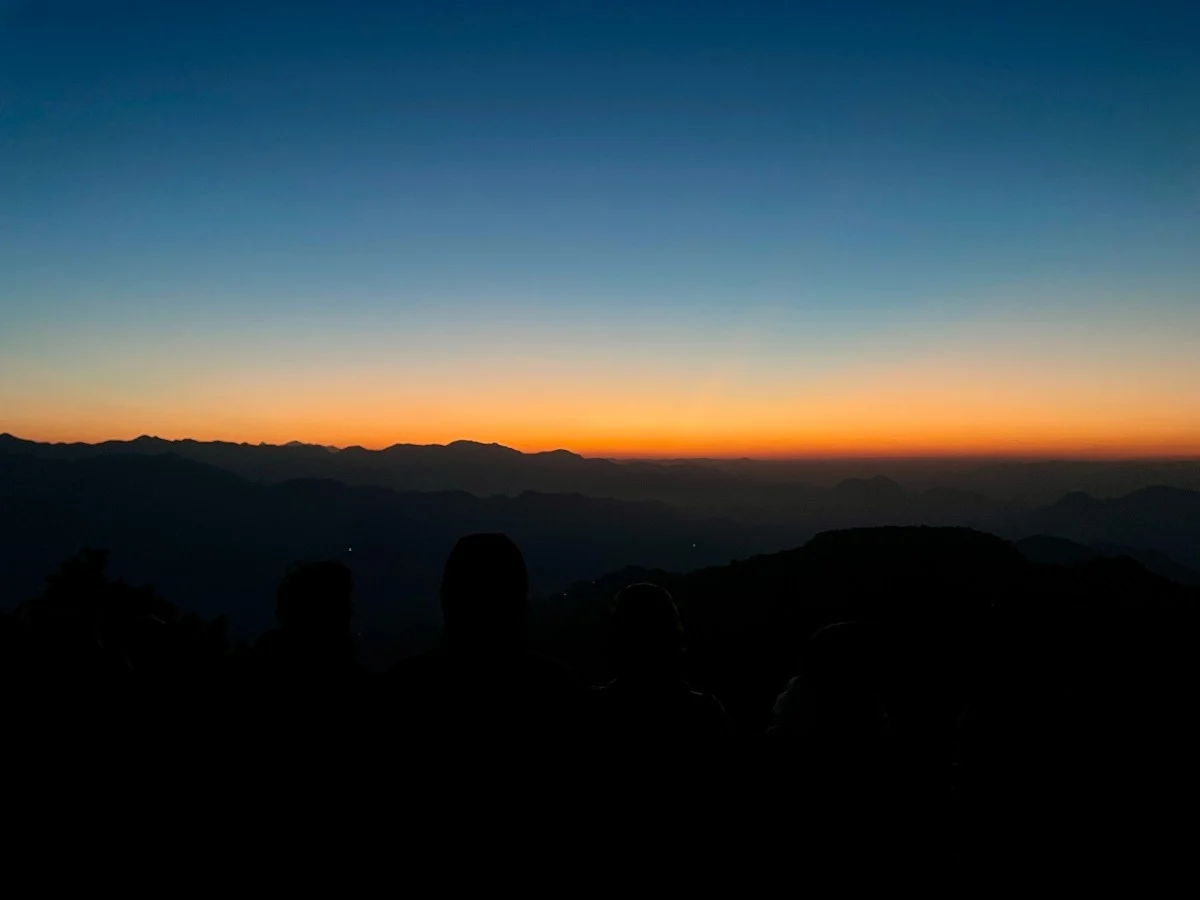
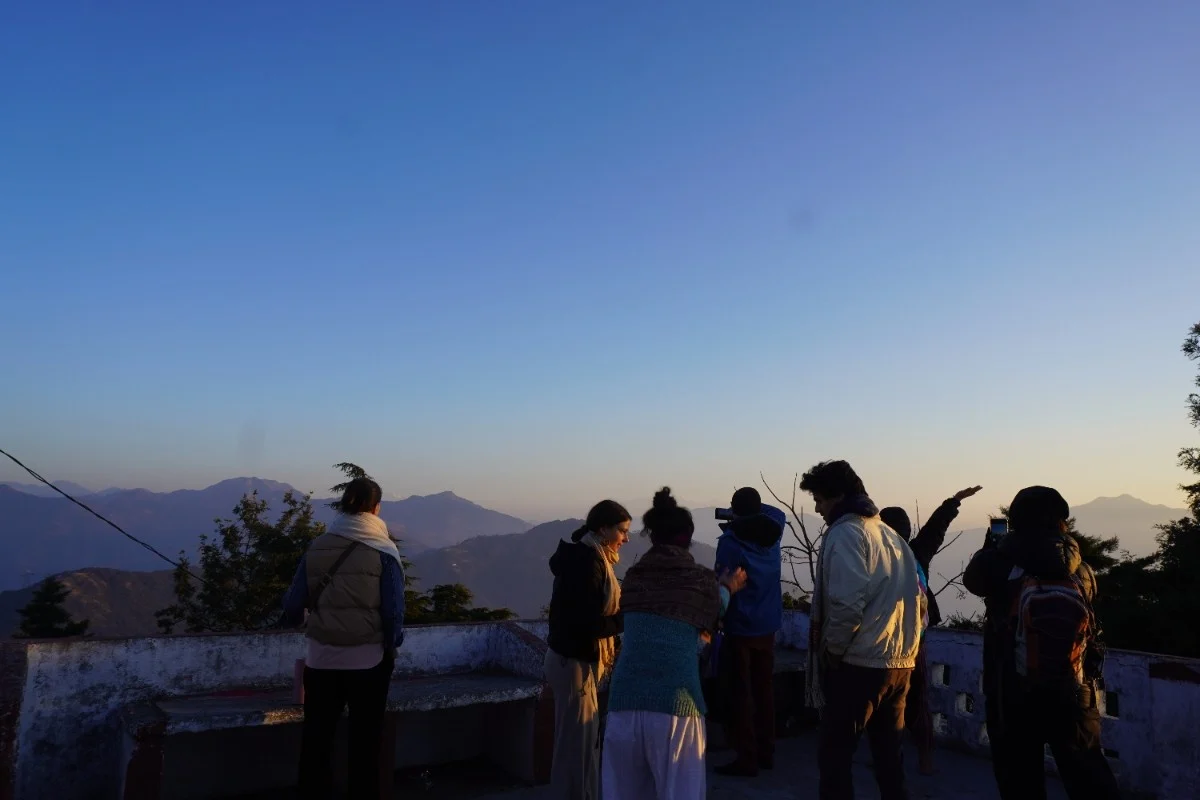
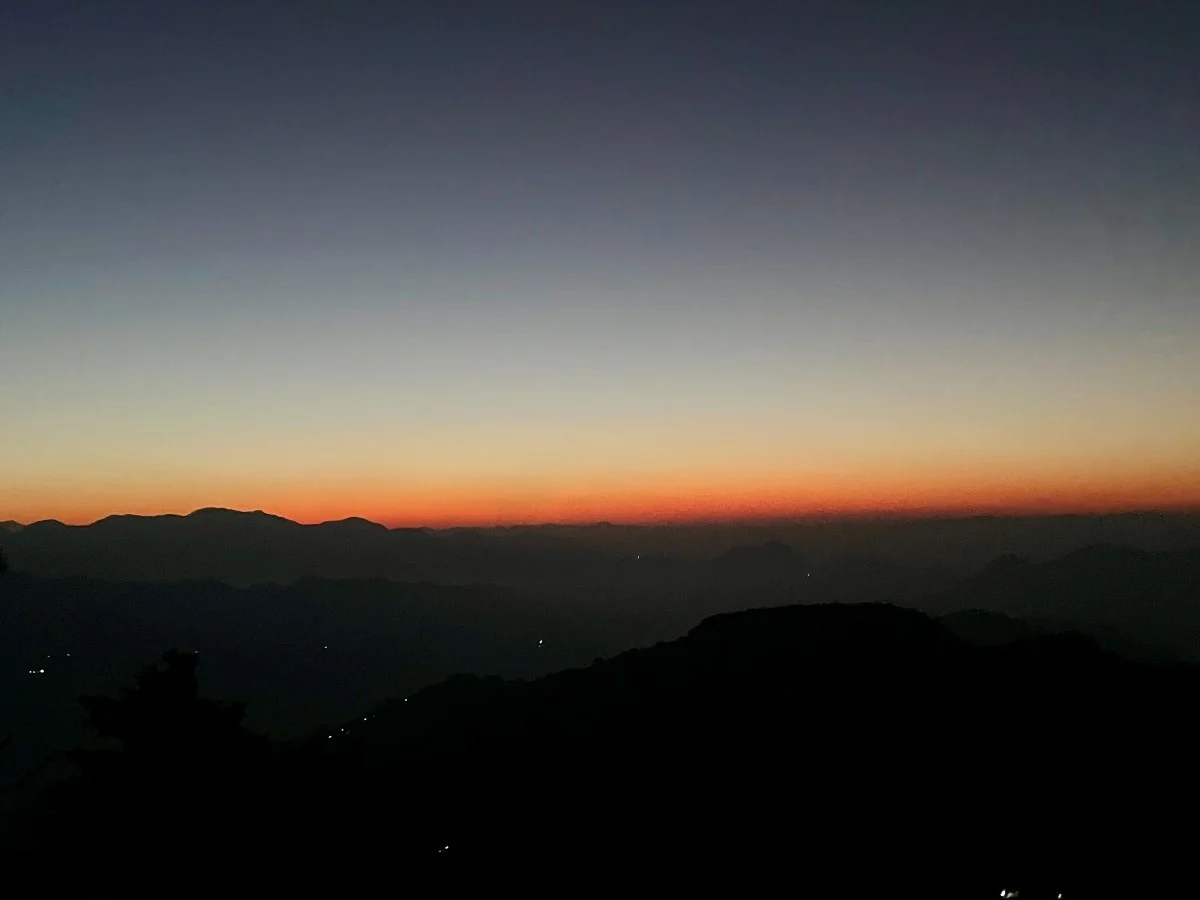
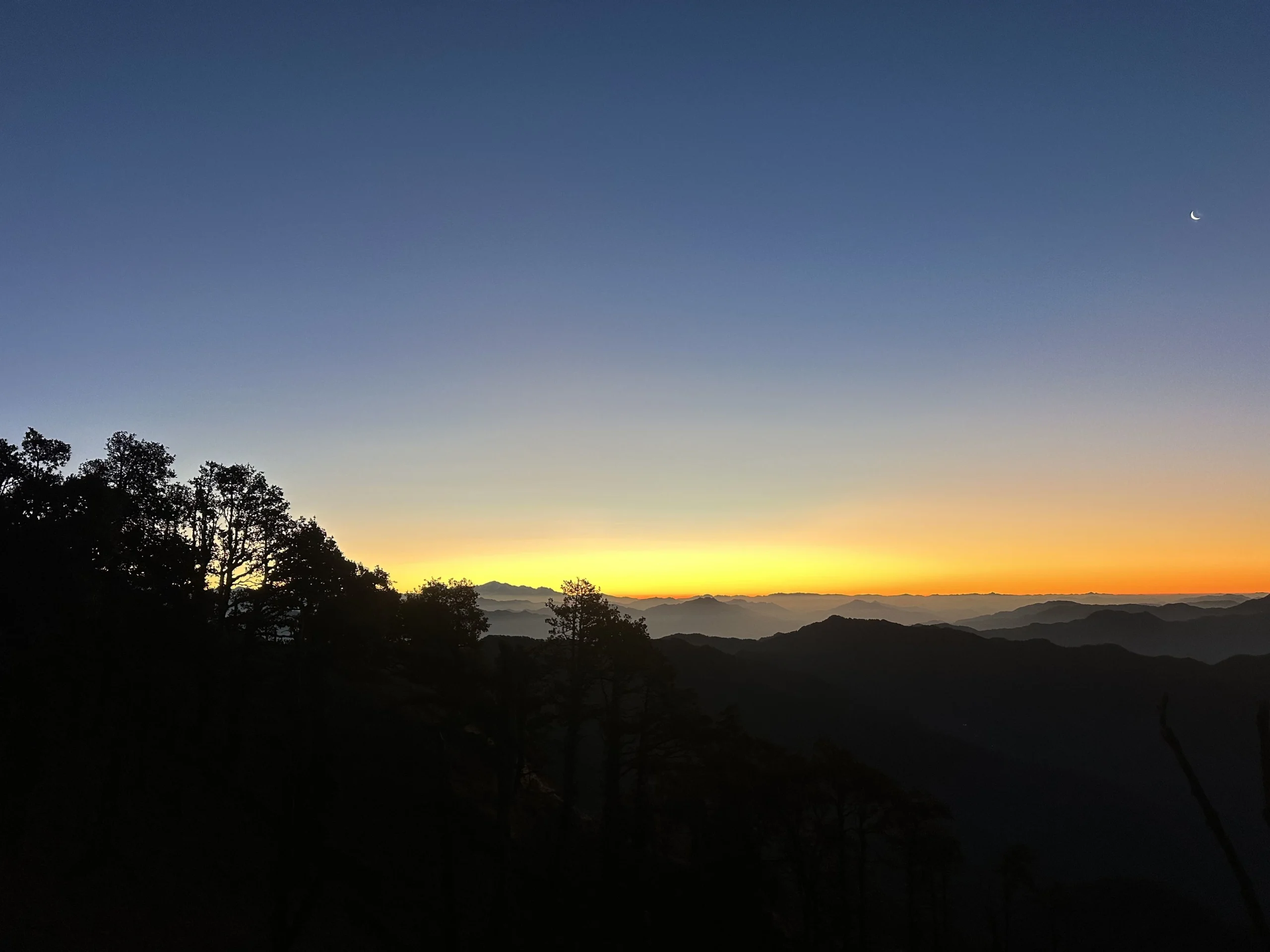
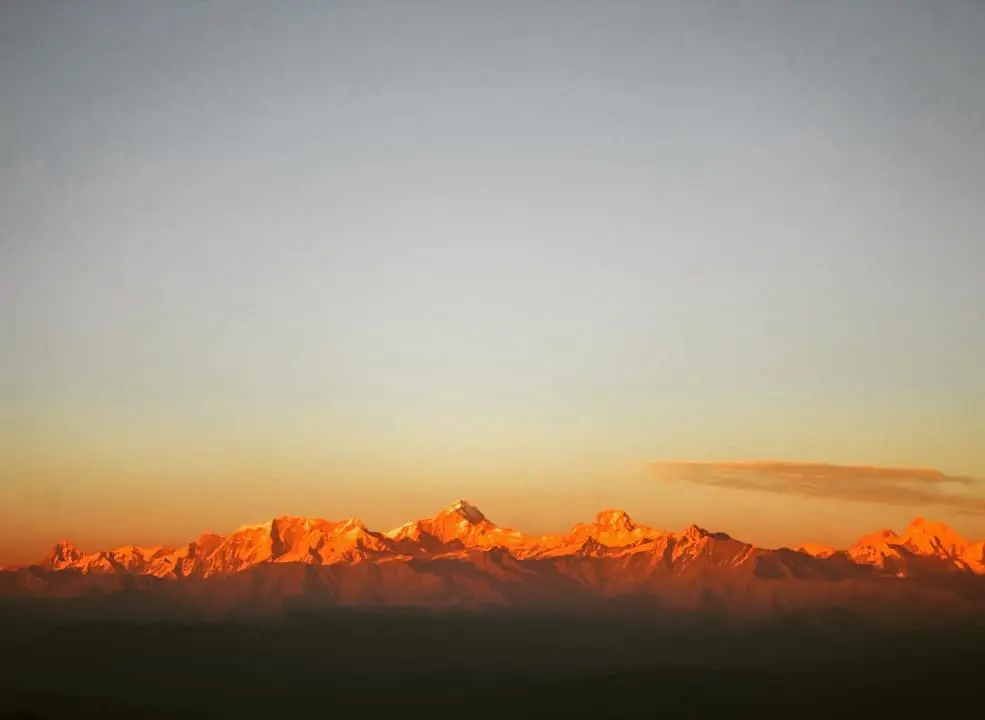
Standing on the Kunjapuri Temple Trek ridge before sunrise, watching the sky slowly catch fire behind a wall of Himalayan peaks, it becomes very clear why this little day hike near Rishikesh has become so loved.
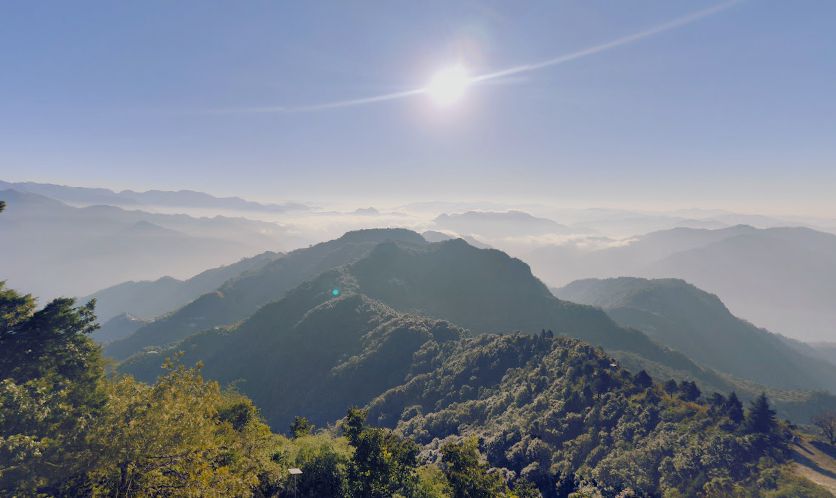
Kunjapuri Temple Trek is short, easy to moderate, and fully doable as a one day trek near Rishikesh, but it gives you a rare combination in a single outing – a proper forest trail, hidden waterfalls, traditional Garhwali villages, and a powerful Shaktipeeth temple with 360 degree views of Swargarohini, Bandarpunch, Gangotri, Jaonli, Jogin, Shivling, Janhukut and Chaukhamba along with the Ganga valley and Doon plains.
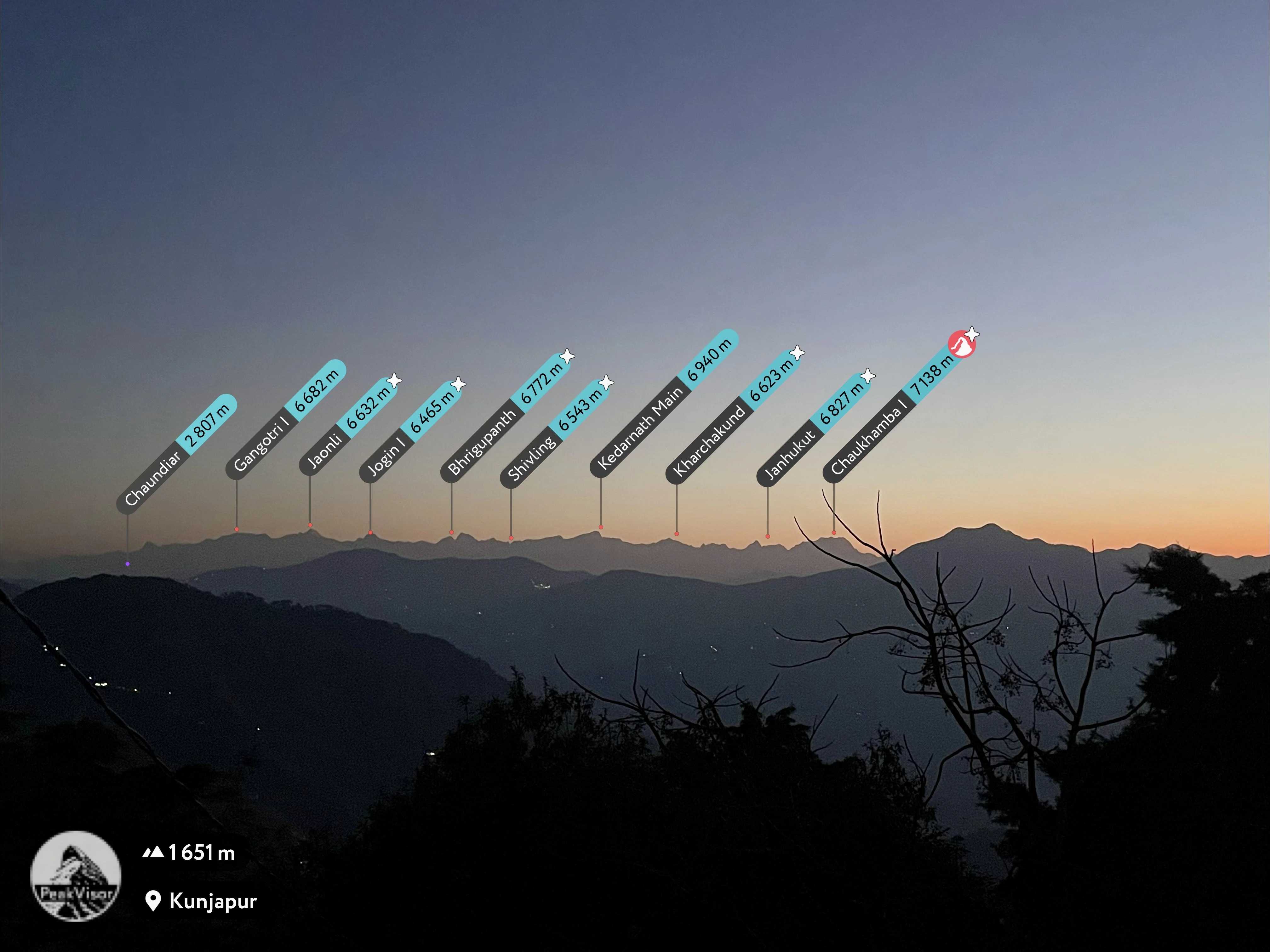
For most people, the “main question” is simple: is Kunjapuri sunrise trek worth waking up at 4-5 am for? If you enjoy sunrises, mountains, and a bit of walking, the honest answer is yes; you get a big mountain feel and a very tangible spiritual atmosphere without needing many days off or hardcore trekking experience.
What is special about Kunjapuri Temple Trek?
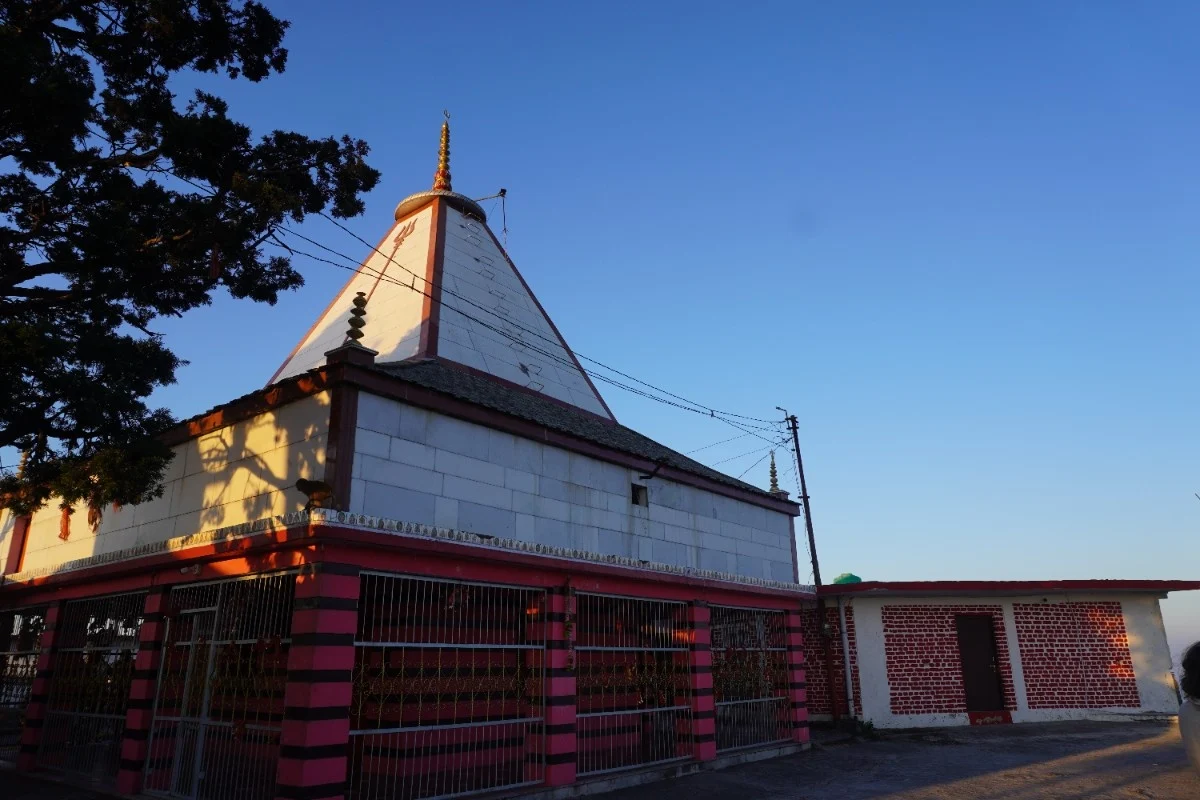
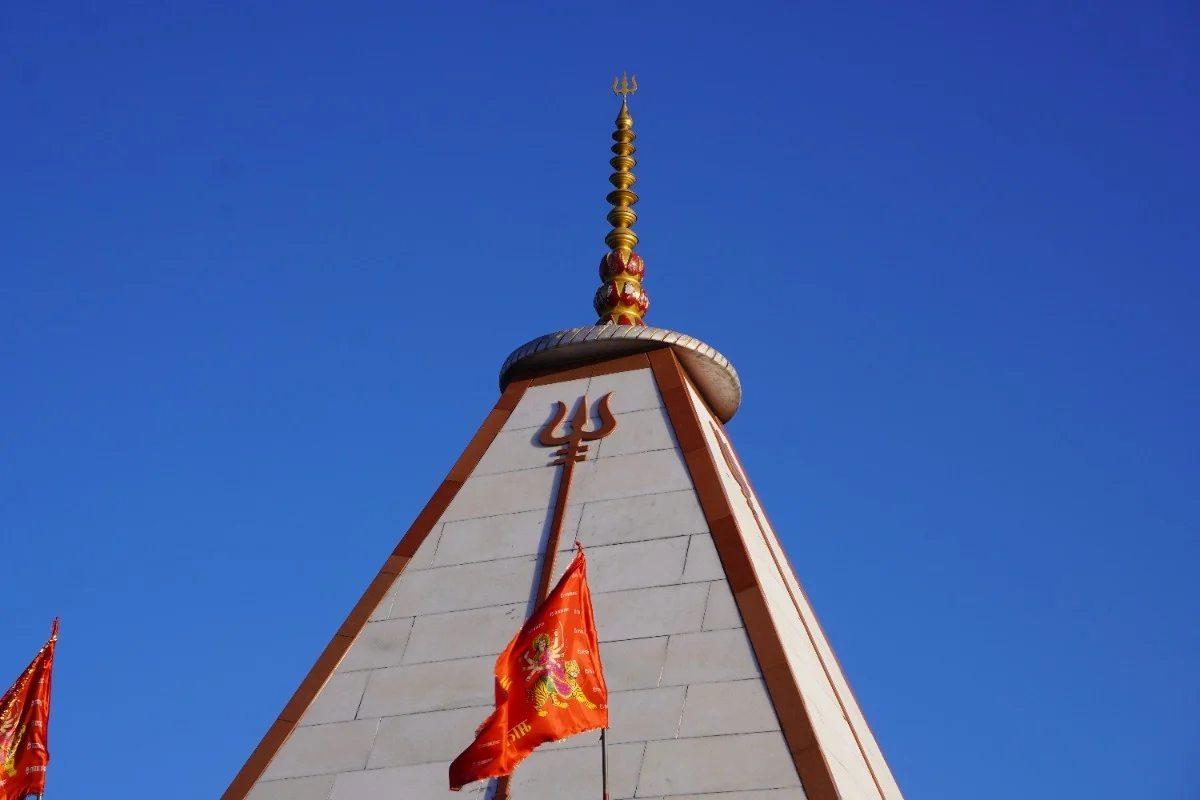
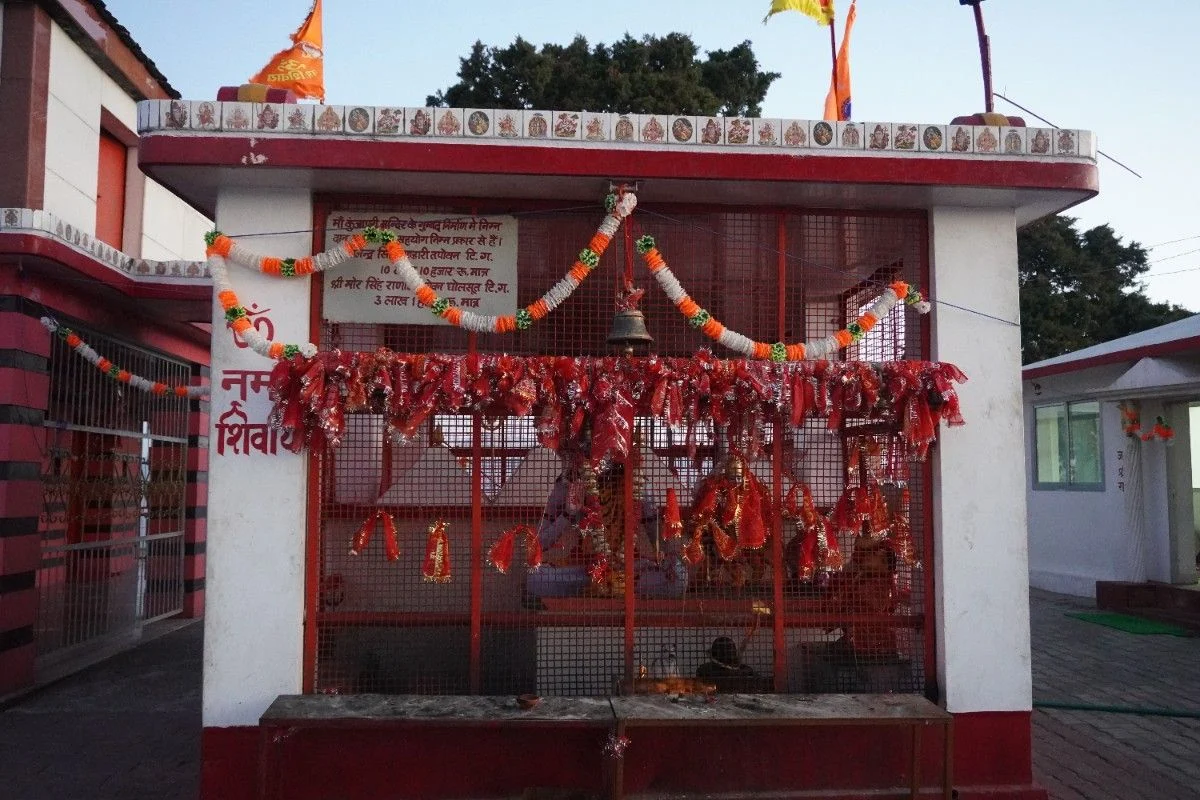
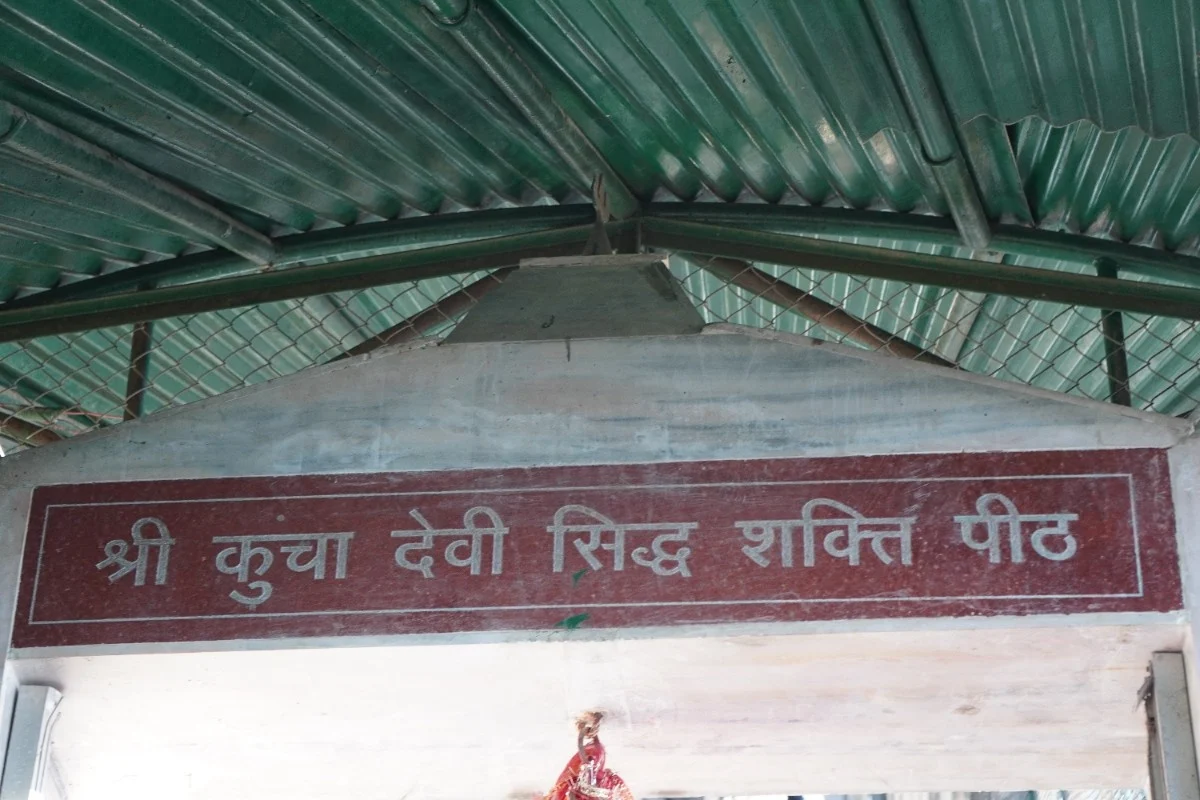
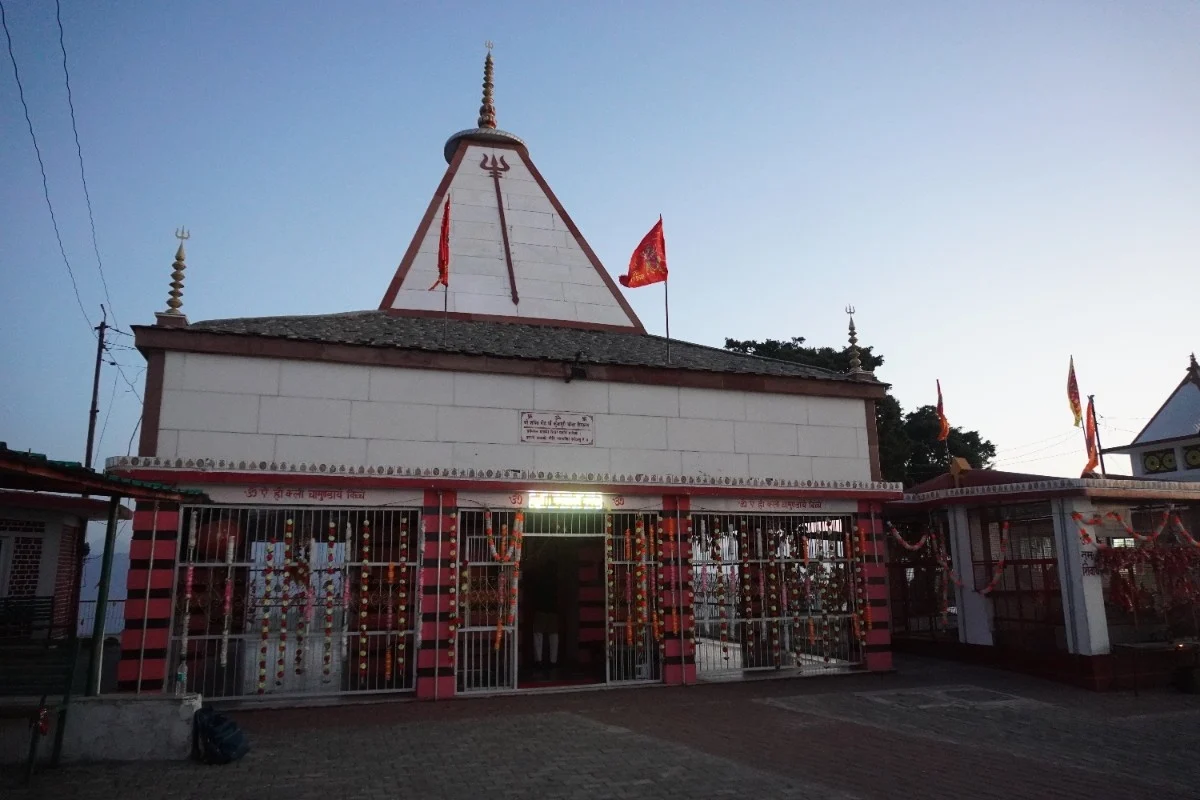
Kunjapuri Devi Temple sits at about 1,676 m on a hilltop above Rishikesh and Tapovan, close enough to be accessible in a couple of hours yet high enough to give you wide, clean views of the Garhwal Himalayas. It is one of the important Shaktipeeths in Uttarakhand, which means pilgrims come here for darshan throughout the year, while trekkers and travellers come for the sunrise, the forest walk and the feeling of being on a proper Himalayan ridge without a long approach.
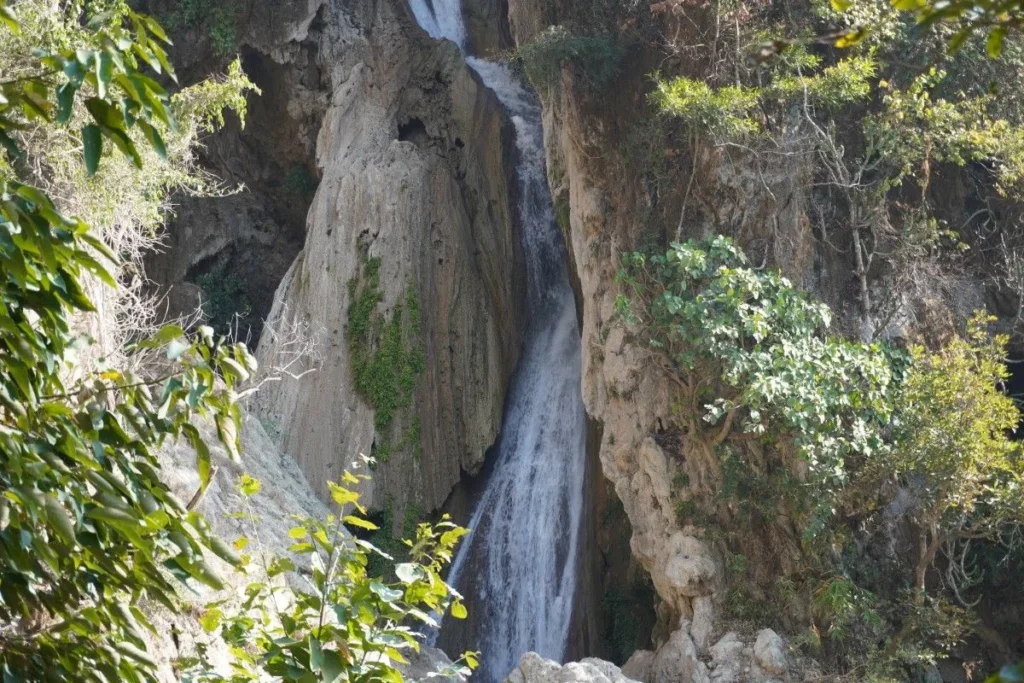
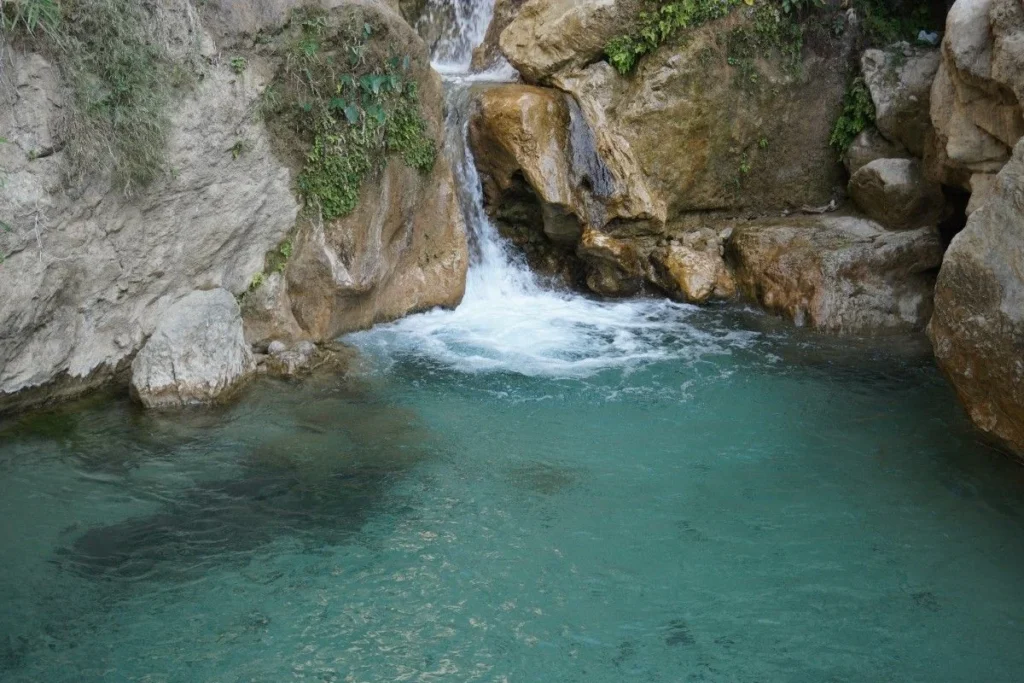
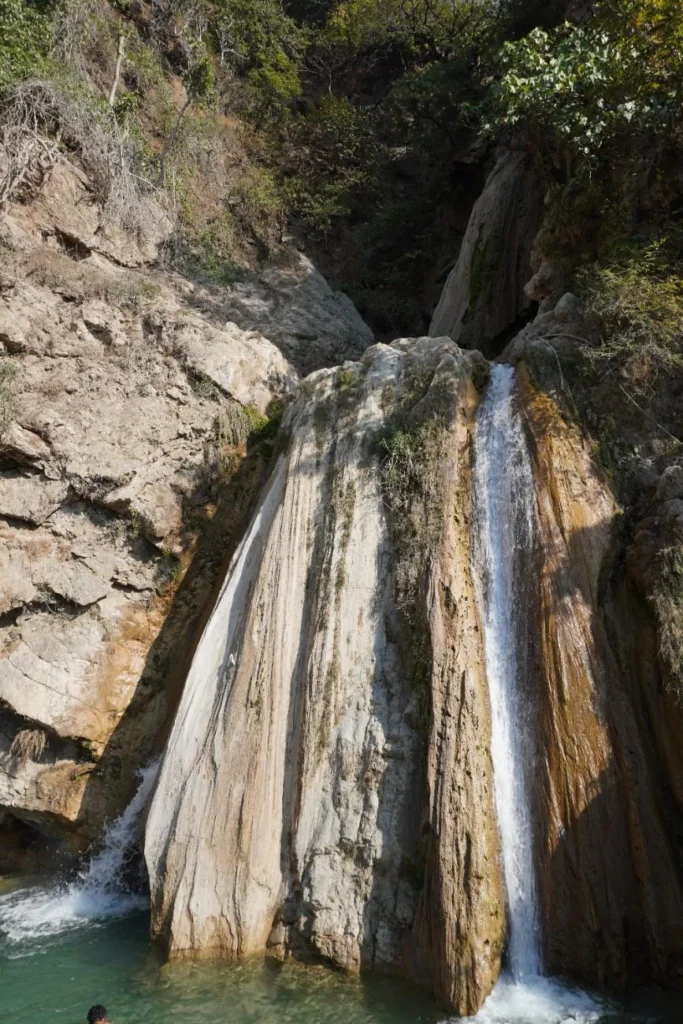
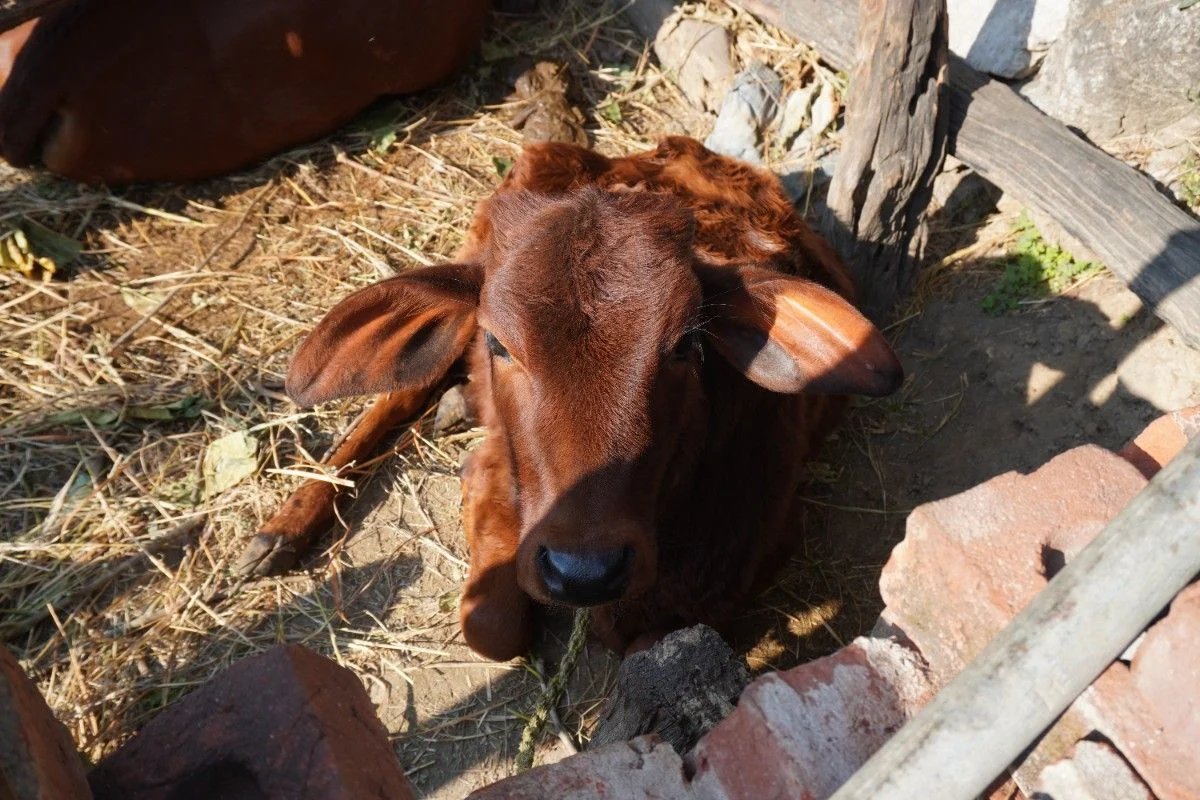
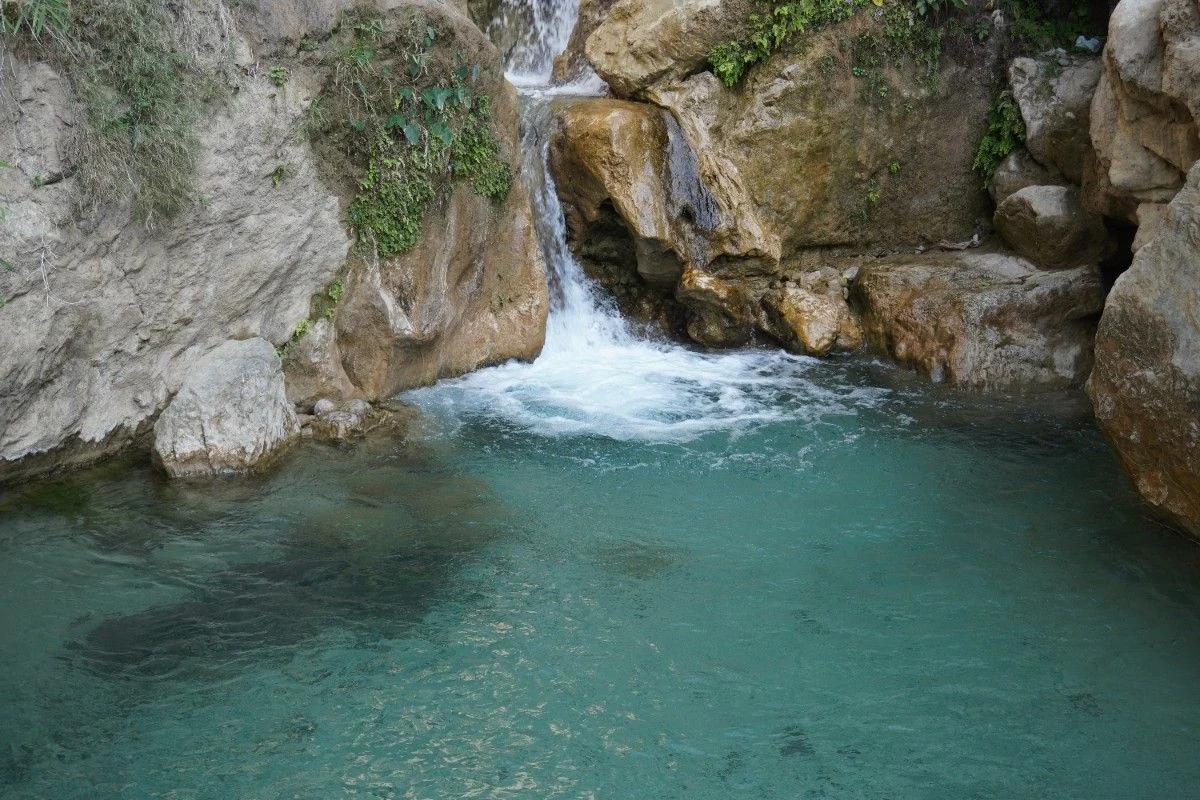
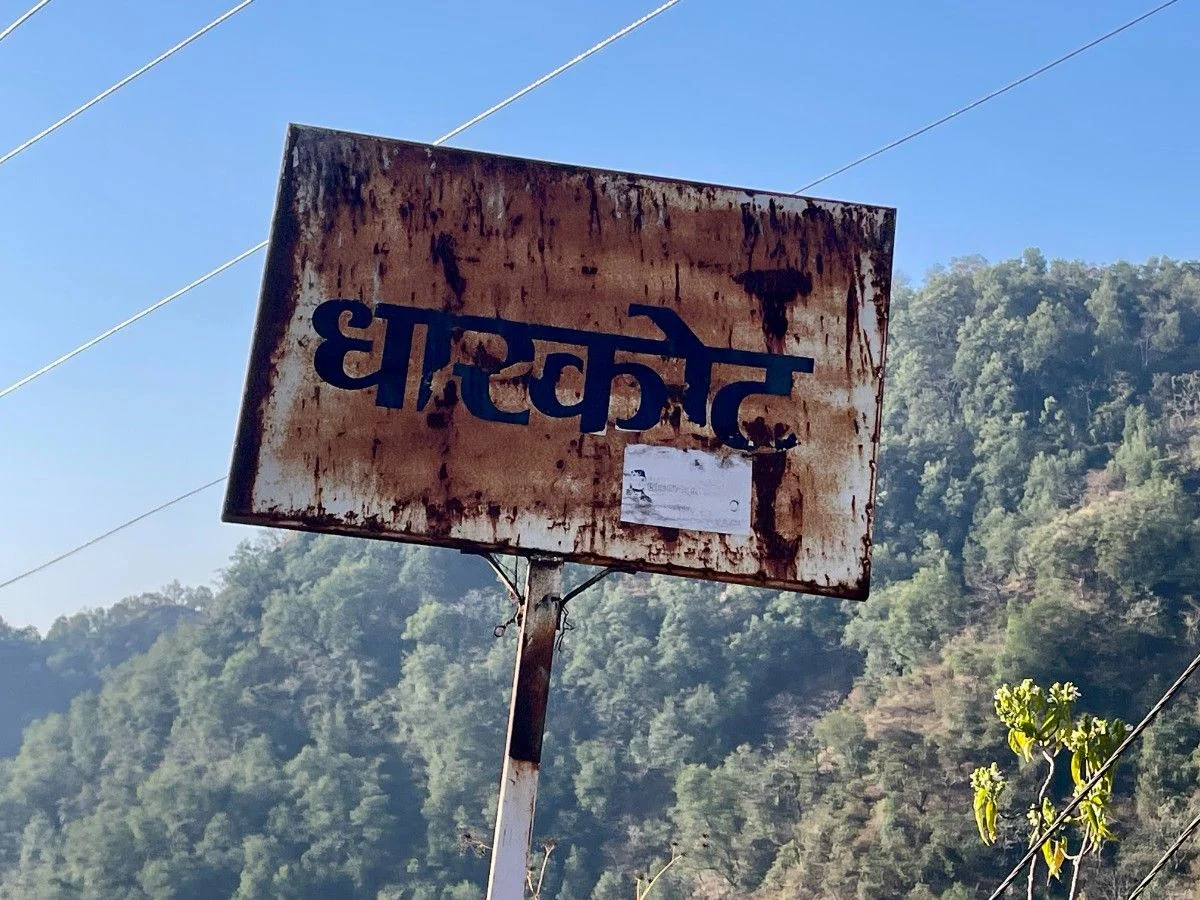
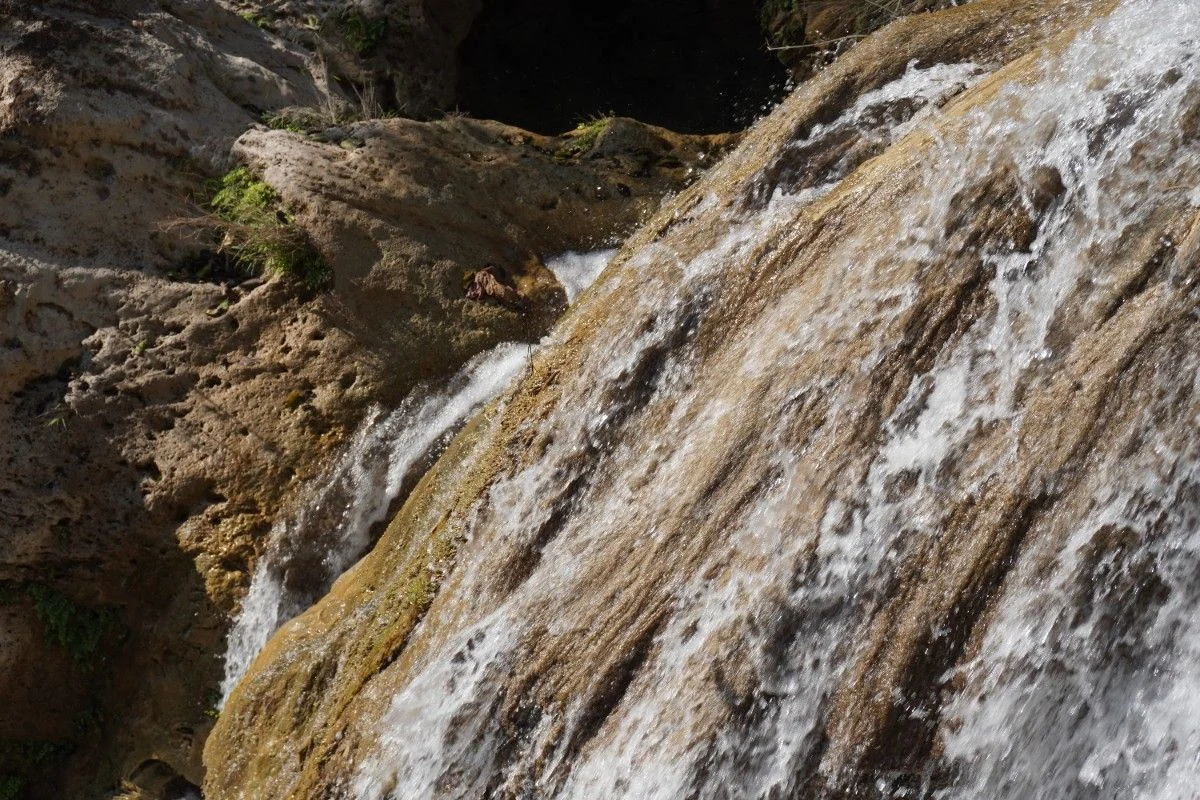
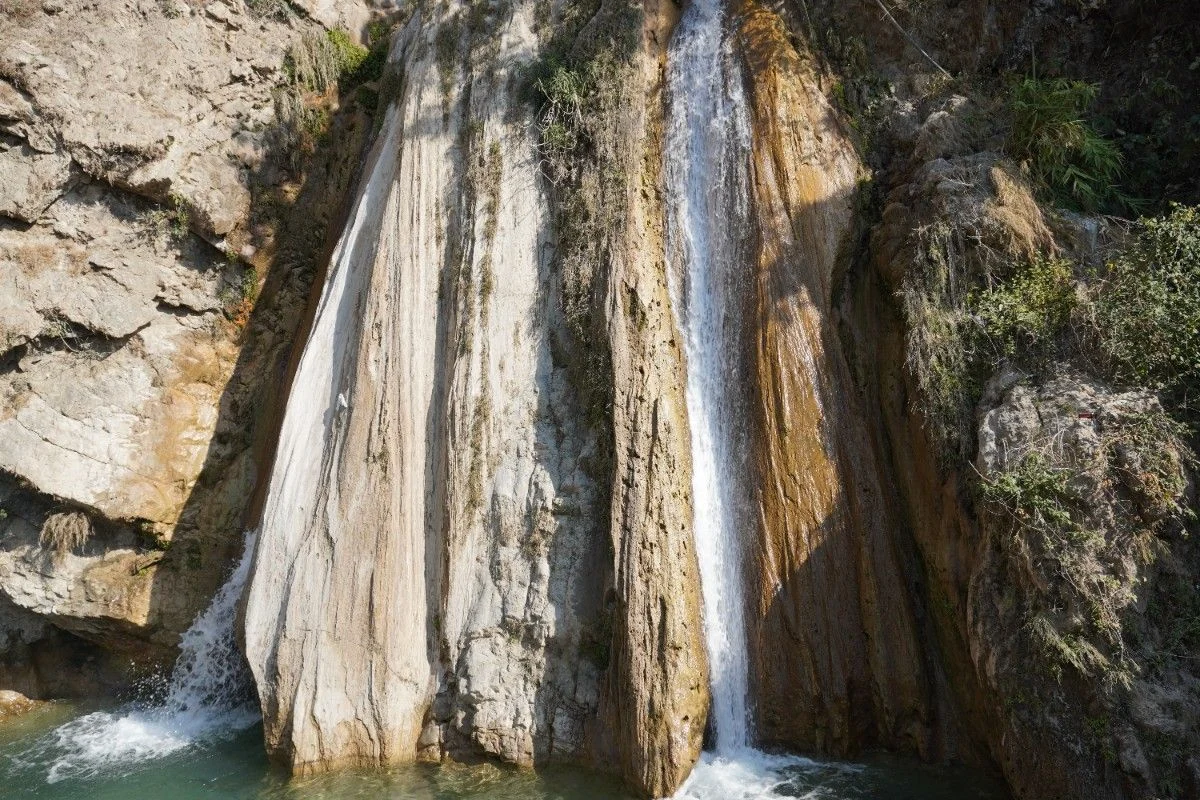
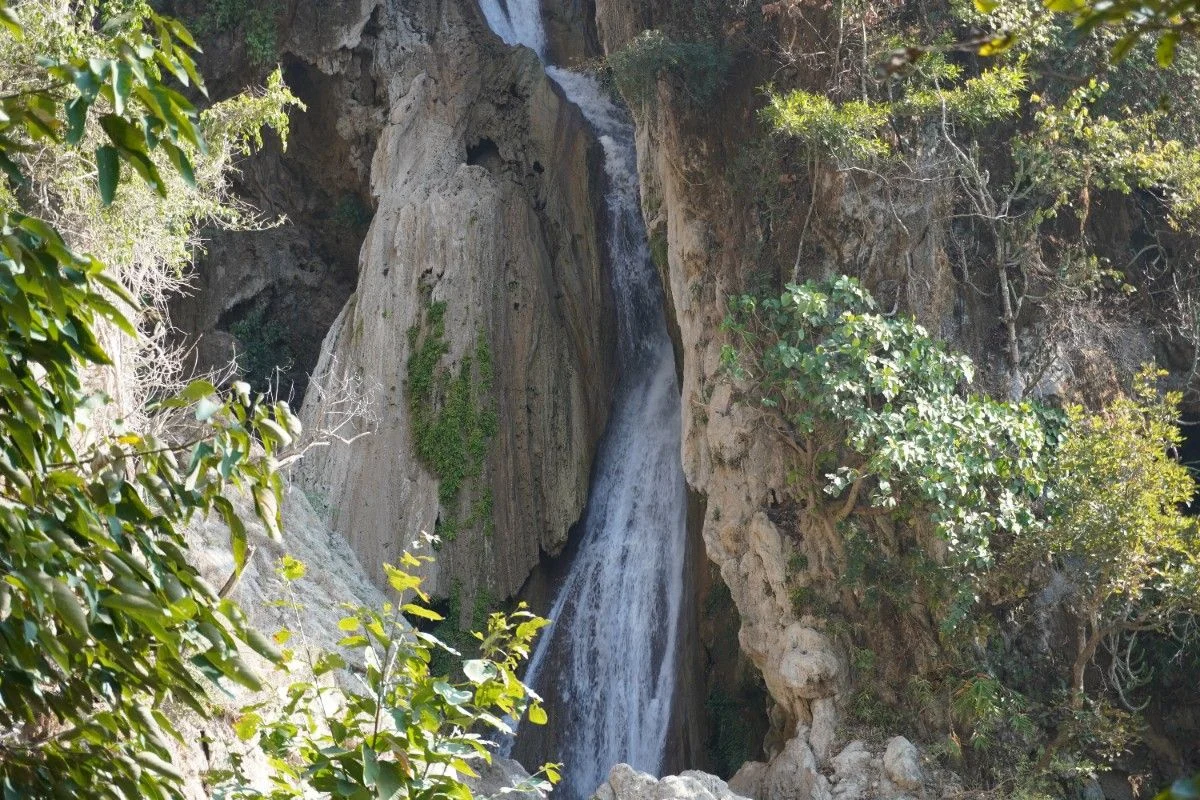
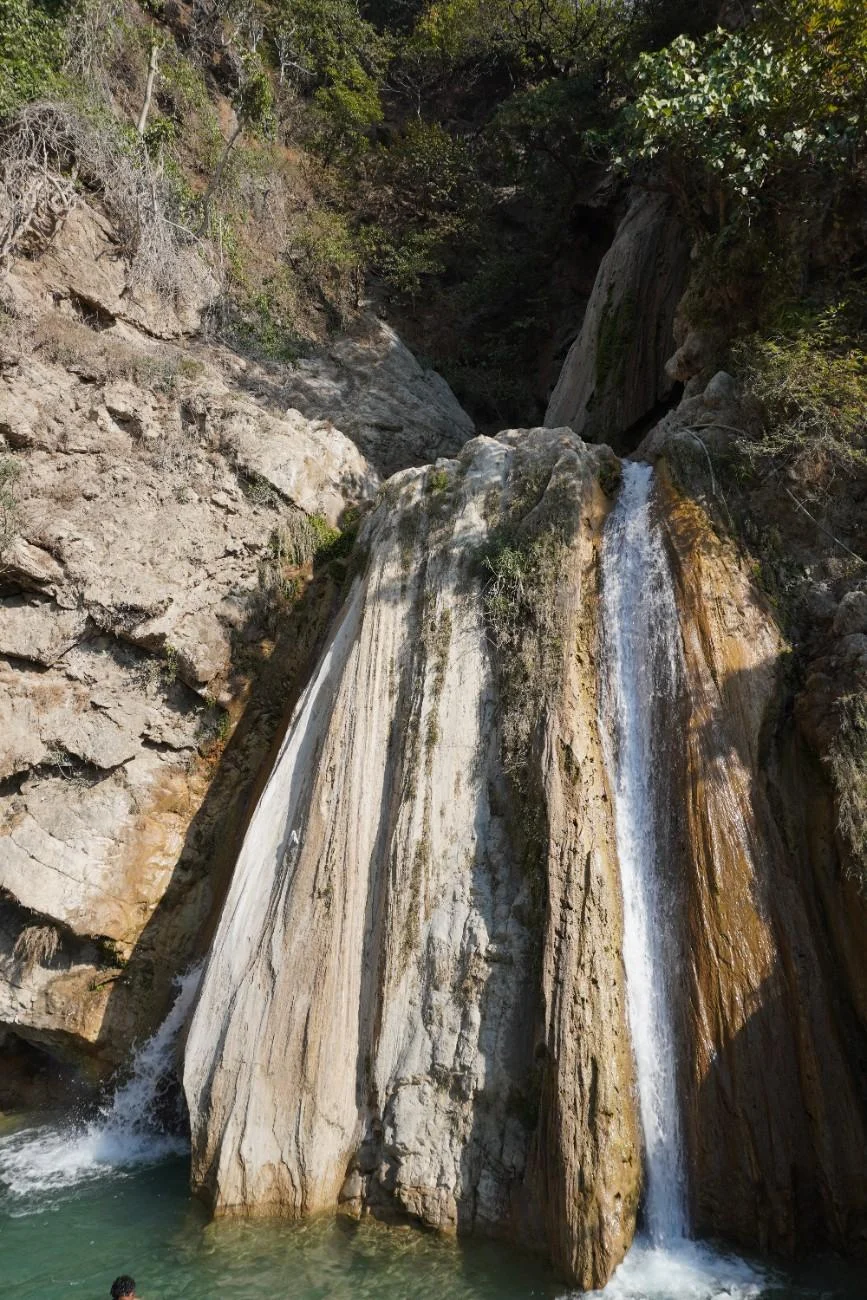
The trek itself is flexible. You can do a full uphill plus downhill in a day, a popular drive up, trek down version, or even a simple drive both ways just for the sunrise if you are not in the mood for hiking. Along the way, you pass Secret Waterfall (another trail), Neer Garh Waterfall and villages like Pater, Kodarna, Dharkot and Barkot, where stone and wood houses, terraced fields and friendly kids remind you that these are living mountains, not just a backdrop for Instagram.
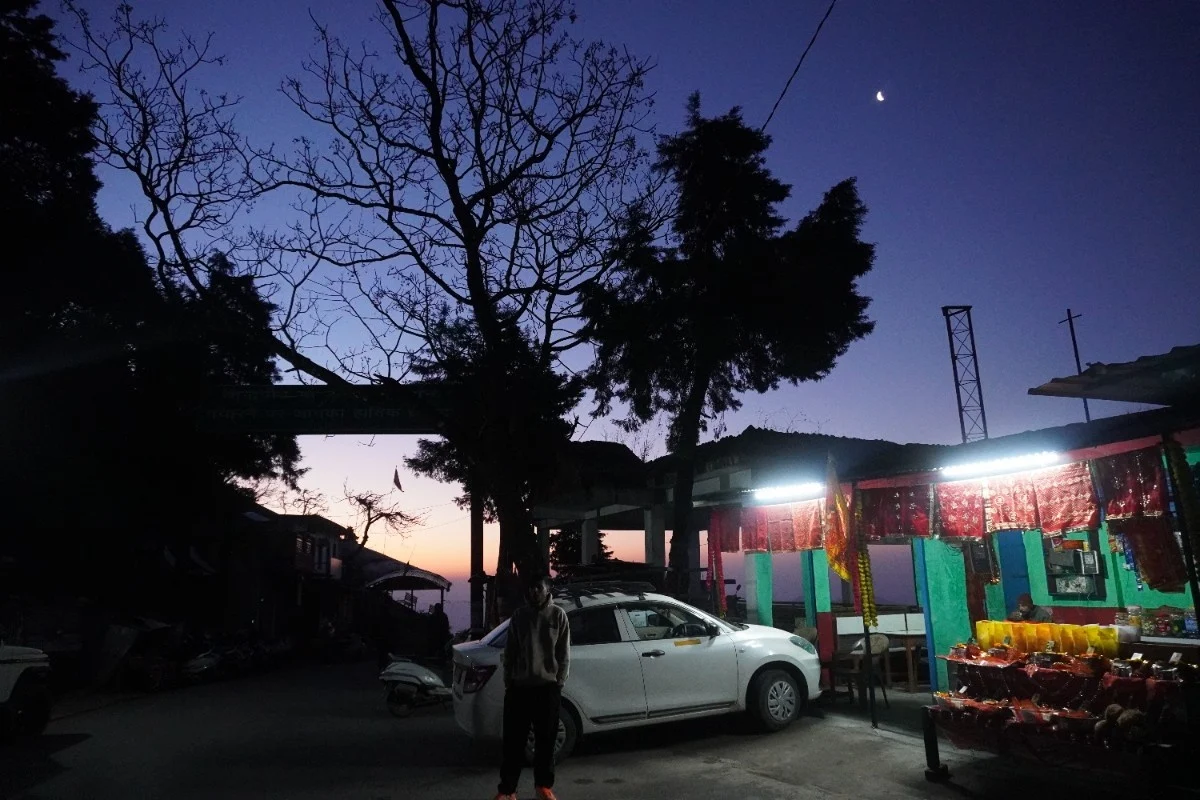
Sunrise and sunset are both big highlights here. Broadly, sunrise at Kunjapuri is between about 5:15 – 5:45 am in the summer months and between roughly 6:30 – 7:00 am in the winter half of the year, so most sunrise drives start from Rishikesh around 4:00 am. If you are more of an evening person, sunset views are also beautiful, with colours shifting over the snow peaks and the Doon and Rishikesh lights slowly coming on below you.
Quick facts for planners
| Value | Attribute |
| Kunjapuri Temple altitude | About 1,676 m or 5,500 ft above sea level |
| Typical trek distance | Jio and Airtel usually work at temple top, forest sections are often patchy |
| Usual door to door duration | 6-8 hours for drive up, trek down plans (Rishikesh to Rishikesh) |
| Ideal trip type | Half day Rishikesh trek, sunrise photography, short spiritual getaway |
| Mobile networks | Jio and Airtel usually work at temple top, forest sections often patchy |
Kunjapuri Temple Trek Itinerary
The nice thing about Kunjapuri Temple Trek itinerary is that there is not just one correct plan; you can pick what suits your fitness, time and mood. For fast Rishikesh visitors, the drive up, trek down pattern gives the maximum variety in minimum time, while more experienced hikers often enjoy doing the full forest loop in one long day.
Drive Distance: 24 km; 1 hour
Descend: 8-9 km; 2-4 hours
This is the most popular and practical plan for many visitors. Very early morning, you leave Rishikesh or Tapovan by cab and drive up the mountain road to Kunjapuri, reaching the parking area in about 45-60 minutes.
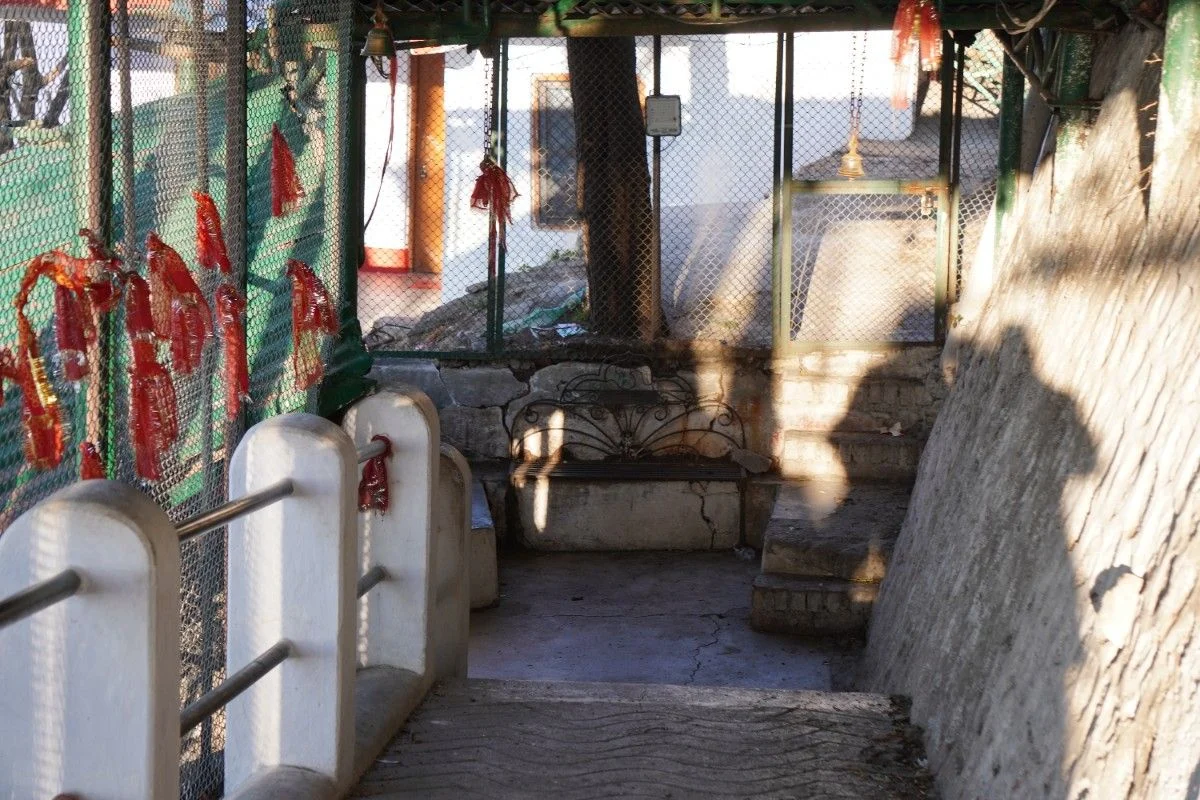
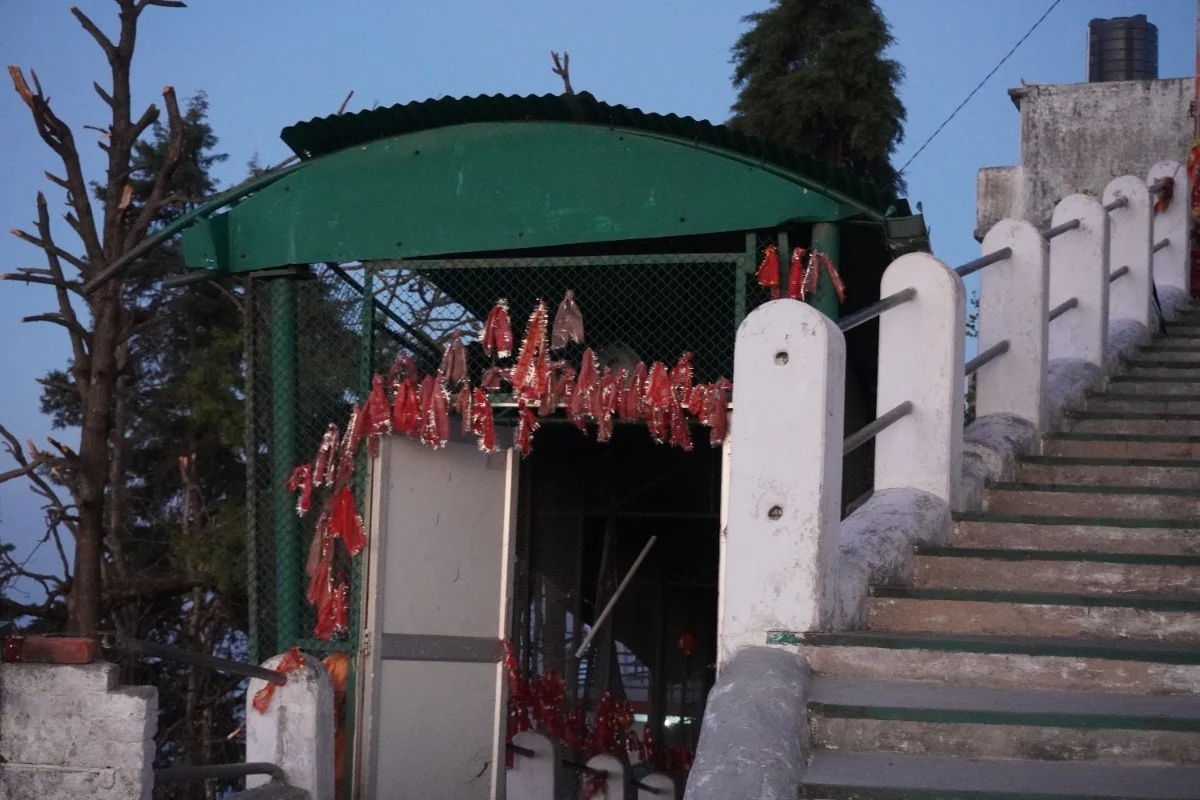
From the parking, there are about 80 fairly steep steps to the temple; short but enough to wake you up if you were still sleepy. You reach the temple before sunrise, find a quiet spot facing the peaks and then just watch as the snow line and the sky behind Swargarohini, Bandarpunch, Gangotri, Chaukhamba and other summits change colour from deep blue to orange and gold. After darshan, a bit of yoga or meditation if you like, and some time soaking in the views, you start the trek down.
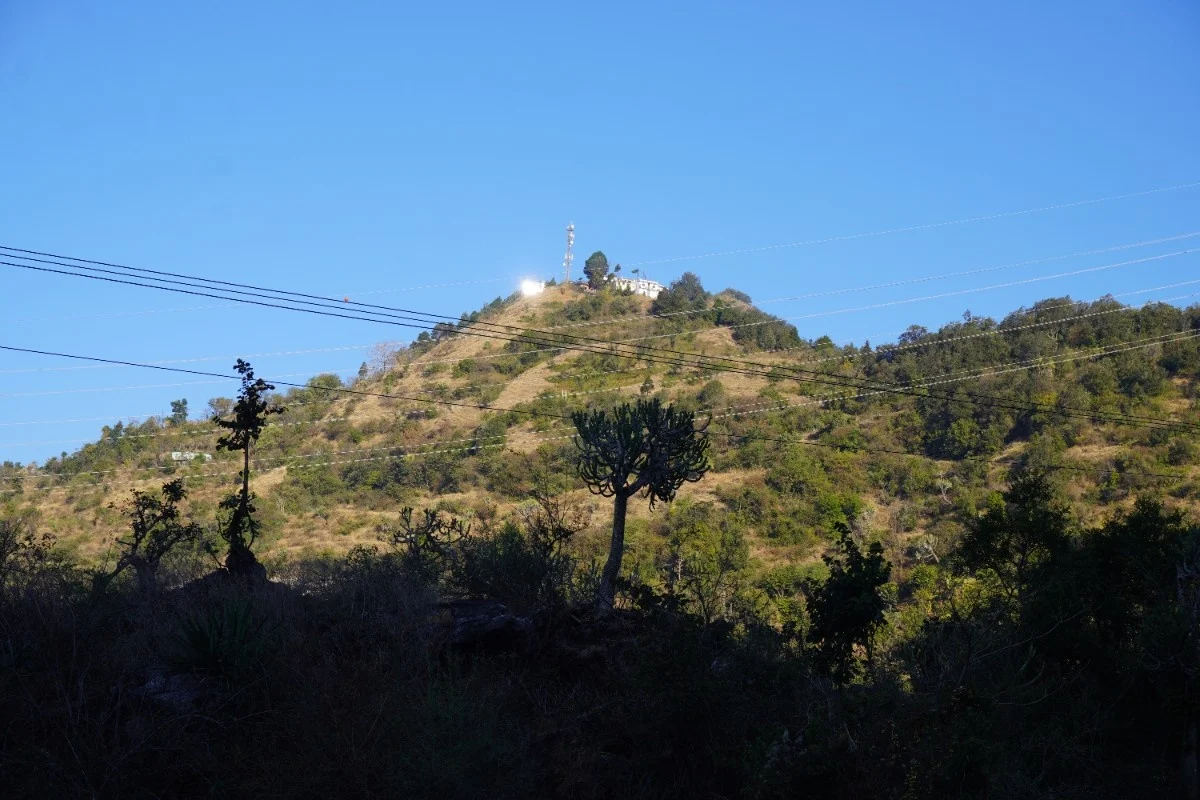
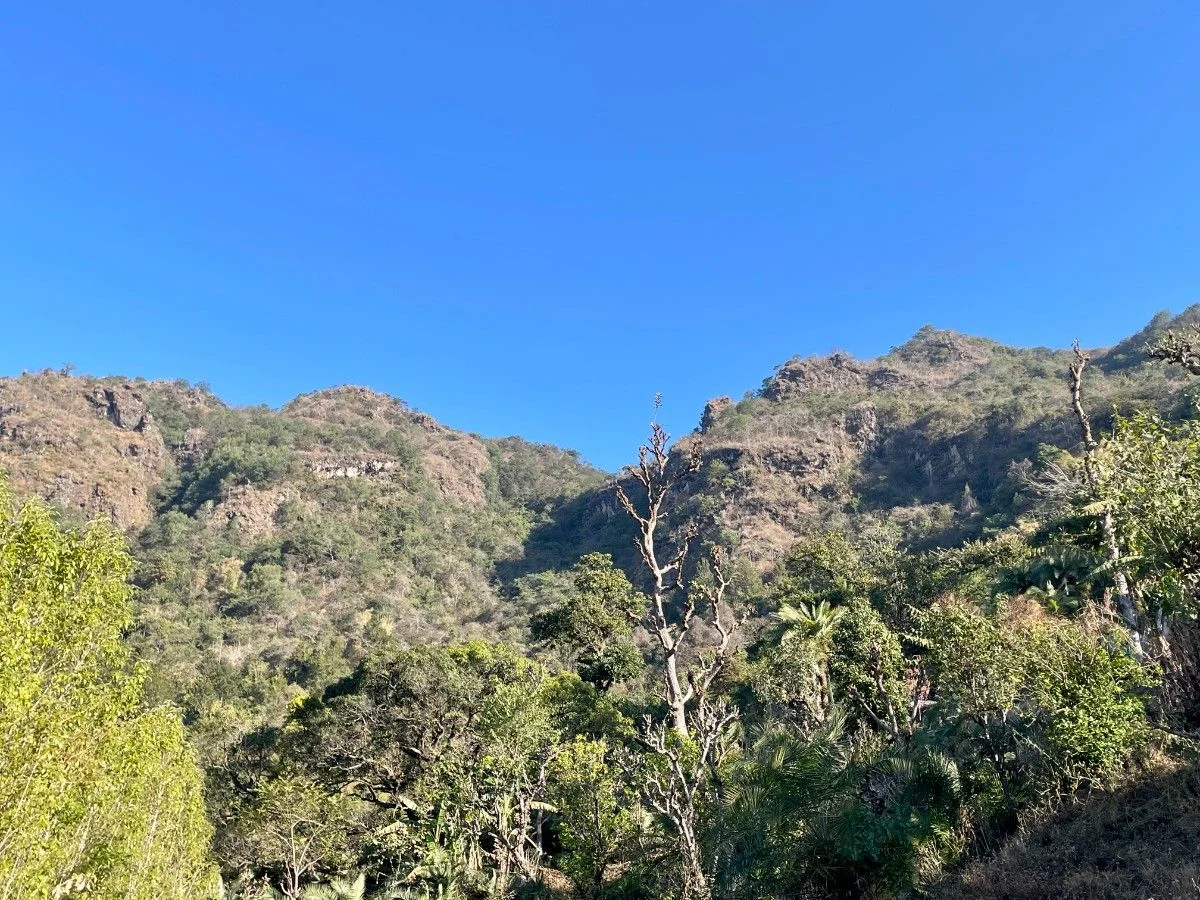
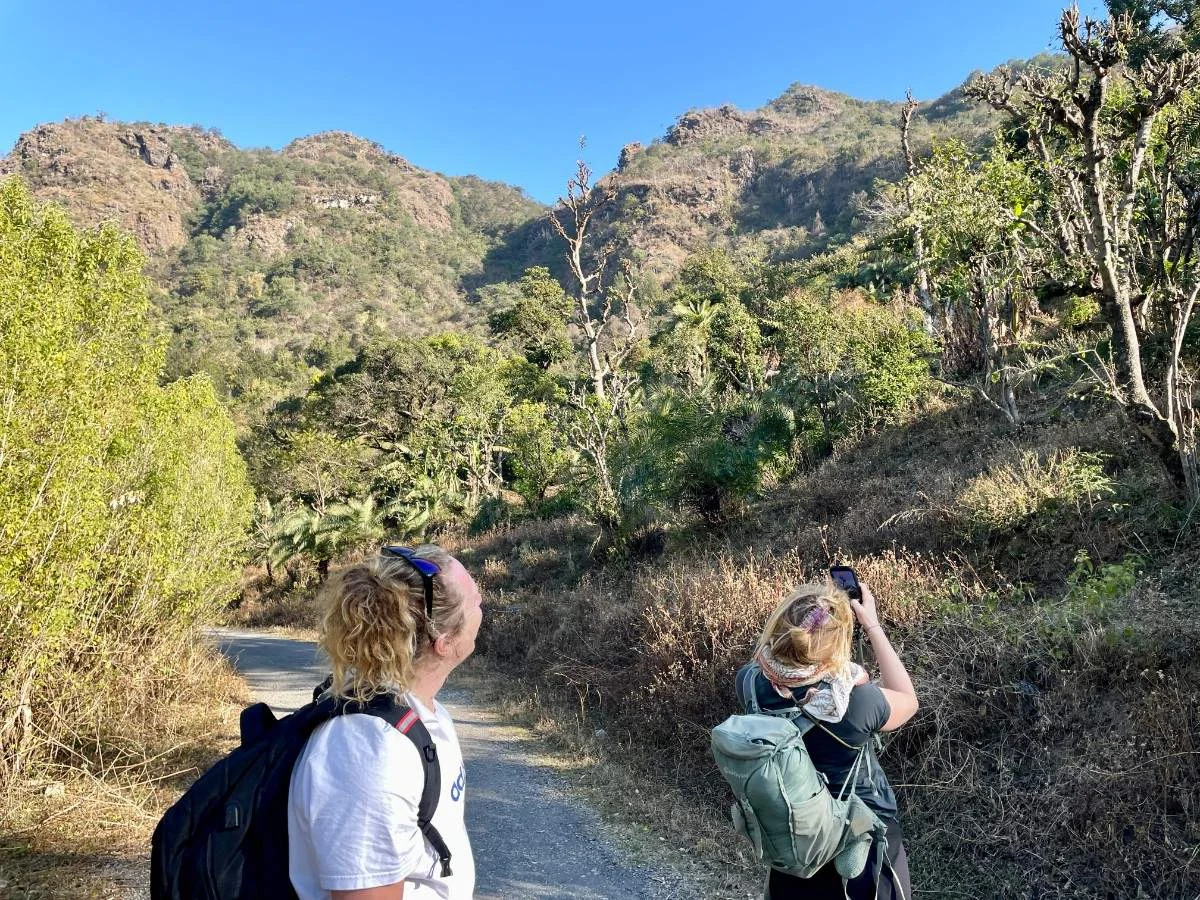
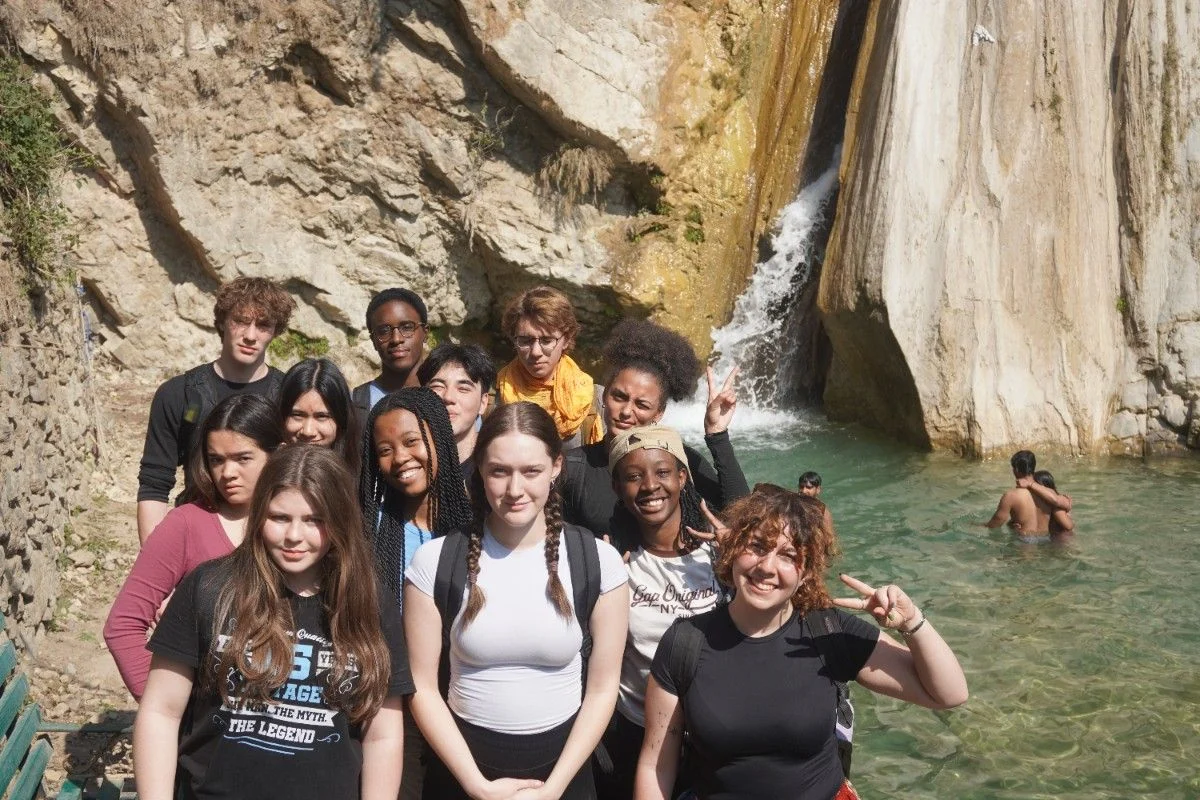
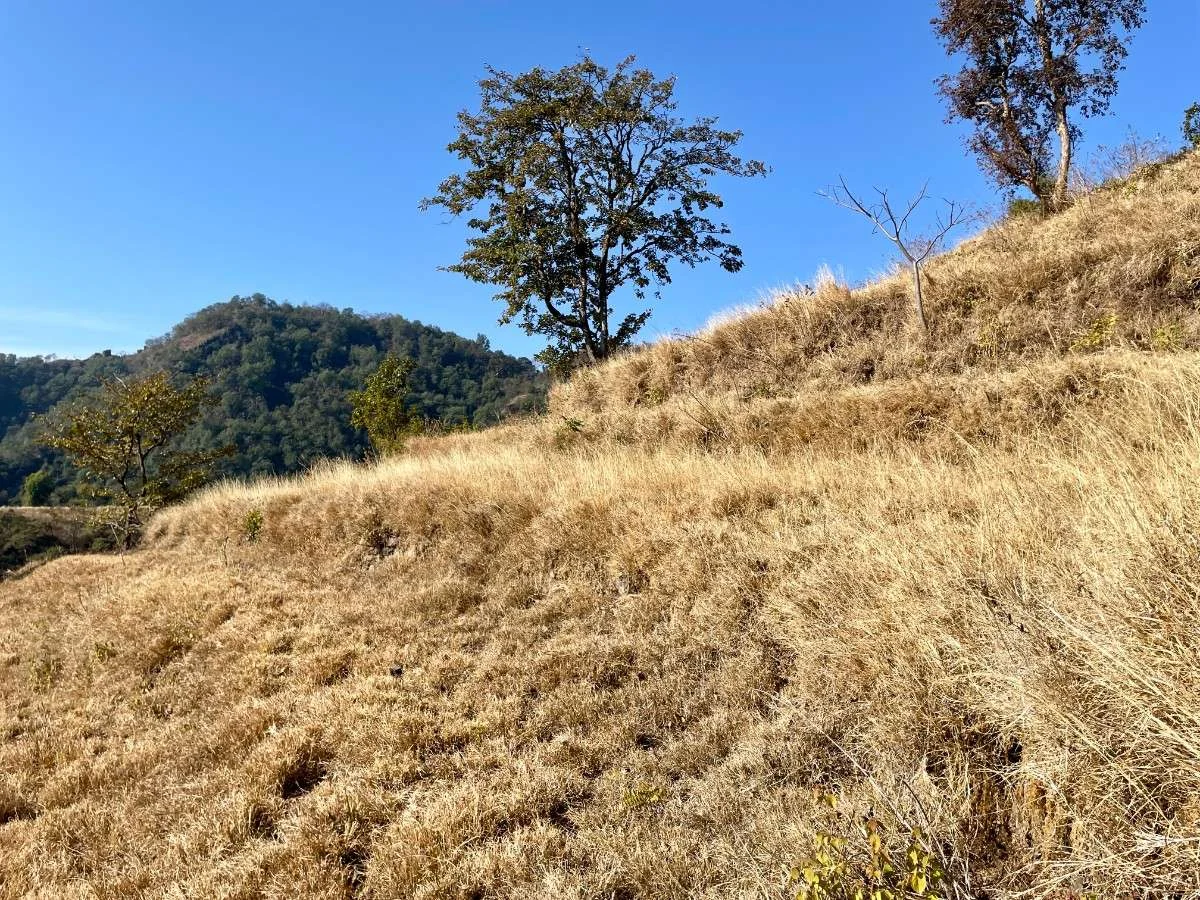
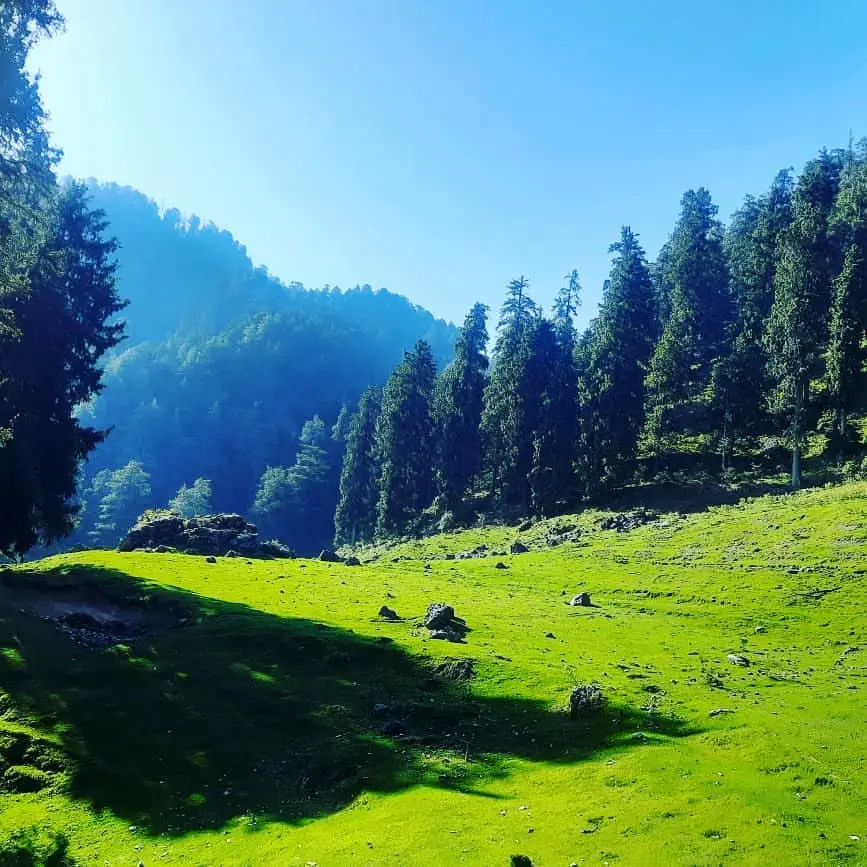
The downhill route often used goes from Kunjapuri through villages like Pater and Dharkot and via Neer Waterfall back towards Tapovan, making a 8-9 km pleasant descent on forest paths and village trails. You walk through oak and pine forests, pass small fields and homes, meet villagers on their morning routines, and if time allows, take a dip at Neer Waterfall.

Trek Distance: 16-17 km
If you want a bit more physical challenge and do not mind a longer day, you can make it a complete Tapovan to Kunjapuri and back trek. Starting from Tapovan or near Neer Waterfall, you climb steadily for 8-9 km through forest, crossing villages like Dharkot and Barkot before finally reaching the road and then the stairs up to the temple.
This uphill section usually takes around 4-5 hours depending on pace and breaks, and is best done in the cooler part of the day, either starting very early for sunrise at the top, or planning a slightly later start for a daylight summit and then descending before dark.
The return descent is easier on the lungs but can be tough on knees if you hurry, so it helps to keep a steady, relaxed pace; this version is great if you want to feel you have earned your temple visit and are okay with 26 km day overall.
Drive Distance: 48 km
For those travelling with elderly family members, very young children, or simply not feeling up for trekking, there is nothing wrong with making Kunjapuri temple a pure sunrise viewpoint plus darshan trip. You take a cab from Rishikesh or Tapovan, drive up in time for sunrise, climb the 80 steps, enjoy the views, attend aarti or quietly sit for a while, and then return by the same road.
You miss the forest sections and waterfalls, but you still get the main essence, the panoramic view of the Garhwal Himalayan peaks and the Shaktipeeth energy of the temple itself.
For many people doing a Rishikesh yoga retreat, this short temple only plan becomes a perfect early morning add on before their regular classes and Ganga aarti in the evening.
Inclusion and Exclusion
Price Inclusion
Transport: Transport from Rishikesh
Lunch: Lunch is included
Forest Entry and Permits: All required fuel charges, tolls, forest entry fees, and permits are covered.
Guide: A qualified guide will accompany you.
Emergency Kit: First aid medical kits are provided for safety.
Price Exclusion
Emergency Evacuations: Any charges related to emergency evacuation are not included
Personal Expenses: Any meals or accommodations outside of the provided itinerary or additional services not listed in the inclusions.
5% GST
Check the booking procedure, including details on booking deposits, payment terms, and the cancellation policy.
Sunrise and Sunset timings
Because the whole point of this trek for many people is that moment when the sun comes up over the peaks, timing matters. In the summer months, sunrise usually happens between about 5:15 am and 5:45 am, so most groups leave Rishikesh around 3:45-4:15 am depending on the exact month.
In the winter half, sunrise is later, roughly 6:30 am to 7:00 am, which makes the wake up call slightly kinder, though mornings are colder and windier. Sunset windows are naturally shifted to the evening; broadly speaking, you can expect good sunset light in the early evening, often between about 5:30-6:30 pm depending on season, and many visitors drive up specifically for this softer golden hour.
Temple opening hours are typically within the 6 am-6/8 pm range, but it is always wise to confirm locally before planning a late visit.
Month wise Kunjapuri sunrise and sunset
| Month group | Sunrise window | Sunset window |
| January to March | About 6:40 – 7:15 am | About 5:28 – 6:15 pm |
| April to June | About 5:15 – 6:05 am | About 6:35 – 7:13 pm |
| July to September | About 5:19 – 5:55 am | About 6:44 – 7:15 pm |
| October to December | About 6:10 – 6:55 am | About 5:16 – 6:00 pm |
Spiritual Significance
Kunjapuri is not just a viewpoint temple; it sits deep inside some of the most powerful stories of the Shakti tradition. According to the Shaktipeeth legends, when Goddess Sati immolated herself at her father Daksha’s yajna, Lord Shiva, overcome with grief, wandered the universe carrying her body, and to calm him and to prevent cosmic destruction, Lord Vishnu used his Sudarshan Chakra to cut Sati’s body into 52 parts which fell at different places across the subcontinent, each of which became a Shakti Peeth.
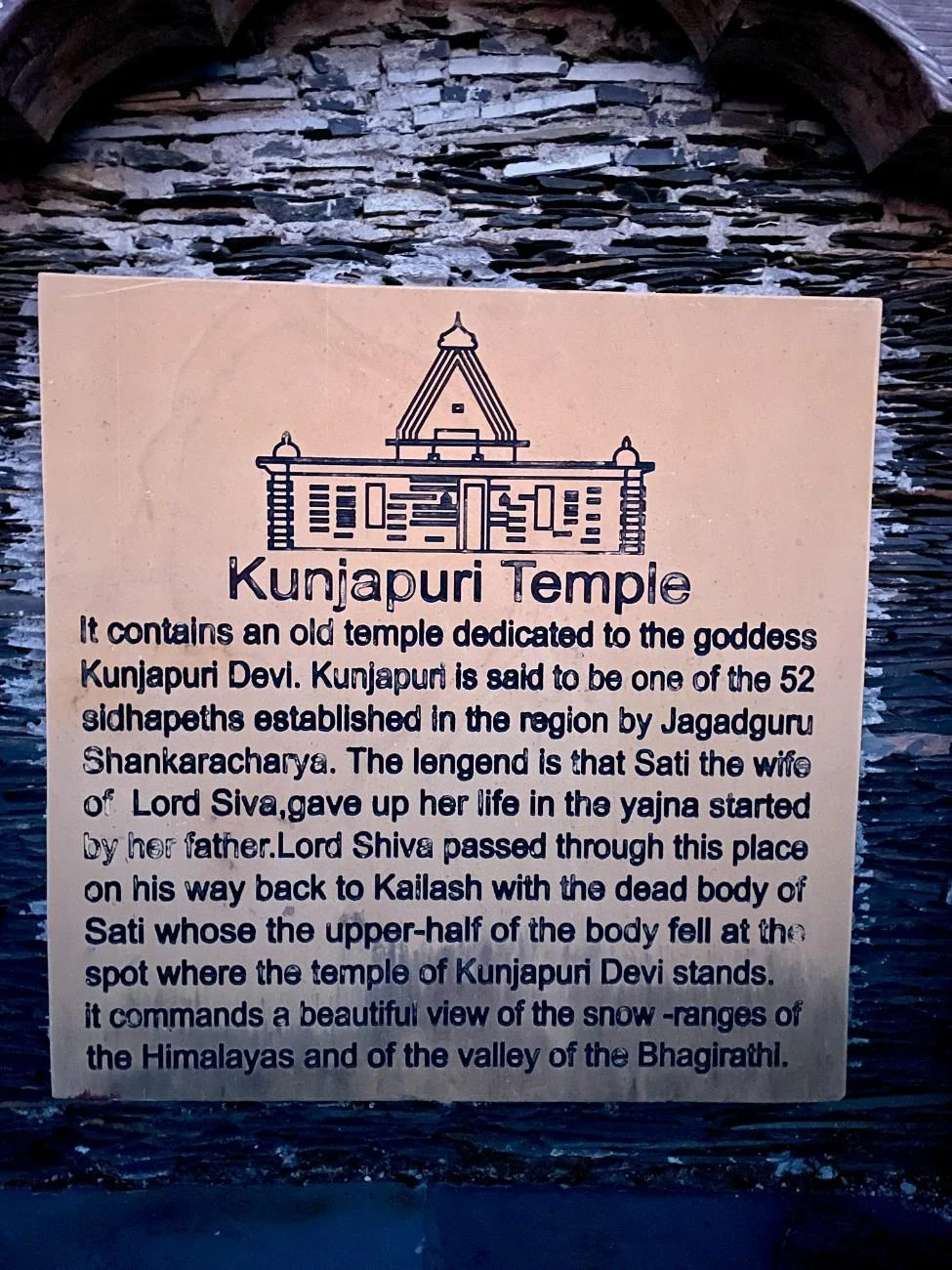
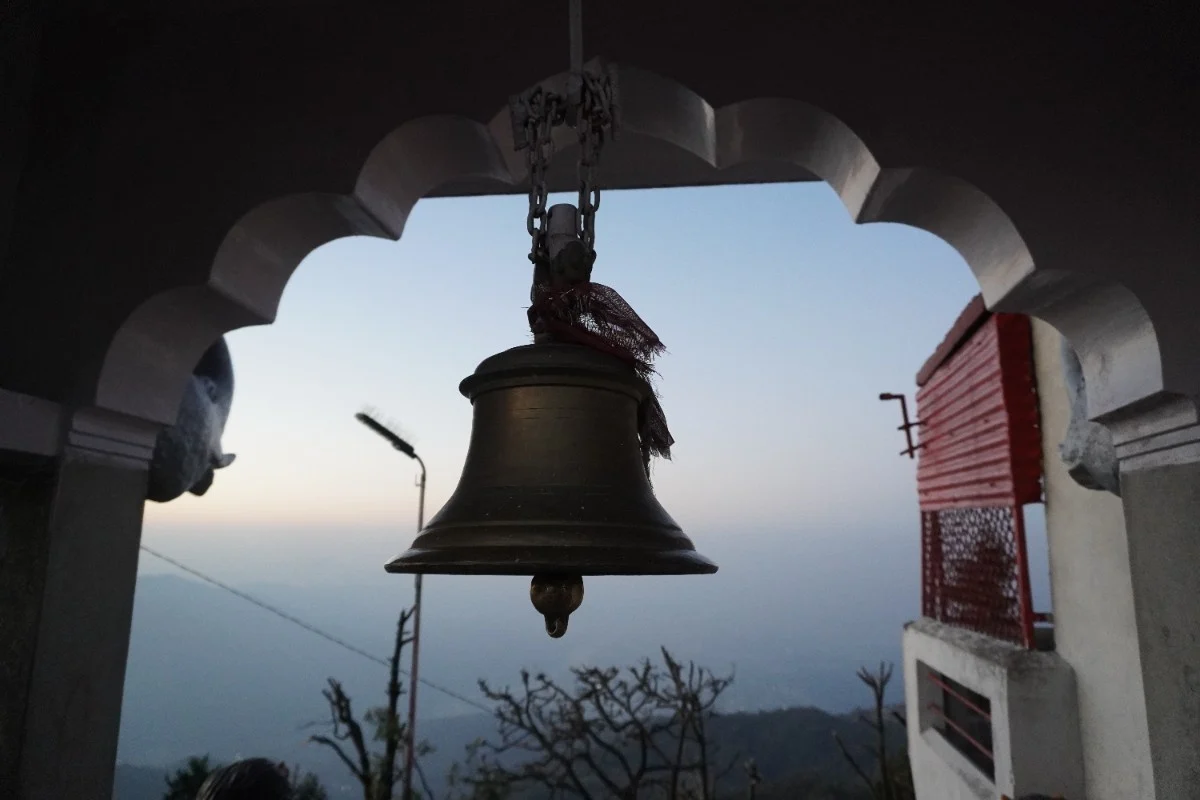
Kunjapuri is revered as the place where Sati’s chest or upper portion fell, and is counted among the important Shaktipeeths of Garhwal; that is why you will hear locals refer to it with such respect and why Navratri and Dussehra celebrations here are particularly vibrant, with special pujas, fairs and crowds of devotees making their way up the steps. Many also speak of a triangle of powerful Shakti temples in this belt, with Kunjapuri forming one corner of a spiritual circuit that combines intense mythological significance with natural beauty.
On a more personal level, the history of the temple is kept alive less through dates and more through stories about Adi Shankaracharya being associated with the temple’s establishment in popular belief, about local villagers’ vows and thanksgiving offerings, and about the way sunrise worship here has become a daily ritual for sadhus and householders alike. For travellers, this means Kunjapuri is a rare place where you can stand with a camera in one hand and still feel very much part of a living spiritual tradition rather than a museum like monument.
Things to Carry
- Sleeping Bag
- Common Tent
- Mattress
- Dining Tent
- Camping Stool
- Walkie Talkie (For Team)
- Utensils
1. Clothing
- Outer Layer: 1 Down Jacket (Winter)
- Gloves: (Winter)
- Headwear: 1 Warm Hat + 1 Scarf/Balaclava (Winter)
- Sun Hat: 1 (Summer)
2. Footwear
- Hiking Shoe
3. Backpack & Trekking Gear
- Daypack: 1 (For day-hike)
- Trekking Poles/Sticks: 1 pair
- Headlamp: 1–2 head torches (with extra batteries)
6. Health & Hygiene
- Sun Protection: Sunscreen
- Lip Balm: 1
- Snacks: Energy bars, dry fruits, chocolates (Must include)
7. Accessories
- Bottle/Bladder: 1
- Sunglasses: 1 (UV-protected and polarized)
How to reach Kunjapuri?
Kunjapuri’s accessibility is one of the reasons it works so well as a day trip or a short trek from Rishikesh tourism hub. From the plains, Dehradun and Haridwar work as convenient gateways, with road links that make a pre dawn start logistically easy for most itineraries.
By Air
The nearest airport is Jolly Grant Airport, Dehradun. From there, Kunjapuri is around 30-35 km away by road via Rishikesh, and the drive usually takes about an hour or a bit more depending on traffic and route. Many travellers fly into Dehradun, transfer to Rishikesh for their stay, and then plan Kunjapuri sunrise trek from Rishikesh as a sunrise or day outing from there.
By Train
The closest railway hubs are Rishikesh and Haridwar. Rishikesh station is just a short distance from Tapovan and the main tourist areas; from there, taxis, autos and local transport can take you to your hotel and later up to the Kunjapuri roadhead. Haridwar, being a bigger junction, has more train options, and from Haridwar you can reach Rishikesh by road in about an hour before heading up towards the temple.
By Road
If you are already in Rishikesh or Tapovan, Kunjapuri is roughly 25-30 km away by road, depending on the exact starting point and route. From Rishikesh or Tapovan, you can hire a private cab for a round trip, very common for sunrise plans, and some travellers also use shared jeeps or combine Kunjapuri with other local sightseeing if coming with a group.
The road is a typical Garhwal hill road, winding with repeated bends but generally drivable, and most standard cars can handle it comfortably in normal conditions. On peak Char Dham Yatra days the traffic can be slower, so buffer time helps if you are chasing a very specific sunrise minute.
Trekking Routes
If you choose to trek up, down or both ways, the main trail combinations generally look like this. Tapovan or Rishikesh to Neer Waterfall, Badhera and Barkot villages to Kunjapuri to Pater to Dharkot to Neer Waterfall to Tapovan or Rishikesh as a long loop, with the uphill section being steeper and more strenuous.
Alternatively, you can drive up, trek down or trek up, drive down depending on your energy and time. Because there are multiple small forest paths and village diversions, it is strongly recommended to go with a local guide or a reliable operator, especially in the dark if you are starting early for sunrise. The advantage of a guide on this particular easy trek in Uttarakhand is that they also know off trail water points and small shrines where you can pause quietly instead of crowding only at the main temple courtyard.
The nearest major railway stations are Haridwar and Rishikesh. From these stations, one can take a taxi or board a bus to Rudraprayag or Ukhimath. The road journey from Rishikesh to Chopta takes around 8 to 9 hours. Regular buses are available to Rudraprayag and limited services to Ukhimath. From Ukhimath, which is about 30 kilometers from Chopta, shared jeeps or private taxis can take you to the base.
If you’re planning to travel by car, it’s better to leave early in the morning and aim to reach Chopta by the afternoon. Ukhimath is the last town with ATM facilities and petrol pumps, so it’s a good place to stop and refuel or withdraw cash. Roads beyond Rudraprayag are narrow but manageable. It is wise to carry enough fuel, cash, and warm clothes.
From Rishikesh take a bus to Karanprayag and from there change buses for Tharali. Tharali is connected to Loahjung and local taxis are available. Alternatively, you can also reach Lohajung via Haldwani. From Haldwani, take a bus to Tharali and from Tharali take a taxi to Lohajung.
Map and Weather
Nearby Attractions and Adventures
- Narendra Nagar Palace
- Triveni Ghat
- Khait Parvat Trek
- Pramarth Niketan
- Nag Tibba Trek
- Agarkhal Market for Pahadi Goods
FAQs
In case if you are covering the distance by vehicle then it’s lot easy. If hiking is your prefrence then it’s moderate trek for a day hike cause it’s 16 km both sides from Neer Garh Waterfall.
The trek can be done all year round, but clear sky months are best if you want proper mountain views, with late autumn and spring often giving the sharpest visibility while winter can bring a dusting of snow and very crisp sunrises.
Monsoon adds lush greenery and moody clouds, though trails can be slippery, and in heavy rain many prefer to drive rather than trek.
In broad terms, sunrise at Kunjapuri Devi Temple is usually around 5:15 – 5:45 am in summer months from April to September, and around 6:30 – 7:00 am in winter months from October to March.
Sunset views are typically good in the early evening window, roughly between about 5:30 pm and 6:30 pm, though exact times vary with season and day length, so it is wise to check the day’s sunrise and sunset time a day in advance and plan your start accordingly.
Technically, if you are only driving up and down, you do not need a guide, but if you are trekking, especially in the dark for sunrise, or using the full forest route via waterfalls and villages, going with a local guide or a trusted organisation is a very good idea.
They know the turns, the safest shortcuts, and the best sunrise spots, and they also help make sure that your visit supports local livelihoods in the Rishikesh trekking guide community.
Yes, many families visit Kunjapuri by car, and many beginners do their first Himalayan trek near Rishikesh here as a drive up plus trek down combination. The key is to start early, carry some water and light snacks, wear proper shoes, and not rush the steps or steep sections.
Comfortable walking shoes with grip, a light jacket because mornings can be windy and cold, a water bottle, some snacks, a headlamp or torch if starting in the dark, and a small daypack are usually enough for most people.
In winter, add gloves and a warmer layer; in monsoon, a rain jacket and some care with slippery rocks makes the Kunjapuri hike much more comfortable.
Because it is counted among the Shaktipeeths where a part of Goddess Sati’s body is believed to have fallen, Kunjapuri is seen as a very powerful seat of Shakti in the Garhwal region; for many devotees, a visit here is not just about the view, but about seeking strength, blessings and inner clarity in a place where myth and mountain come together very strongly.
For regular Rishikesh visitors, doing a Kunjapuri Devi Temple sunrise trek once becomes a kind of annual reset, combining pilgrimage, light trekking and meditation in a single half day.









Leave a Comment