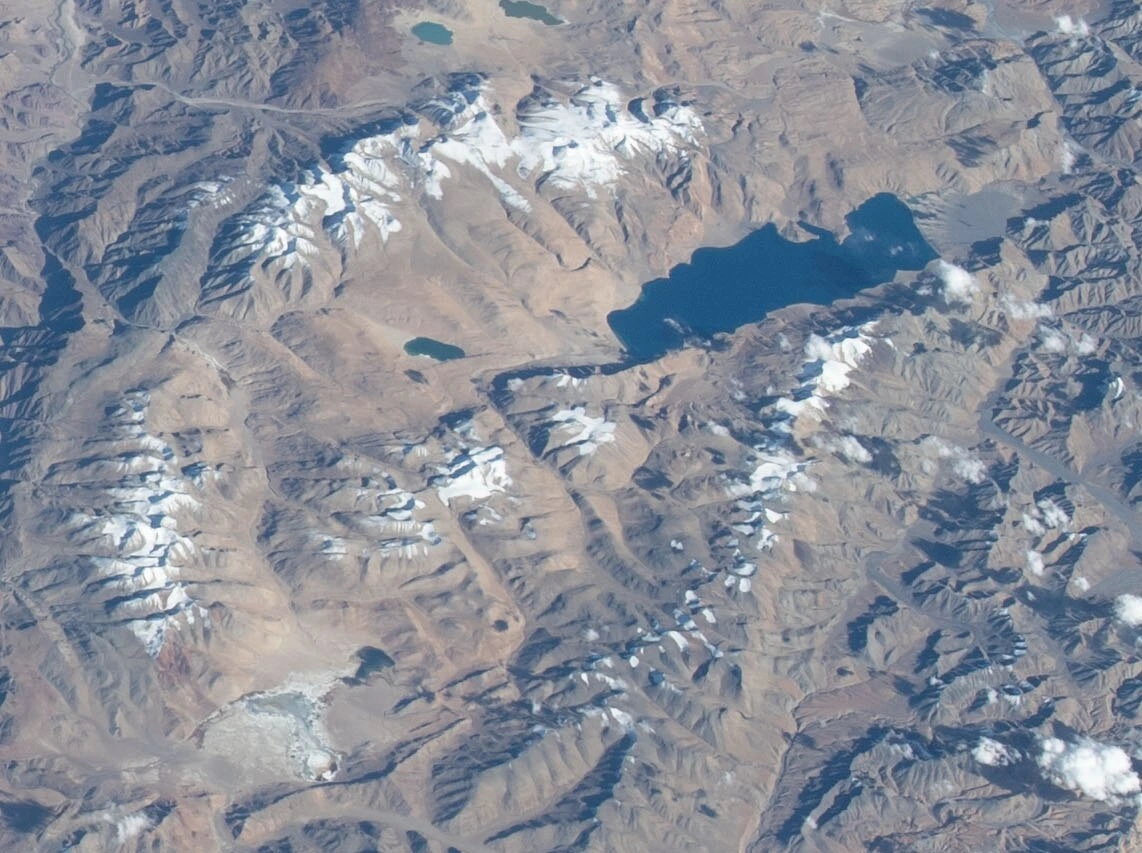
On the windswept plateau of Ladakh, the calm, cobalt-blue expanse of Tso Moriri stretches beneath the vast Himalayan sky. As you move across this high-altitude desert, the Mentok Kangri range rises before you – three elegant peaks of the Changthang region.
Located roughly around 32.9°N, 78.3°E, Mentok Kangri I, II, and III offer you a rare combination of beauty, challenge, and solitude. Though these summits are considered technically moderate, their altitude, each climbing above 6,000 meters, demands respect. Yet, the approach remains wonderfully accessible, weaving through nomadic terrain and opening a doorway into an unforgettable Himalayan ascent.
Climbing History
When you explore the climbing history of the Mentok Kangri range, you discover that it is relatively young compared to the storied giants of the Karakoram and Western Himalaya. The peaks remained largely unknown until the latter half of the twentieth century, mainly because the Changthang plateau was sparsely visited and politically sensitive. As the region gradually opened to trekkers and mountaineers, small exploratory teams began attempting these summits.
It is believed that early ascents of Mentok Kangri I were made in the 1990s by independent climbers and Indo-foreign expeditions who ventured into the area while mapping trekking routes around Tso Moriri. Because the mountains were considered “trekking peaks,” many expeditions did not maintain detailed climbing logs. Nevertheless, these early climbers laid the foundation for the routes used today: straightforward glacier travel, gentle snow slopes, and ridge climbs made easier by stable summer conditions.
Over time, trekking companies based in Leh began offering combined packages for Mentok Kangri I, II, and III. Their popularity surged as travelers sought alternatives to overcrowded peaks like Stok Kangri. In fact, many mountaineers now consider the Mentok Kangri trio the perfect progression for learners: challenging enough to be meaningful yet manageable for those seeking a high-altitude experience.
Best Season to Climb Mentok Kangri
Because of the extreme weather conditions on the Changthang plateau, you must time your expedition carefully. Although Ladakh is famously dry, winter storms can bury the region in deep snow, and temperatures plummet so severely that even experienced mountaineers avoid the area.
You should plan your climb between:
- Mid-June to Late September (Primary Season)
- Early October (Only in good weather years)
During these months, the plateau offers melt-free slopes, colder but stable nights, and minimal avalanche risk. Even then, you must acclimatize properly in Leh or Korzok, gradually ascending to base camp to avoid altitude sickness. Weather windows are usually generous, but sudden snow or high winds can still delay your summit push.
Route Overview and Expedition Duration
Although itineraries vary slightly, your expedition will typically require 8–12 days, including acclimatization. You can choose to attempt one peak or combine all three.
Typical Schedule for Mentok Kangri I
- Day 1–2: Arrive in Leh, mandatory acclimatization
- Day 3: Drive to Korzok (4,500 m)
- Day 4: Acclimatization hike around Tso Moriri
- Day 5: Trek to Base Camp
- Day 6: Training and rest
- Day 7: Summit attempt and return
- Day 8: Return to Leh
When you add Mentok Kangri II or III, your schedule extends by 2–4 days, depending on your pace and weather conditions. Each summit day generally begins before dawn, allowing you to reach the top in 4–6 hours and descend safely before afternoon winds intensify.
Overall, you experience a moderate technical challenge: walking on scree, using crampons on snow slopes, and occasionally scrambling along snowy ridges. Ropes may be used for safety, but the terrain generally favors steady endurance rather than advanced mountaineering techniques.
Budget and Cost Range
Your overall expenditure can vary significantly depending on whether you opt for a local Ladakhi operator, a mid-sized adventure company, or a premium all-inclusive agency. To help you plan better, here’s a broad cost outline based on common market rates in India:
Typical Cost Range
- Solo or custom private expedition: ₹90,000 – ₹1,50,000
- Group fixed-departure trek: ₹70,000 – ₹1,00,000
- Premium expedition package (top-tier operators): ₹1,60,000 – ₹2,80,000
What’s Usually Included
- All permits (including peak and environmental fees)
- Transport between Leh and Korzok
- Trekking and climbing equipment (tents, ropes, group gear)
- Meals during the expedition
- Guide and support staff
- Mules or porters for load carrying
What’s Excluded
- Personal gear (boots, clothing, crampons, harness)
- Accommodation in Leh
- Travel insurance with high-altitude coverage
- Tips and personal expenses
- Emergency evacuation costs
Because Mentok Kangri lies outside the highly commercial circuits, prices remain more affordable than at peaks like Kang Yatse or Stok Kangri.
Map and Terrain Overview
Below is a simplified conceptual outline you can use to visualize the expedition:
- Leh (3,500 m): Starting point
- Korzok (4,500 m): Gateway village on Tso Moriri’s edge
- Mentok Base Camp (5,200–5,300 m): Located on a gentle moraine ridge
- Summits of Mentok Kangri I, II, III: Broad, panoramic viewpoints overlooking Tso Moriri, the Champa nomad settlements, and distant Tibetan peaks
The route generally follows stable moraines and compacted snow, making it safer than heavily crevassed glacier routes.
Final Thoughts
As you journey across the wind-shaped heights of the Changthang, you discover that Mentok Kangri offers far more than a summit; it offers a rare space to breathe, reflect, and push your boundaries.
Each step across the high plateau deepens your connection to Ladakh’s silent grandeur, and each ridge strengthens your confidence in ways you only recognize on the descent.
When you finally return to the shores of Tso Moriri, you carry a renewed sense of purpose shaped by thin air and wide horizons. And as you leave these mountains behind, you know their call will stay with you long after the climb ends!

Leave a Comment