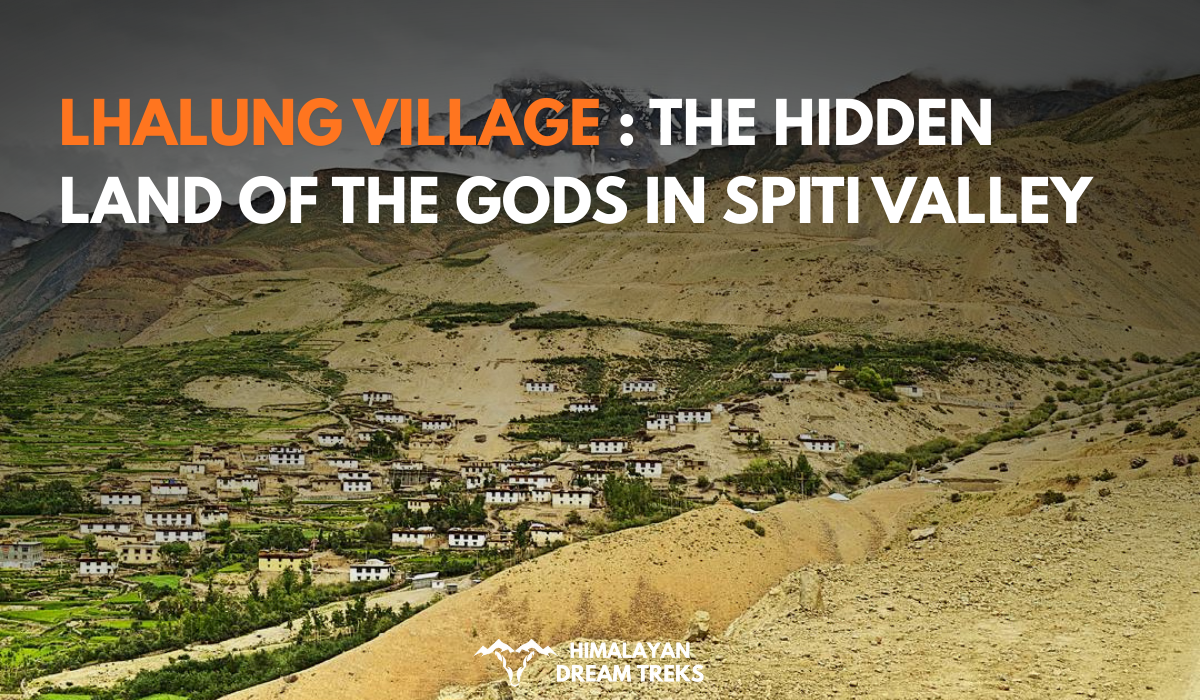
Have you ever felt that relentless, nagging pull towards a place you’ve never seen? A corner of the world so untouched, so fundamentally real, that it promises to reset the very rhythm of your life? For many of us in India, exhausted by the ceaseless drone of city life, the answer lies hidden deep within the mighty Himalayas, far beyond the well-trodden paths of Manali and Shimla. We’re talking about the high-altitude desert of Spiti Valley, a landscape that looks less like Himachal Pradesh and more like the surface of the moon, yet possesses a spiritual heart that beats louder than any urban cacophony.
But even within the famous Spiti circuit, there exists a village whispered about only by those who truly seek silence. It is a place the locals call the “Land of the Gods”, a name that, unlike so many marketing clichés, is rooted in ancient mythology and living faith. This hidden haven is Lhalung Village. Nestled quietly in the Lingti Valley, Lhalung is not merely a stopover; it’s an immersive experience that strips away the superficial layers of modern travel, leaving you face-to-face with thousand-year-old temples, shifting mountain spirits, and the purest form of Himalayan hospitality. If you crave an authentic journey where every breath of thin air is a reminder of your own existence, then this detailed guide to Lhalung Village in Himachal is your essential roadmap. Forget the crowds, prepare for adventure, and let’s unlock the ancient secrets of this jewel. This isn’t just travel; this is an exploration into the enduring spirit of the mountains.
Table of Contents
Lhalung: The Green Heart of Spiti Valley
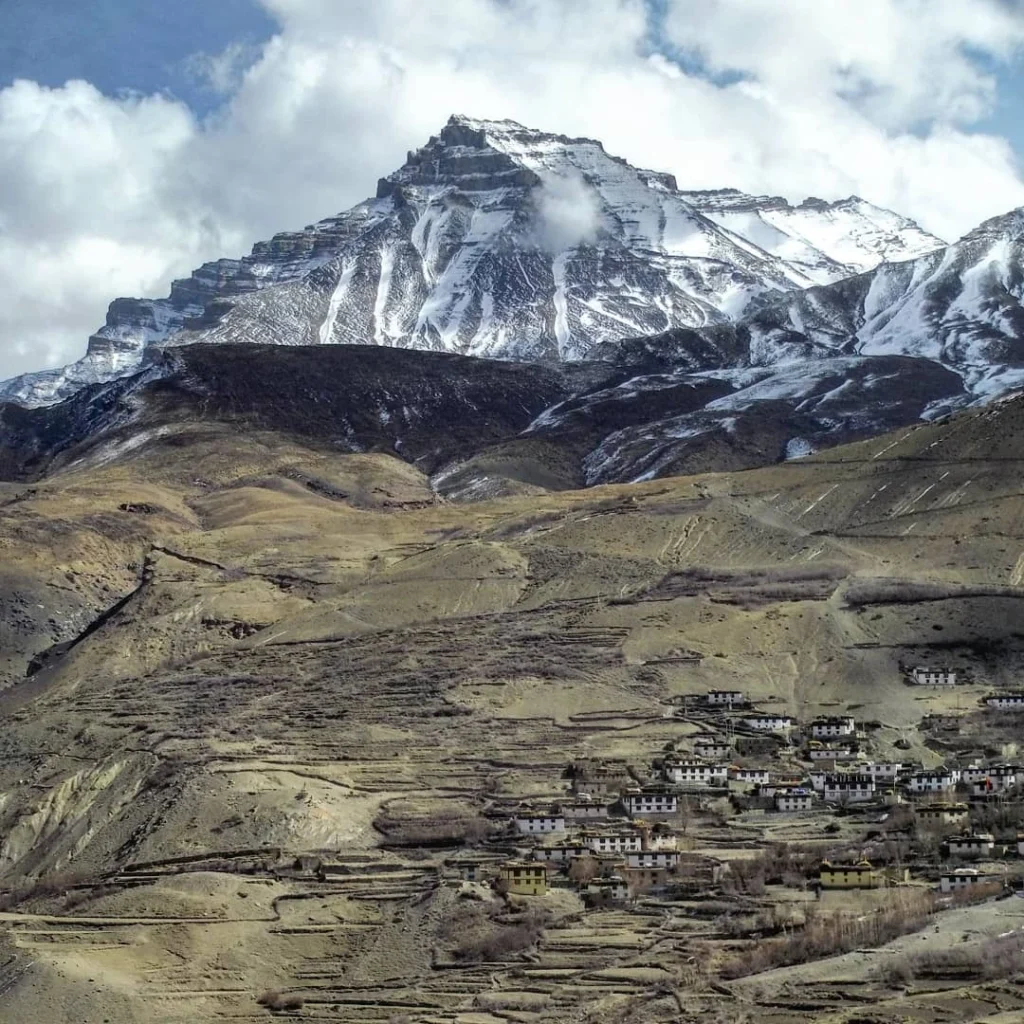
The translation of Lhalung is simple yet profound: ‘Lha’ means ‘deity’or ‘gods,’ and ‘lung’ means ‘land’ or ‘area.’ It is, quite literally, the Land of the Gods. But what truly sets Lhalung apart from its neighbours, the brown, starkly beautiful villages of Komic, Hikkim, and Langza, is its surprisingly vibrant and welcoming topography. When you finally crest the road and look down upon Lhalung, you are met with a sight that seems utterly impossible for a high-altitude desert. Instead of endless ochre and grey, you see splashes of deep green: fields meticulously cultivated with peas and potatoes, fed by hidden springs and glacial melt, giving the valley floor an unexpected, lush texture.
This fertile microclimate is a key reason for the village’s historical significance. Unlike the harsh, exposed villages higher up, Lhalung, sitting at an altitude of approximately 3,658 meters (12,001 ft), has been able to sustain life and culture for millennia. It is a settlement built for longevity, not just survival. The moment you step out of your vehicle, you notice the difference. This quiet, persistent greenery in the heart of the Trans-Himalayas is Lhalung’s first, most powerful magic trick, a truly unique feature that captivates every Indian traveller accustomed to the more barren imagery of Spiti. This village is not just offbeat; it is an ecological and cultural anomaly, a profound testament to the adaptability and dedication of the Spitian people who have turned rock and sand into a flourishing sanctuary.
The Millennium-Old Serkhang Gompa: Lhalung Monastery’s Golden Legacy
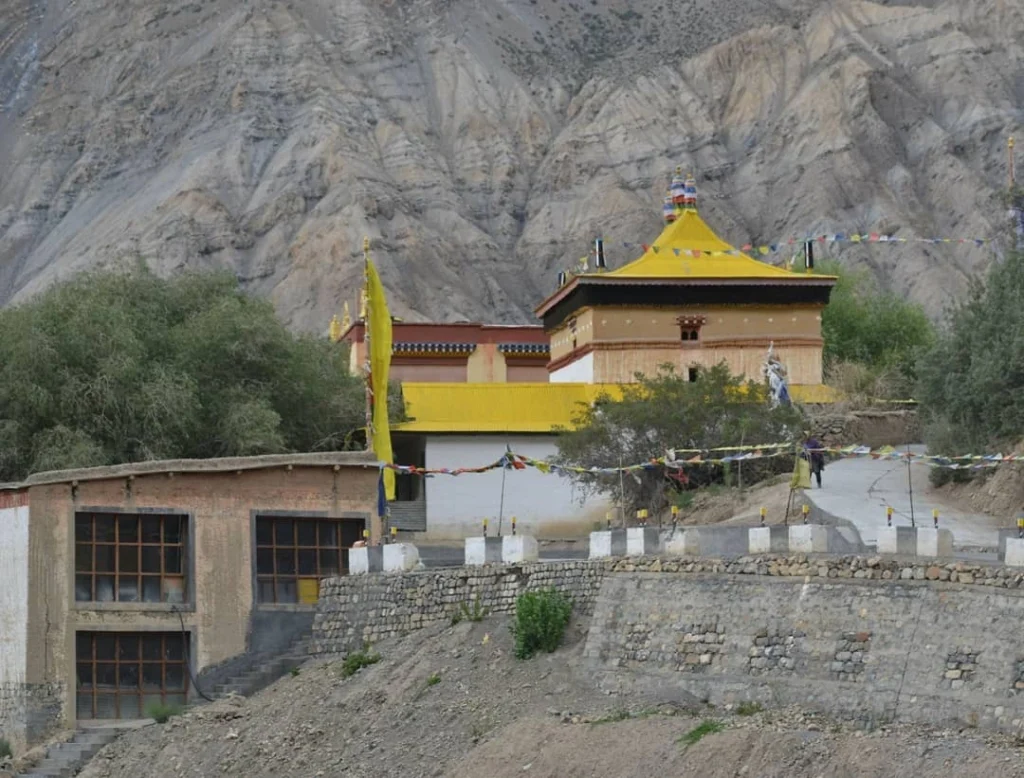
The spiritual core of the village, and the primary reason for its revered status, is the Lhalung Monastery, often locally referred to as the Serkhang Gompa, the Golden Temple. To call this monastery old is a gross understatement; it dates back to the late 10th century, placing it squarely within the era of the Second Great Diffusion of Buddhism in Tibet, making it one of the very earliest monastic foundations in the Spiti Valley, alongside Tabo.
Rinchen Zangpo and the Choshor Site
The monastery is inextricably linked to the towering figure of the Great Translator, Lotsawa Rinchen Zangpo. A brilliant Buddhist scholar, Rinchen Zangpo is credited with establishing 108 monasteries across the Western Himalayan region. Lhalung was one of his earliest foundations. Historically, Lhalung was designed not just as a simple gompa (monastery) for local worship, but as a Choshor site, a major centre for learning, religious debate, and spiritual revitalization. This explains why, despite its current modest size, Lhalung historically housed many structures, some of whose ruins are still visible around the central complex, suggesting a massive, bustling educational hub in ancient times.
The Serkhang: A Sanctuary of Clay and Gold
The main temple, the Serkhang, is the absolute highlight. It earned the moniker “Golden Temple” not because of a grand golden spire, but due to the exquisite, elaborate golden frescoes and artwork within its main sanctuary. The interior is a sensory feast: the walls are adorned with an extraordinary array of intricately detailed mud-plaster sculptures, over 51 deities arranged in complex mandala formations, covering the space from floor to ceiling. These three-dimensional figures, gilded and polychromed, possess an artistic complexity and spiritual depth rarely seen. What makes them truly astonishing is their age and preservation. Local folklore claims these statues were crafted by gods, not men, in a single night, a legend perhaps born from the sheer perfection of their ancient artistry and the human impossibility of maintaining such delicate structures for over a thousand years in this harsh climate.
The Mythology of the Undying Tree
Adding to Lhalung’s mystical aura is the presence of the Undying Tree, a sacred willow believed to be as old as the monastery itself. Legend suggests that when Rinchen Zangpo sought the divine location for his monastery, he planted several twigs of a Sea Buckthorn or willow. Only one survived and thrived, signalling the spot chosen by the Lhalung Devta (deity). The monastery was then said to have been constructed around this living marker.
The Heart of Lhalung: Mythology of Tangmar Mountain
In Lhalung, the mountains are not just scenery; they are sentient beings. Dominating the backdrop of the village is the imposing Tangmar Mountain, a massive, rugged cliff face that plays a central role in local mythology. This mountain is believed to be the residence of the Lhalung Devta, the powerful head deity of the entire Lingti Valley.
The most captivating tale associated with Tangmar is its legendary ability to change colours based on the Devta’s mood.
- When the mountain appears bathed in a gentle yellow or gold hue, it signifies happiness, prosperity, and contentment, a blessing for the village’s harvest and future.
- Should the mountain take on a stark, menacing red hue, it is seen as a sign of anger or displeasure, often prompting villagers to perform specific rituals and prayers to appease the deity.
- Occasionally, a deep blue tint is noted, interpreted as the Devta being sad or hurt.
For a visiting traveller, observing Tangmar Mountain is a lesson in faith and reverence. While geological explanations might involve the interplay of light and mineral deposits on the arid rocks, for the Lhalung community, this colour-shifting phenomenon is a fundamental, accepted truth, a direct communication line from the divine to the temporal world. Understanding this unique fusion of stark natural beauty with profound spiritual belief is crucial to truly appreciate the depth of culture you encounter in Lhalung. You are not just looking at a mountain; you are gazing upon a living, breathing god.
The Best Time to Visit Lhalung
The window for a comfortable, reliable visit to Lhalung Village is narrow but spectacular: June to October.
- Summer (June to August): This is the peak season. Both major entry routes (Shimla and Manali) are reliably open. The weather is sunny and pleasant during the day (10°C to 20°C). This is the time when the fields in Lhalung are at their greenest, and the monasteries are fully operational. Night temperatures range from 5°C to 10°C.
- Autumn (September to October): Arguably the most beautiful time. The tourist crowds thin out, the skies are brilliantly clear, and the crops turn golden before harvest. The nights start getting significantly colder, but the roads remain open. Daytime temperatures are typically between 5°C and 15°C, but the nights start getting significantly colder, often dropping into the range of -5°C to 0°C, but the roads remain open.
- Winter (November to May): Strictly for the hardy and experienced. The entire Spiti Valley, including Lhalung, is blanketed in heavy snow. Kunzum Pass, which connects Manali to Kaza, closes entirely, making the Shimla-Kinnaur route the only access (often treacherous). Daytime temperatures usually hover between -10°C and 0°C, and can reach till -20°C at night. Homestays offer extremely basic, difficult conditions. Avoid this period unless you are prepared for extreme, high-altitude winter conditions.
The Great Spiti Circuit: Choosing Your Entry Route
Lhalung is usually accessed via Kaza, the sub-divisional headquarters of Spiti.
Route 1: The Kinnaur-Spiti Route (Shimla Side)
- Shimla → Rampur → Reckong Peo → Nako → Tabo → Kaza → Lhalung.
- Distance: Approximately 430 km from Shimla to Kaza.
- Time: Requires a minimum of two days (e.g., Day 1: Shimla to Reckong Peo/Kalpa; Day 2: Kalpa to Kaza/Lhalung).
- Advantage: This is the recommended route for better acclimatization. The gradual gain in altitude through Kinnaur (Kalpa, Nako) allows your body to adjust to the thin air, significantly reducing the risk of Acute Mountain Sickness (AMS).
Route 2: The Manali-Spiti Route (Kullu Side)
- Manali → Atal Tunnel → Gramphu → Batal → Kunzum Pass → Losar → Kaza → Lhalung.
- Distance: Approximately 230 km from Manali to Kaza.
- Time: Can be done in one long, arduous day, but stopping at Losar or Kaza is highly advised.
- Advantage: Shorter distance, especially with the Atal Tunnel bypassing the difficult Rohtang Pass.
- Warning: This route involves a rapid ascent to high altitudes (Kunzum Pass is over 15,000 ft), which is harder on the body and can easily trigger AMS. Always spend a night acclimatizing in Kaza or Tabo before heading to Lhalung.
The Final Leg: Kaza to Lhalung Logistics
Lhalung is situated approximately 36 km from Kaza. There are two primary ways to approach the village from the main highway:
- Via the Attargo Bridge Turn-off (The Kaza Side Approach):
- Driving from Kaza towards Tabo, you will cross the Attargo Bridge where the Spiti River meets the Pin River. About 1.5 km after this bridge, you will see a small, sharp right turn-off that climbs steeply into the Lingti Valley.
- This road is narrow, often rough, but scenic. It takes about 45 to 90 minutes to cover the final 10-15 km stretch, depending on road conditions.
- Via Dhankar Village (The Tabo Side Approach):
- If you are coming from Tabo and stop at Dhankar Monastery, you can take an internal, high-altitude road that connects Dhankar directly to Lhalung. This road is approximately 23 km and offers incredible, dramatic views. Many travellers prefer this sequence, visiting Dhankar, taking the internal road to Lhalung for a night stay, and then dropping down to the main highway the next day.
Public Transport Details
For budget and solo Indian travellers, public transport is a lifesaver, though services are limited.
- Daily Bus Service: There is a dedicated HRTC local bus that runs daily from Kaza Bus Stand to Lhalung Village.
- Shared Cabs/Taxis: Hiring a private taxi from Kaza is the most comfortable option but is expensive. Shared cabs rarely ply the specific route to Lhalung due to its remote nature, so relying on the fixed HRTC bus is more reliable for public transport.
Immersing in Local Life: Homestays
Lhalung Village is home to only about 45 families, and it thrives on authenticity, rejecting the commercialism that has crept into other parts of Himachal. You will not find hotels, resorts, or fancy guesthouses here. What you will find are traditional homestays, the only way to truly experience the warmth and enduring culture of the Spitian people.
The Homestay Experience
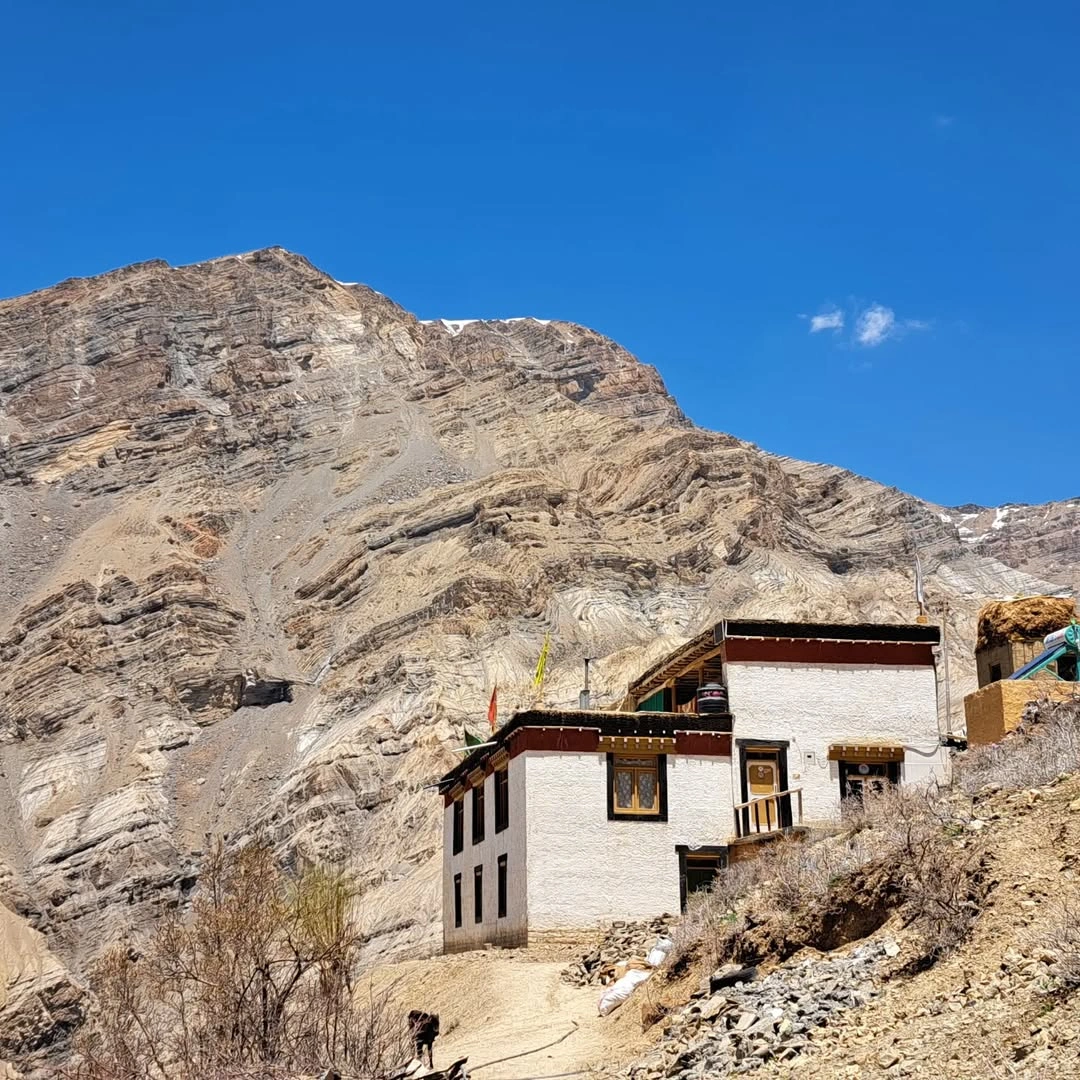
Staying in a Lhalung homestay is a step back in time. The homes are often constructed from mud and stone, designed to withstand the brutal Himalayan winters. They offer basic, clean, and immensely comfortable rooms, usually featuring traditional warm bedding (multiple layers of razai) and shared common areas. A few examples are Khabrik homestay, Zomsa homestay, and A.K. Homestay.
- Connectivity: Be prepared to disconnect. Mobile network connectivity is extremely poor to non-existent.
- Facilities: While some progressive homestays have upgraded to include western toilets or running water, water conservation is paramount. Electricity is often solar-powered, leading to common power cuts, so a flashlight and a power bank are crucial travel partners. The simplicity of life here is the actual luxury.
Beyond the Gompa: Treks and Trails of Tranquility
While the Serkhang Monastery is the central draw, the beauty of Lhalung Village lies in its setting within the vast Lingti Valley. The surrounding landscape invites slow travel and mindful exploration, moving beyond the checklist mentality of typical tourism.
Village Walks and Short Hikes
The area immediately surrounding Lhalung is perfect for short, reflective walks. Strolling through the pea fields and observing the intricate network of irrigation channels is a great way to understand the agrarian life of Spiti. For a more adventurous hike, you can climb the ridges above the village for a panoramic view of the entire Lingti Valley, providing excellent vantage points for photographing the Tangmar mountain.
The Lhalung-Demul Trek
For the serious trekker, Lhalung serves as a connection point for longer trails, notably the path leading to Demul Village. This is not a casual walk; it involves descending into a deep gorge, crossing the Lingti River, and then climbing steeply up to the high-altitude village of Demul. This 4-5 hour trek is extremely rewarding, offering unadulterated views of the Spitian wilderness and a chance to experience the challenging topography that isolates these settlements. Similarly, hikers can find trails connecting Lhalung to Dhankar Village (often via a remote route bypassing the main road), linking two of Spiti’s most historically significant settlements.
Altitude and Safety: Essential Tips for the High-Altitude Traveller
Travelling to Lhalung means travelling to 12,000 feet, which requires careful preparation, especially for an audience largely residing in the plains. Acclimatization is not optional, it is vital for a safe and enjoyable trip.
Acclimatization is Key
- Move Gradually: The Shimla-Kinnaur route is highly preferred because it allows altitude gain over multiple days (e.g., spending nights at Rampur, Kalpa, and Tabo before reaching Kaza).
- Rest in Kaza/Tabo: Always spend a full day resting and acclimatizing in a major hub like Tabo or Kaza before making the final ascent to Lhalung.
Lhalung: The Timeless Chapter in Your Himalayan Story
The journey to Lhalung Village is less about ticking off a bucket list point and more about turning inwards. In the absence of a strong mobile network, the distractions of the outside world simply cease to exist, forcing a conversation with the quiet, powerful self that often gets lost in the hustle. This Spiti Valley destination, the Land of the Gods, offers an experience that is deeply enriching, culturally profound, and visually unforgettable.
From the quiet dignity of the Lhalung Monastery with its millennium-old clay deities and the exquisite artistry of the Serkhang Gompa, to the humbling sight of the Tangmar Mountain changing its colours with the mood of the Devta, Lhalung is a place where history, faith, and geography merge seamlessly. It is a true, authentic hidden gem in Himachal, demanding respect, patience, and a genuine appreciation for its unique existence. Go slow, travel deep, engage with the resilient people, and carry nothing back but memories and a renewed sense of connection to a land that truly embodies serenity. This was the detailed guide to Lhalung Village you need, now you can go write your own chapter in the Himalayas.

Leave a Comment