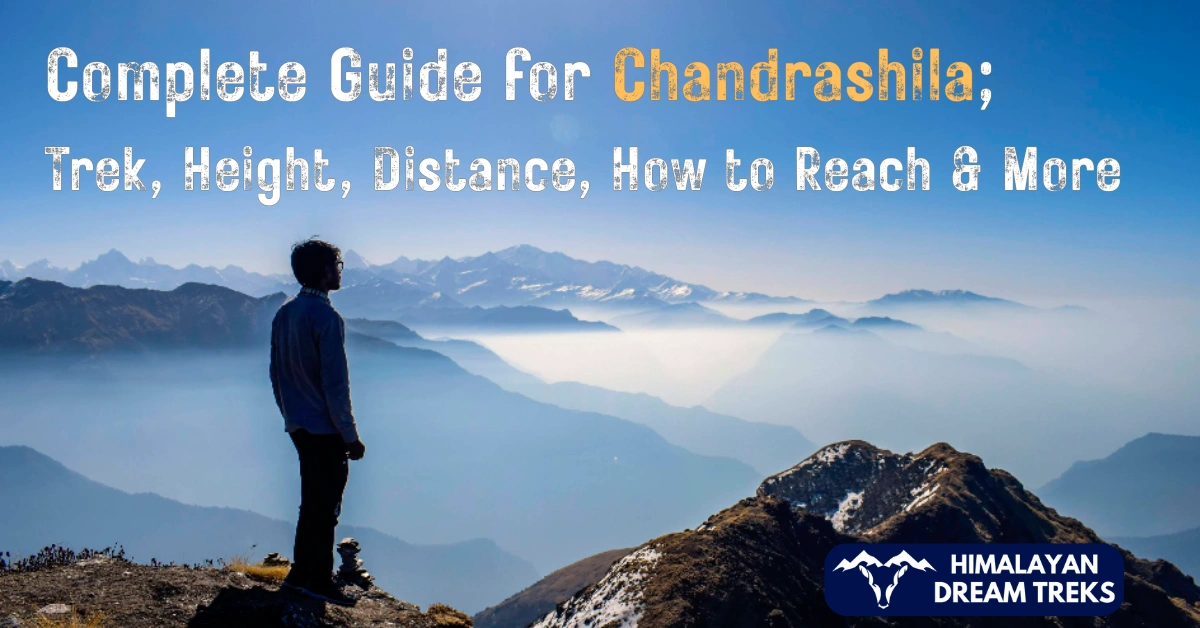
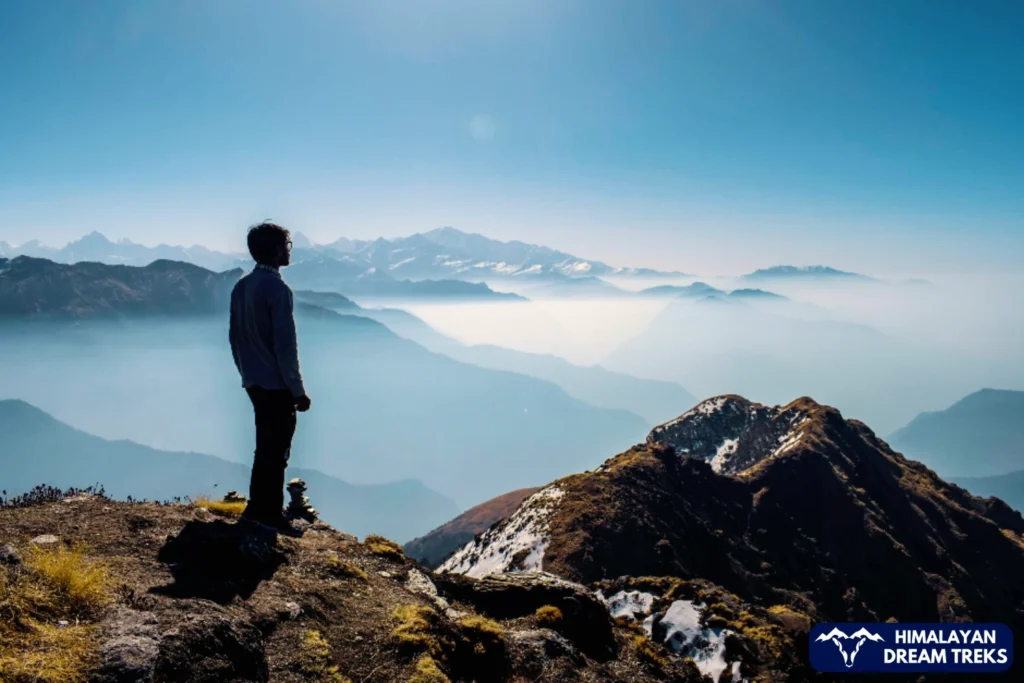
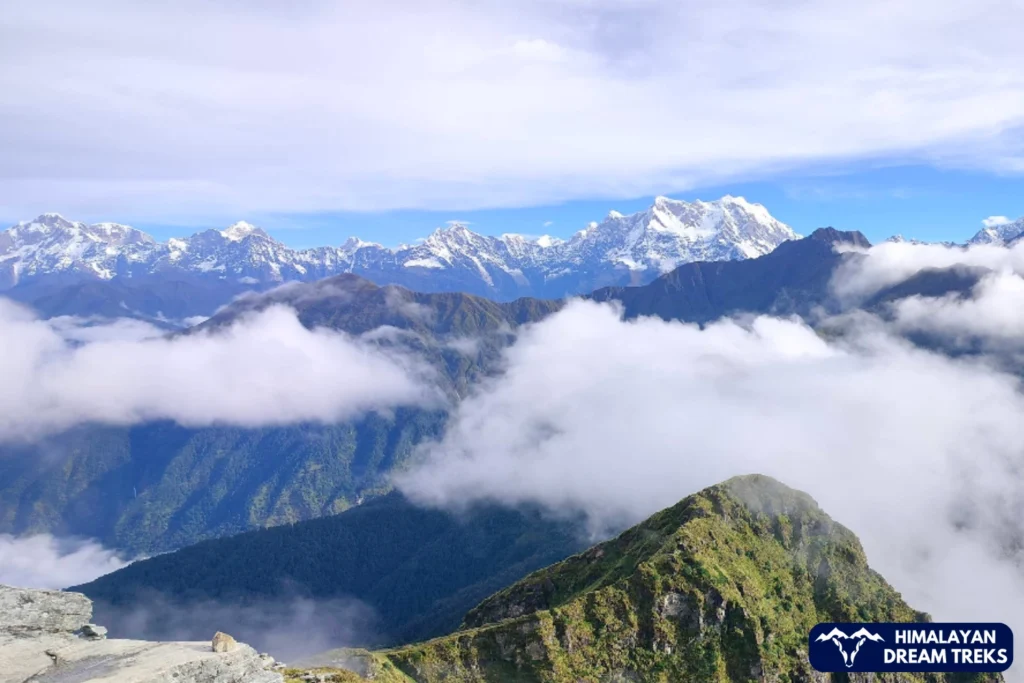
If I had to pick one trek that quietly sneaks into your heart and refuses to leave, it would be Chandrashila. It is not the longest trek and not the toughest either, but something about that mountain summit stays with you. Known as “Moon Rock,” Chandrashila is a beautiful summit of 12,110 feet, famous for its 360-degree view of the Garhwal Himalayas. The peak provides incredible views of giants including Mt. Nanda Devi, Trishul, Kedar Peak, Chaukhamba, and many other prominent mountain peaks. The moment you reach the top, the world opens into a full sweep of the peaks in the Himalaya, each one glowing with its own character and variety. It feels less like climbing and more like being welcomed into a circle of big mountains.
The trek begins from Chopta, a tiny hamlet tucked into the forests of the Rudraprayag district, a place where the climate stays cool through most of the year. From there, you follow the familiar trail toward Tungnath, one of the highest Shiva temples in the world and among the five Panch Kedar temples. The temple stands above the Mandakini and Alaknanda river valleys and is deeply linked to the Pandavas of Mahabharata. Then you continue toward the Chandrashila peak right after Tungnath. The route feels easier compared to other high mountaineering climbs because trekkers do not need technical skills, special equipment, or climbing experience. You simply walk, breathe, and stay steady as the mountains rise around you. It is absolutely a perfect introduction to climbing a peak for the first time and is often recommended for beginners, families with kids, and even senior citizens.
At Himalayan Dream Treks (HDT), we always make sure you have a complete guide to any destination you embark on. Whether the trek is kid-friendly or not, comprehensive knowledge is the key to making your trekking experience memorable.
Table of Contents
Why Trek to Chandrashila Is One of the Most Loved Treks in Uttarakhand
Breathtaking View from the Summit
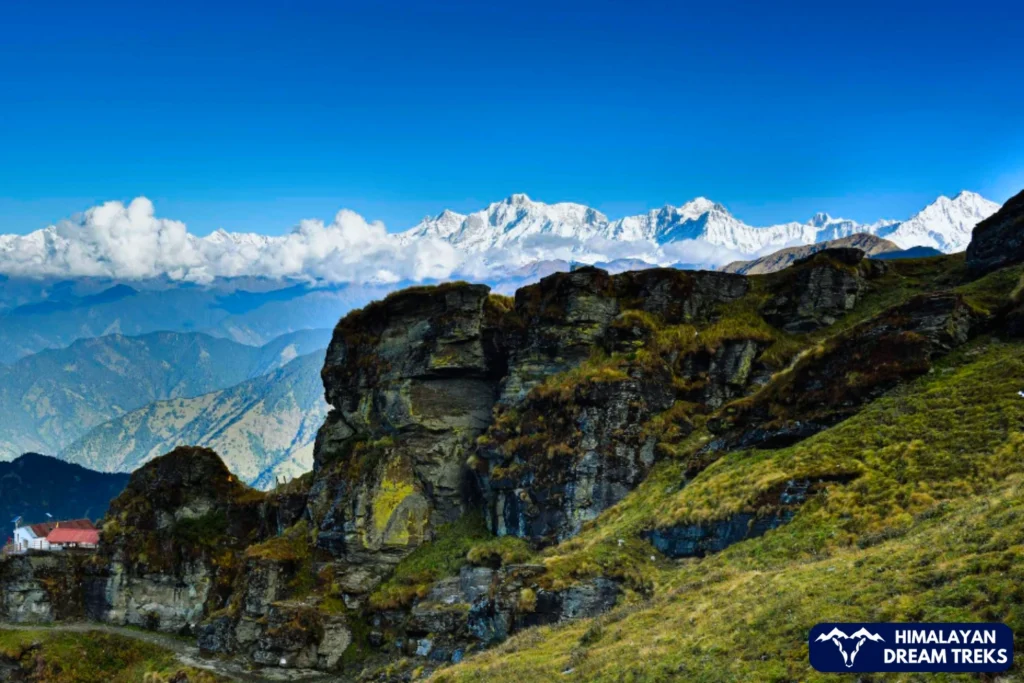
Chandrashila gives you a front row seat to some of India’s biggest Himalayan peaks. On a clear day, you see Nanda Devi, Trishul, Kedar Peak, Bandarpunch, Chaukhamba, and other giants standing around you like old guardians. For a trek this short, the full 360 degree panorama feels almost unreal. When you look down toward Rohini Bugyal or catch a “sea of clouds” drifting below the summit, something shifts quietly inside you. It is one of those simple, notable moments that stay with you long after you climb down, making it one of the most rewarding treks in Uttarakhand. The peak is often called the “Moon Rock” because the summit shines brightly under sunlight, especially when fresh snow reflects the glow like silver dust.
Tungnath Temple: Meet the World’s Highest Shiva Temple
Just below the Chandrashila summit sits Tungnath (12,073 feet), a temple believed to be over 5,000 years old and deeply linked to the Pandavas through the Panch Kedar legends. It stands higher than Kedarnath (11,755 ft), which means your journey is already at a special height before reaching the peak. People of all ages climb here, from devotees to curious travelers, and even those who say they are “not temple people” feel a quiet shift inside these stone walls.
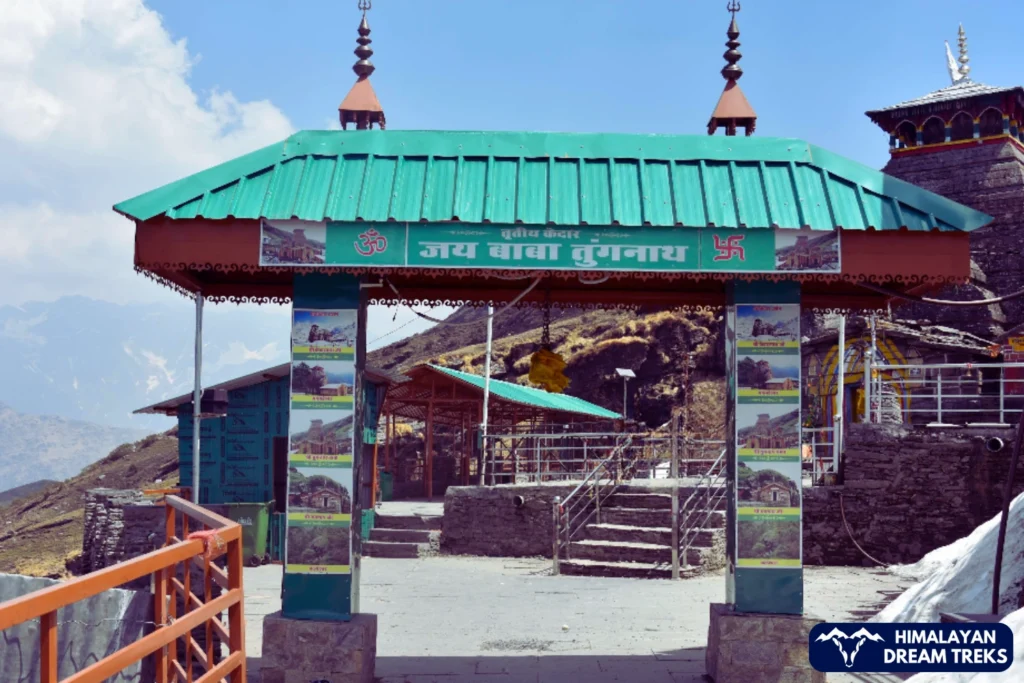
During May, the deity of Lord Tungnath is brought from Mukumath to the temple, marking the best time for a spiritual visit. Summers stay pleasant, around 16°C, though evenings turn chilly enough that carrying a light woolen makes a difference. Winter treks between January and March are also possible if you enjoy snow covered trails and a little adventure. But you will not visit inside the temple at this time.
Easy To Follow Trekking Route
The trail to Chandrashila is surprisingly simple, the kind of route that feels welcoming even if you are stepping into the mountains for the first time. The path from Chopta to Tungnath is well paved and maintained by the temple authority, so you always know where you are going without second guessing yourself. Once you move from Tungnath toward Chandrashila, the trail is no longer paved, but it stays clearly marked, well beaten, and easy to follow, even when the wind picks up on the ridge.
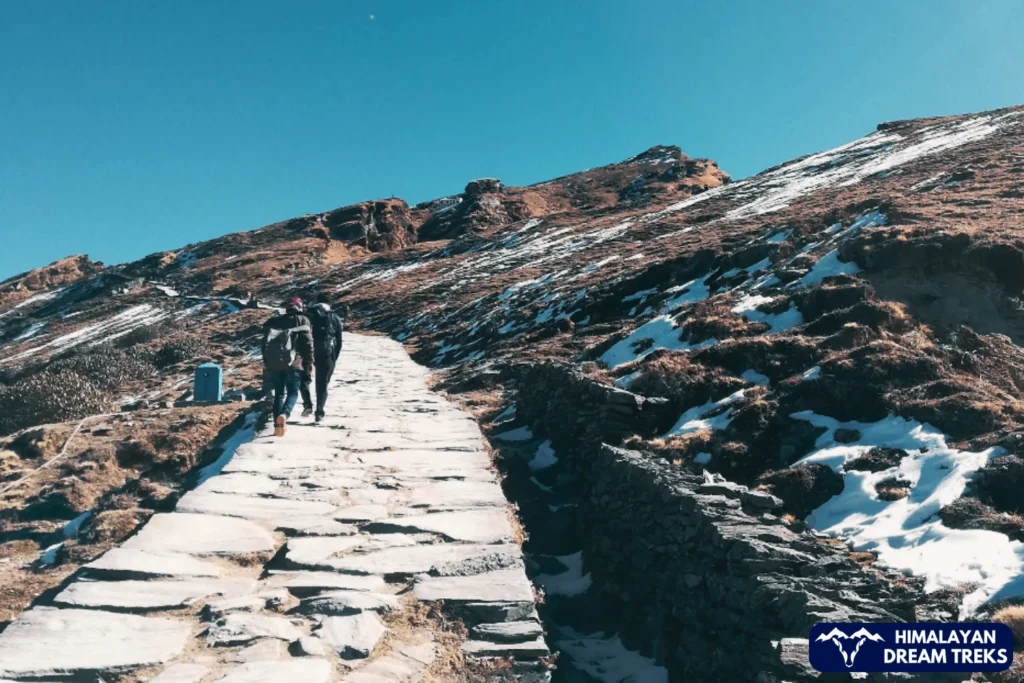
The distance stays completely manageable for most trekkers.
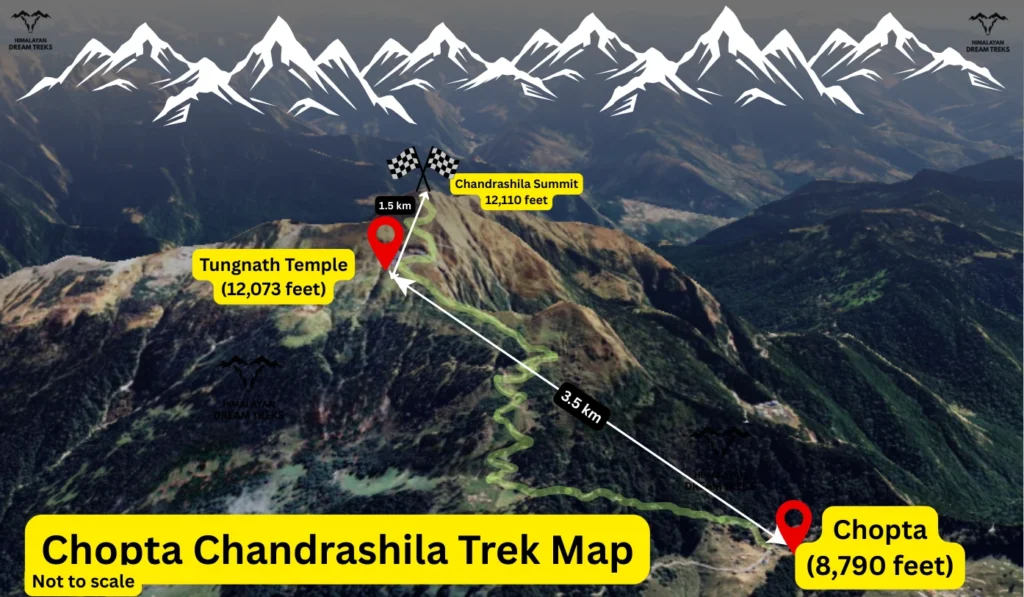
- Chopta to Tungnath Trek: around 3.5 km
- Tungnath to Chandrashila Trek: 1 to 1.5 km with a short steep push at the end
The trek stays easy to moderate from start to finish. There is one short climb from Tungnath to Chandrashila that can feel a bit challenging for some, but the rest of the walk is steady and friendly. Forests of cedar and rhododendron follow you for most of the journey, their colours and quiet presence making the trail feel peaceful, green and strangely comforting.

Famous Places to Visit After the Trek
After completing the trek to Chandrashila, there are several places nearby that add even more meaning to your journey.
- Deoriatal: It is a beautiful alpine lake near Sari Village, linked to the Pandavas and the Yaksha story from the epic Mahabharata. On clear days, you can see Chaukhamba reflecting in the water, which is always nice to look at after a long trek. It is a calm place to sit for a bit, catch your breath, and just take things slow.
- Omkareshwar Temple, Ukhimath: The temple is the winter seat of Kedarnath ji, and visiting it gives you a simple sense of connection to the local traditions. The atmosphere is steady and peaceful, and it helps you understand how important this region is for people who come here for worship.
- Kalimath Temple: Located about 13 km from Ukhimath, Kalimath is one of the rare temples dedicated to Goddess Kali where the deity is worshipped beneath the earth. It feels raw, powerful, and deeply sacred.
- Triyugi Narayan Temple: Around 50 km from Ukhimath, this temple is believed to be the site where Lord Shiva and Goddess Parvati were married. The eternal flame here is said to have been burning since that time, adding a timeless charm to the visit.
- Kartik Swami Temple: The temple sits about 75 to 80 km from Chopta, and from the entrance point (Kanakchauri) you walk a short 3 km trail to reach the shrine since it isn’t directly accessible by road. The Kartik Swami Temple is dedicated to Lord Kartikeya or Murugan. It has a calm, steady feel that makes the visit comfortable. View of mountains is outstanding from here. If you have an extra day, it is a nice place to slow down and spend some quiet time with the mountains around you.
Best Time to Visit Chandrashila
Every season brings its own personality to this trek, and honestly, that’s part of the charm. But beyond scenery, things like weather, trail conditions, and crowd levels can change your entire experience. Here’s what each window really feels like when you are out there.
Winter (December–February): Perfect for Snow Lovers
If you ever wanted to see the mountains at their most magical, this is the season. The trail turns white, Tungnath freezes in silence, and the Chandrashila peak looks like a winter wonderland. The climb becomes slower and steeper because of snow, so expect a little effort, but the reward is completely worth it. Crowds are thinner too, which makes the whole journey feel more personal and peaceful. During the peak winter season (December to February), daytime temperatures range from 2°C to 7°C, while at night the temperature drops below freezing, often reaching as low as –10°C. So it’s must important to carry warm clothing and essential winter gear.

Spring (March–April): Ideal for Nature Lovers
A lovely time to visit. Rhododendrons bloom in shades of red and pink, mornings are crisp, and the skies stay mostly clear. Snow patches still appear early in the season and chances of snowfall are minimal. This is a great time if you want a balance of scenery and comfort without the heavy winter rush. During this time, the daytime temperature is pleasant, but the nighttime temperature remains cool, so warm clothing is still essential.
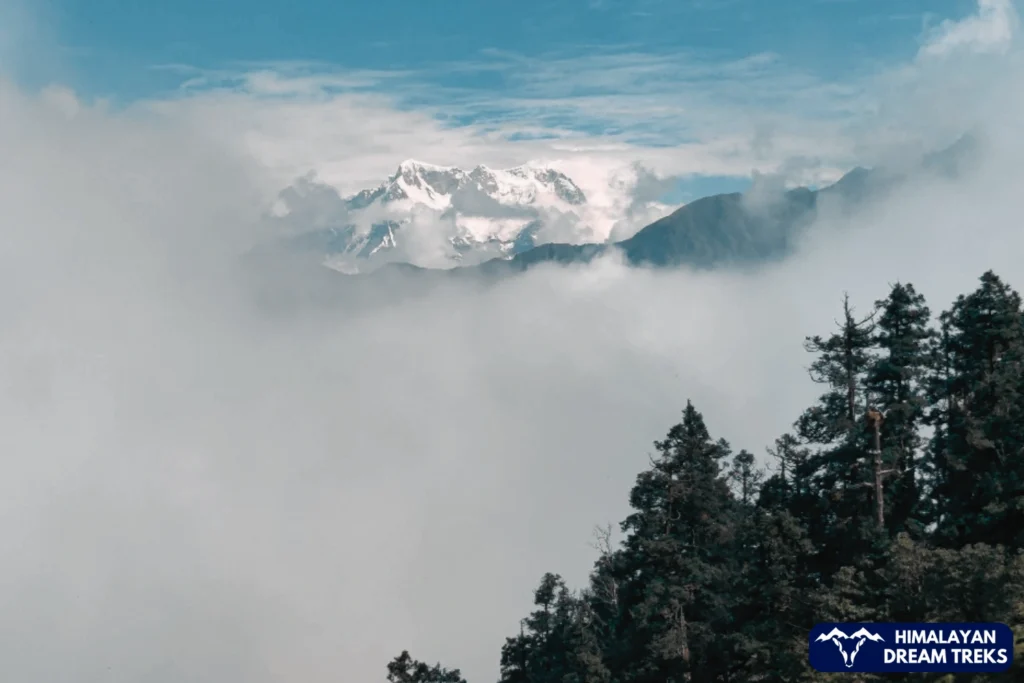
Summer (May–June): Absolutely good for Spiritual Trekkers
This is the busiest season, and for good reason. Weather stays warm, trails are easy to walk, and Tungnath temple remains open with lively footfall from devotees and trekkers. But the crowds can be big, especially on weekends and holidays. If you don’t mind the rush, it’s a great time to enjoy bright skies, pleasant temperatures, and longer walking hours. In summer, the days are warm and pleasant, while the evenings, nights, and early mornings are cool.
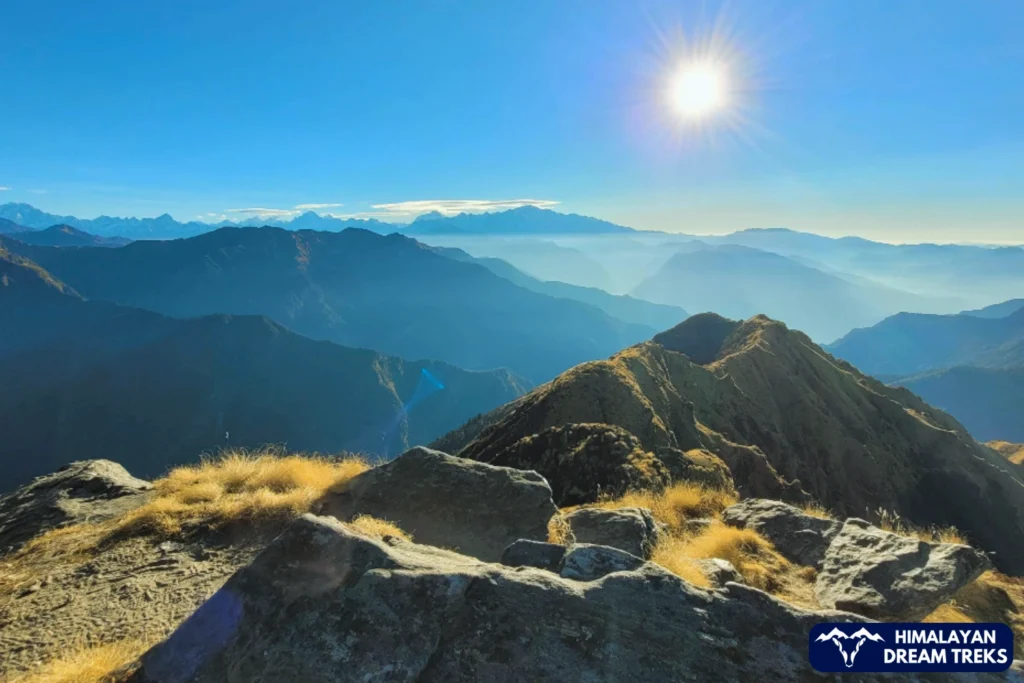
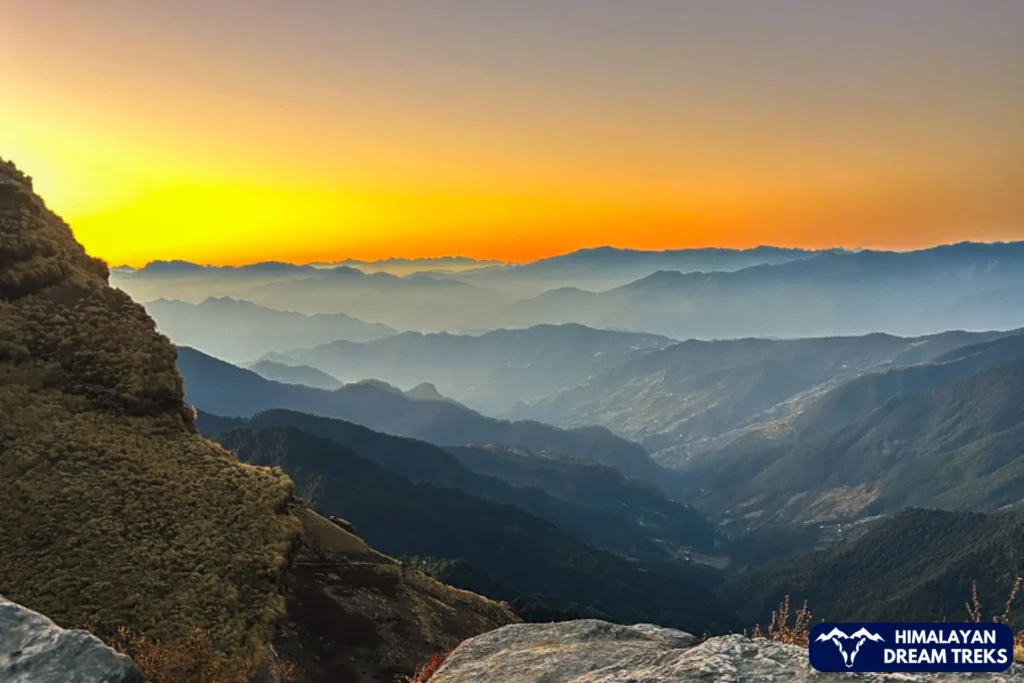
Autumn (Sept–Nov): Good for Clear view of Mountain Peaks
If I had to pick one season that feels almost perfect, it would be this one. The air turns sharp and fresh, the views get unbelievably clear, and the golden light on the Rohini Bugyal makes it look grand and peaceful. Crowds are lighter compared to summer, and the weather stays stable. It’s one of the safest and most beautiful windows to trek.
Pro Tip: For All Months
Start early, really early. Clouds love rolling in after lunch and can easily hide the entire summit view. And whatever season you choose, always check the weather before planning. Up here, conditions can change suddenly, and a clear forecast makes the difference between a great trek and a tricky one.
Accessibility: How to Reach Chandrashila from Delhi, Haridwar or Rishikesh
Reaching Chandrashila is fairly simple once you get a sense of the route. Everything starts from Chopta, because the trek to Tungnath and then Chandrashila begins from there. First you reach Chopta, then trek to Tungnath, and finally walk the last 1.5 km to the summit.
Reaching Chopta by Road
Most travelers reach Chopta through Delhi, Haridwar or Rishikesh, and then continue by bus, shared jeep, bike or taxi. The roads are well connected, but they get narrow and winding after Rudraprayag.
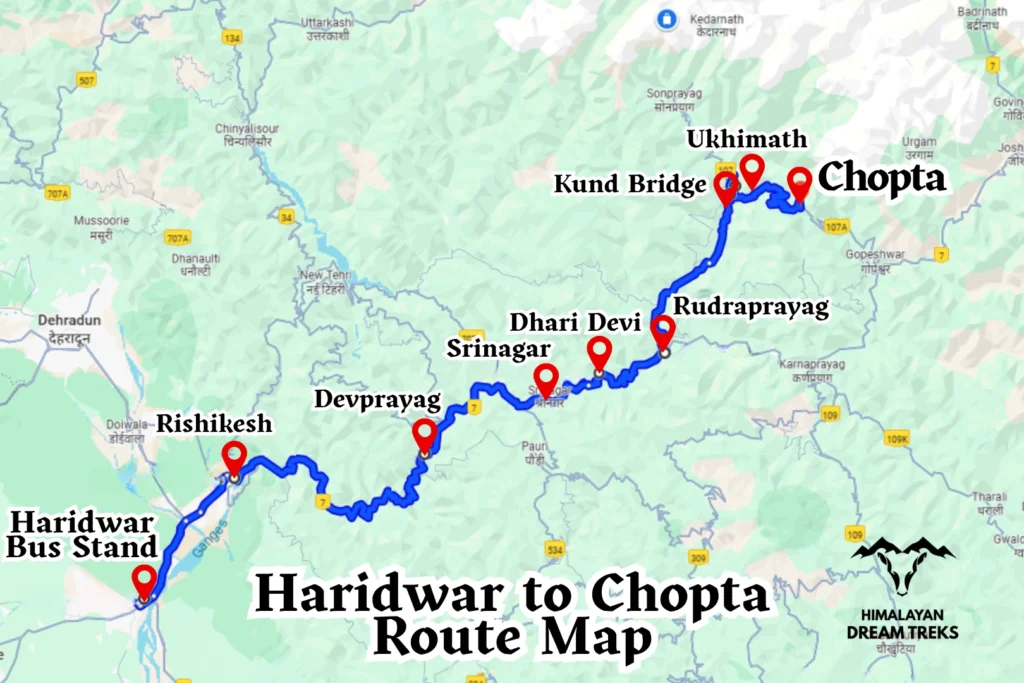
Common route from Haridwar/Rishikesh to Chopta base:
Route Follows: Haridwar or Rishikesh → Devprayag → Srinagar (Garhwal) → Dhari Devi → Rudraprayag → Kund Bridge → Ukhimath → Chopta
This is the same route used by buses, shared jeeps and most taxis. Travel time from Haridwar is usually 7 to 9 hours, depending on traffic and stops. You can also hire a vehicle on rent for a more flexible journey.

Nearest Airport and Railway Station for Chandrashila
- Nearest Railway Station: Haridwar and Rishikesh are the nearest railway stations. Best is to look for trains for Haridwar as it has frequent trains connected to major cities in India, and you can get buses or shared jeeps onward.
- Nearest Airport: Jolly Grant Airport, Dehradun is the nearest airport at about 220 km away from Chopta Chandrashila. From the airport, taxis are easily available to Rishikesh, Rudraprayag, Ukhimath and Chopta.
Haridwar or Rishikesh to Ukhimath Drive
Ukhimath is the last major transport hub before Chopta, so reaching here first makes the whole journey smoother. From Haridwar, buses start early in the morning, usually between 4:30 and 9:00 AM, and they reach Ukhimath by evening. The fare stays around ₹450 to ₹500.
From Rishikesh, UTC and private buses leave between 5:00 and 7:00 AM, and the fare is roughly ₹400 to ₹450.
If you miss these direct buses, another option is to take a bus going toward Guptkashi or Gaurikund and get down at Kund Bridge. Shared taxis to Ukhimath are usually easy to find from there, so the journey stays manageable.
Ukhimath to Chopta Drive
Most travellers prefer stopping in Ukhimath for the night and continuing to Chopta the next morning. Shared taxis start around 7 AM, cost about ₹200 per person, and usually take a little over an hour to reach Chopta.
In winter, the situation changes a bit. Heavy snow sometimes blocks the upper stretch, so taxis stop at Makku Math or Baniyakund instead. From there, you either walk the last few kilometres or take a snow-chain vehicle when available. It is a normal routine in the snow season, so it’s nothing to worry about, just something to be ready for.
Traveling Directly by Taxi from Haridwar or Rishikesh to Chopta
If you want to skip transfers, you can book a private taxi straight from Haridwar or Rishikesh. The ride from Haridwar to Ukhimath usually costs around ₹7,000, and the fare to Chopta depends on the season but generally stays between ₹6,000 and ₹8,000.
Shared jeeps also run from Haridwar early in the morning, normally between 5:30 and 6:30 AM. They’re a practical option if you want to reach the region without switching vehicles too many times.
Returning from Ukhimath to Rishikesh or Haridwar
Return buses follow very strict timings, so planning helps. After coming back from Chopta to Ukhimath by shared taxi, it’s best to aim for the early buses. The daily bus to Haridwar leaves at 5:30 AM, and the one to Rishikesh leaves at 7:00 AM.
If you miss them, you’ll need to rely on shared taxis to reach Kund Bridge or Rudraprayag and then continue the rest of your trip using connecting buses or another taxi. It works, but it slows down your travel day.
Why Ukhimath is a Better Stay Option Than Chopta
If you want the journey to feel smoother, reaching Ukhimath by evening and staying there overnight is the most practical choice. It is more affordable than staying in Chopta, and the town has grocery stores, restaurants, and reliable electricity, which makes everything easier. Chopta mainly has camps and limited facilities, so even simple things like charging your phone or buying basics can be uncertain.
Another reason to stay in Ukhimath is transport. The early morning buses leave from here, and shared taxis from Chopta to Ukhimath are not always guaranteed, especially in winter. When snow blocks the upper roads, getting a taxi early in the morning becomes even more unpredictable. Staying in Ukhimath avoids all of that and keeps your return journey simple.
Chandrashila Trek Itinerary
Day 1: Rishikesh to Chopta
Most people begin by reaching Rishikesh first, since there’s no direct transport from Delhi to Chopta. From Rishikesh, a direct roadways bus can take you to Ukhimath in about 8 to 9 hours. If you miss it, the backup plan is to travel to Rudraprayag and then switch to a taxi for Ukhimath.
Get shared jeeps from Ukhimath to Chopta and by the time you reach Chopta. The day is almost done, so most travellers spend the night here, find a stay, eat something warm, and rest for the next day’s climb.
Day 2: Trek from Chopta to Tungnath and Chandrashila
The second day is the heart of the trip. You begin your trek from Chopta, walking at your own pace through beautiful forests and open meadows. Eventually, you reach the sacred Tungnath Temple, and from there, a further ascent takes you to the Chandrashila summit. The trail is straightforward and easy to follow, with a steep climb in the final section before the summit. The total distance of the Chandrashila trek is about 5 km one way, and it can be completed in approximately 3 to 4 hours.
Chopta to Tungnath:
- Distance: ~3.5 km
- Trail type: Fully paved
- Difficulty: Mostly gradual
Once you reach Tungnath (3,680 m / 12,073 feet), you’re already standing higher than Kedarnath Temple (3,583 m / 11,755 ft). That alone feels like an achievement. Many trekkers take a short break here before pushing for the final climb.
Tungnath to Chandrashila:
- Distance: ~1 to 1.5 km
- Difficulty: Short but very steep
- Altitude factor: Air gets thinner; mild breathlessness is normal
- Peak altitude: Around 3,690 metres (12,110 ft)
This final section is where the climb demands attention, specially in winter. Even experienced trekkers slow down here, and the best approach is to keep your breathing steady and take short breaks. People of all ages make it to the top simply by pacing themselves.
The overall trek is considered easy to moderate. Many finish the full climb and descent in 6 to 8 hours. Some trekkers rent gum boots or sticks at the base during snowy months, while others prefer carrying their own shoes for comfort. Small things help, like carrying water, juice, chocolates, and staying consistent with your pace.
Because the trail is popular, you’ll never really be alone. It’s the kind of place where you end up meeting people, sharing stories on the way, and sometimes even hiking back together. If you prefer sunrise from the summit, starting around 3:00 am in the morning with a torch or headlamp works well.
Day 3: Return to Rishikesh
The final day is simple. You take a shared taxi from Chopta back to Ukhimath and catch the early bus toward Rishikesh or Haridwar. Once you’re back on the main road, the rest of the journey unfolds easily.
Preparation Tips: Things You Should Know Before Planning
Here is the straightforward version of what actually helps on trekking to Chandrashila, the kind of advice people usually forget to mention until you are already on the trail.
- Start early. The sunrise from Chandrashila feels completely different when you reach the top before the crowds, and it also helps you avoid the clouds that build up after lunch.
- Avoid trekking alon from Tungnath to Chandrashila, especially in snow or bad weather. That section can get risky when conditions change suddenly.
- Carry enough water because the climb is steep in parts and you will feel it.
- Keep a couple of warm layers with you. The wind at the top can surprise you even on a sunny day.
- If you are coming from the plains, spend a night in Chopta to let your body adjust. A little acclimatization makes the climb smoother.
- The trail is short but steep, so pacing yourself is more important than speed.
- Mules are available from Chopta to Tungnath if you or someone in your group needs support.
And here is a simple tip that often gets overlooked: be open to meeting people on the trail. Trekking friendships happen easily here and sometimes a stranger you meet on the way ends up becoming a part of the experience.
Leave a Comment