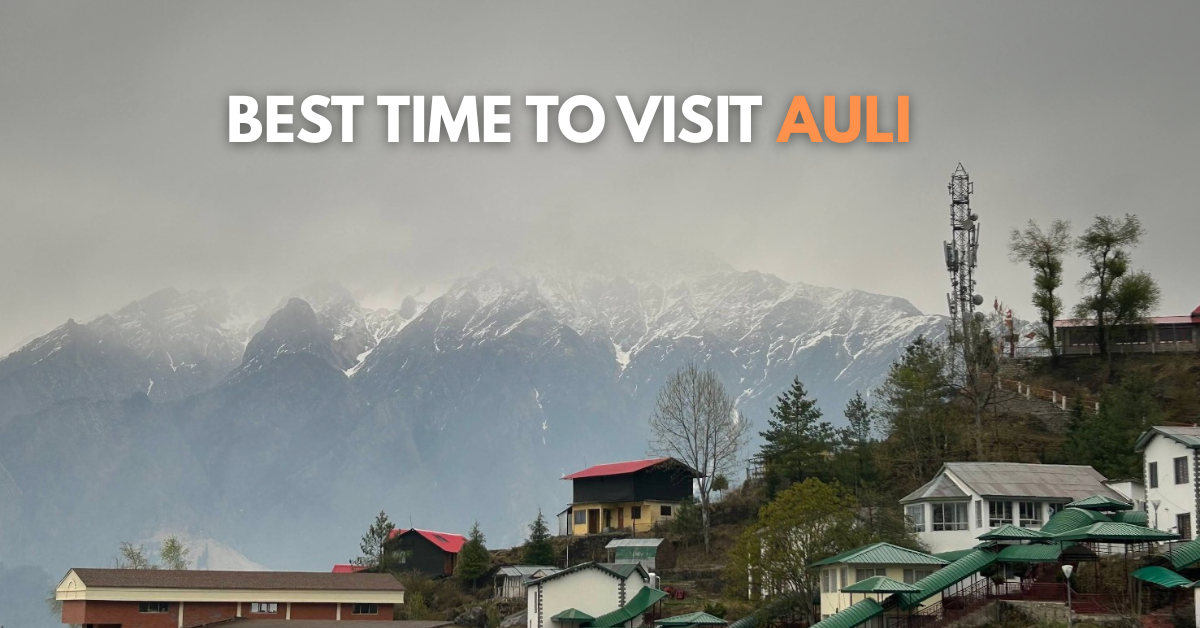
Auli, perched high in Uttarakhand’s Chamoli district, is known as the “skiing capital” of the country, and for all the right reasons. Auli Bugyal, which in the Garhwali language means Meadows, is stretched over an elevation of 2,500 meters (8,200 ft) to 3,050 meters (10,010 ft) above sea level.
This creates the perfect height and flat ground combination for skiing. This factor invites travellers to Auli in the winter season, but Auli isn’t just a winter destination; it has something unique every season.
The best time for Auli Tour depends entirely on what you want to experience: fresh snowfall, skiing slopes, crystal-clear Himalayan views, or quiet mountain escapes through various treks.
So instead of asking “When is the best time to visit Auli?”, the better question is – best time for whom?
Is there One Best Time to visit Auli?
There isn’t a single “perfect” month to visit Auli.
The destination changes dramatically with the seasons:
- Winter (Dec–Feb): Perfect to experience snow, skiing, and other snow activities, but remember this is the peak time, so expect more crowds.
- Spring & Summer (Mar–May): For pleasant weather, and cable car rides which give clear views of mountain peaks like Nanda Devi, Donagiri, etc.
- Monsoon (Jun–Sep): Lush and green landscapes due to heavy rainfalls. The crowd will be low, but travel is not recommended in this season due to the possibility of landslides and blocked roads.
- Autumn (Oct–Nov): Ideal to experience pre-winter cool breezes with clear skies. You can trek to nearby spots such as Chattrakund Lake, Kuari Pass, Gurson Bugyal, Kwani Bugyal, etc.

Best Time to Visit Auli for Snow & Skiing (December to February)

If you want to enjoy Aul’s snow-covered slopes, skiing, and white landscapes, winter is the best time to visit.
- Temperature: -6°C to 4°C
- Snowfall: Usually begins in late December.
- Peak snow months: January and early February
- Best time for skiing: Mid-January to February
During this period, Auli turns into India’s most popular skiing destination. The ski slopes are maintained by GMVN, and professional skiing courses are also conducted here, for different timelines, like for 1 day, 3 days, or more. Because of fresh snowfall, the powdery snow, and the sub-zero temperatures creates the ideal conditions for winter sports.
However, winter also comes with crowds and higher prices. Hotels, ropeway tickets, and transport see peak demand, especially during the New Year and long weekends. Road access can sometimes be disrupted due to heavy snowfall.
To reach the top, you can use the 4 km-long cable-car ride, which is also one of the longest and highest cable-car rides in the world. Only offline tickets are available.
Best for:
- Snow lovers
- Skiing enthusiasts
- First-time visitors who specifically want snow
Avoid winter if:
- You dislike cold temperatures
- You prefer quiet travel
- You are visiting with elderly travellers without snow experience
Best Time to Visit Auli for Clear Views (March to May)

If you want clear Himalayan views, pleasant weather, and fewer crowds, spring and early summer are ideal.
- Temperature: -1°C to 16°C
- Weather: Cool mornings, mild afternoons
- Snow: March may still have leftover snow patches.
- Visibility: Excellent mountain views on clear days.
From March onwards, the snow starts melting, revealing lush green meadows. This is one of the best times for photography, sightseeing, and riding the Auli ropeway without long queues.
The temperature remains comfortable, making it suitable for families and relaxed travellers. While skiing activities decrease after March, the landscape becomes more vibrant and accessible.
Best for:
- Sightseeing and photography
- Families and senior citizens
- First-time visitors who are not focused on snow.
Auli During Monsoon (June to September): Should You Go?

Monsoon is the least popular and not advised time to visit Auli, but not entirely unviable.
- Temperature: 8°C to 18°C
- Rainfall: Moderate to heavy
- Landscape: Lush green and misty
- Crowds: Very low
While the surroundings turn beautifully green, frequent rain can affect visibility and road conditions. Landslides are a common risk on mountain roads, and outdoor activities are also limited.
That said, if you enjoy slow travel, solitude, and off-season discounts, the monsoon can still be appealing — with proper planning.
Note: It is not advised to visit Auli during heavy rain.
Best for:
- Budget travelers
- Offbeat and slow travel lovers
Not recommended for:
- First-time visitors
- Children or senior citizens
- Tight itineraries
Auli During Autumn (Oct-Nov): Clear Skies & Quiet Mountains

Autumn is one of the most underrated yet rewarding times to visit Auli. As the monsoon withdraws, the skies turn crisp, the air becomes dry, and the Himalayan peaks emerge in their full glory.
- Temperature: -2°C to 15°C
- Weather: Cold mornings, pleasant afternoons
- Snow: None, but early frost may appear by late November
- Visibility: Excellent – some of the clearest mountain views of the year
October and November offer unobstructed views of mountain peaks like Nanda Devi, Kamet, and Dunagiri, making this season ideal for photographers and nature lovers. The meadows are golden, the forests are fresh just after the monsoon, and tourist crowds are minimal.
This is also a great time if you want to enjoy the Auli ropeway without long queues and explore nearby attractions comfortably before winter sets in.
Best for:
- Photography and mountain views.
- Quiet, crowd-free travel.
- Visitors who prefer cool weather without snow.
Keep in mind:
- Nights can get cold, especially in November.
- Skiing and snow activities are not available yet.
Autumn is perfect if you want to experience Auli in its calmest, clearest, and most balanced form — just before the winter rush begins.
Month-wise Weather in Auli (Quick Overview)
| Month | Weather | Snowfall | Ideal For |
|---|---|---|---|
| Jan–Feb | Very cold | Heavy | Skiing, snow |
| March | Cold to pleasant | Light | Snow + views |
| April–June | Pleasant | No | Sightseeing |
| July–Aug | Cool, rainy | No | Off-season |
| Sept | Cool, improving | No | Quiet travel |
| Oct–Nov | Cold, dry | No | Clear views |
Best Time to Visit Auli Based on Travel Style
- For snow & skiing: January to February
- For first-time visitors (Not snow focused): March to May
- For budget travellers: July to September
- For photographers: March–June and October
Worst Time to Visit Auli (Reality Check)
There is no absolute “worst” time, but peak winter without preparation and heavy monsoon with tight schedules can negatively impact your experience. Weather changes quickly, within the blink of an eye, in mountainous areas.
If road closures, long queues, or weather uncertainty worry you, avoid:
- Late December (holiday rush)
- Peak monsoon weeks are in July and August.
Final Verdict: So, When Is the Best Time to Visit Auli?
The best time to visit Auli depends on your purpose:
- Want snow? Visit in January
- Want views and comfort? Visit from March to May
- Want solitude and budget travel? Visit September
Choose the season that matches your travel style, reach Auli and Auli will reward you accordingly.

Leave a Comment