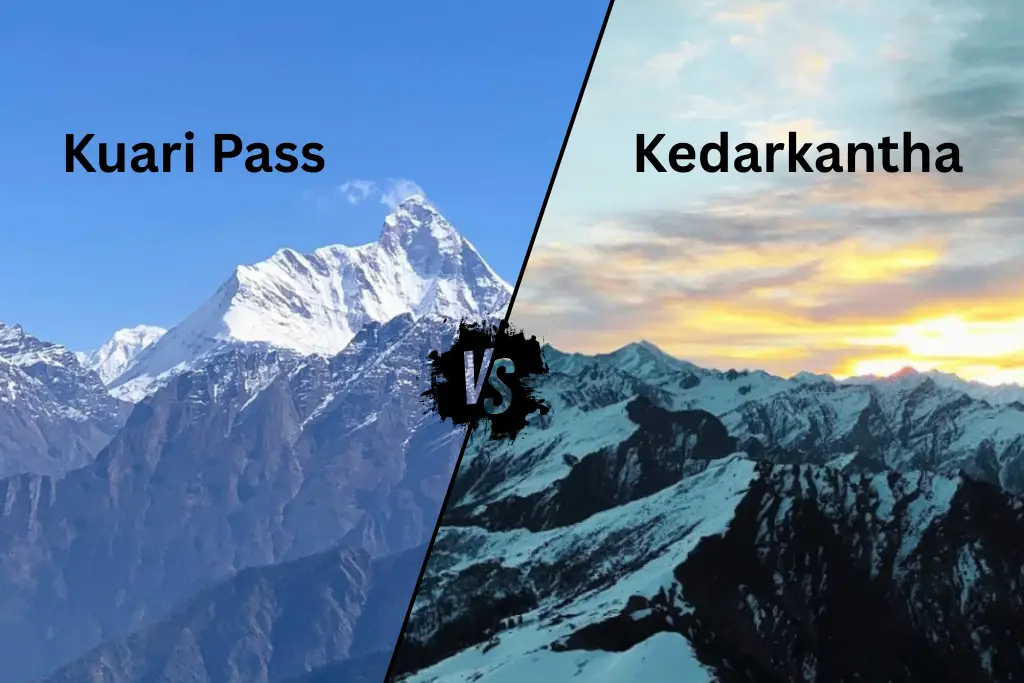
Choosing between Kuari Pass vs Kedarkantha trek is a common dilemma for trekkers planning a winter adventure in Uttarakhand. Both treks sit at similar altitudes, both welcome beginners, and both promise snow, forests, and Himalayan views. Yet, the experience they offer feels very different once you step on the trail.
This trek comparison will help you decide which one suits your expectations, fitness level, and trekking goals. Instead of hype, this article focuses on real terrain, real views, real effort, and real rewards.
Quick Overview: Kuari Pass vs Kedarkantha Trek
| Aspect | Kuari Pass | Kedarkantha |
|---|---|---|
| Location | Chamoli, Uttarakhand | Uttarkashi, Uttarakhand |
| Region | Outer zone of Nanda Devi Biosphere Reserves | Govind Wildlife Sanctuary & National Park |
| Base Camp / Starting Point | Joshimath, Dhak Village | Sankri Village |
| Best For | Meadows, ridgelines, and wide mountain views | Forests, snow trails, sunrise, thrilling summit climb |
| Max. Height | 12,516 ft | 12,500 ft |
| Trek Distance | 33 km for round trip | 20 km for round trip |
| Grade | Easy to Moderate | Easy to Moderate |
| Age Criteria | 7+ | 7+ |
| Duration | 5-6 days | 5-6 days |
| Health Requirement | 5 km in 30 minutes | 5 km in 30 minutes |
| Avg Cost | ₹9,000-12,000 | ₹6,000-8,000 |
| Famous For | View of India’s second highest mountain peak – Nanda Devi (7,816 m) | Thrilling summit push, Sunrise |
| Permit | Offline | Offline |
Both treks fall under the category of best treks in Uttarakhand, but the similarities mostly end here.
Let’s go through both treks one by one-
Kuari Pass Trek: The Himalayan Balcony Walk
Why Kuari Pass Is So Popular
The Kuari Pass trek earns its reputation not because it is tough, but because it offers something rare. It gives close and clear views of high Himalayan peaks without demanding extreme effort.
Starting from Dhak village in Chamoli, the trail gradually climbs through forests, meadows, and snowfields before reaching the Kuari Pass. The round trip distance is around 33 kilometers, spread comfortably over 5 to 6 days.
This slow and steady progression makes it suitable for beginners who want to enjoy the mountains instead of racing against them.
Landscapes You Walk Through
Kuari Pass is not a single highlight trek. It feels like multiple treks stitched together.
You walk through:
- Ancient oak and rhododendron forests
- Wide open meadows like Gorson Bugyal
- Snow-covered trails in winter
- Gentle ridgelines with uninterrupted mountain views
Each day looks different, which keeps the trek engaging without feeling exhausting.
Himalayan Views That Define the Trek
What truly sets Kuari Pass apart is the view of Mt. Nanda Devi (7,817 m). It is not a distant silhouette. On a clear day, it stands massive and close, dominating the skyline.
Other peaks visible from the trail include:
- Kamet (7,756 m)
- Chaukhamba (7,014 m)
- Trishul (7,120 m)
- Hathi Parbat (6,727 m)
- Neelkanth (6,500 m)
- Mana Peak (7,274 m)
- Dronagiri
Such a concentration of high peaks is uncommon on easy to moderate treks in Uttarakhand. This is one of the main reasons Kuari Pass attracts repeat trekkers.
Difficulty Level and Fitness Requirement
Kuari Pass is considered easy to moderate.
- Daily walking distance stays around 5 to 7 km
- Ascents remain gradual
- No technical sections exist
- Altitude sickness is rare with proper acclimatization
Winter snow can increase difficulty slightly, but the trail remains manageable under guided conditions.
If this is your first Himalayan trek, Kuari Pass is forgiving. It rewards patience rather than brute strength.
Kedarkantha Trek: The Classic Winter Summit Experience
Why Kedarkantha Is So Famous
The Kedarkantha trek has earned legendary status among Indian winter treks. The reason is simple. It offers a true summit climb experience at a beginner friendly altitude.
Starting from Sankri village in Uttarkashi district, the trek covers around 20 kilometers and reaches a height of 12,500 feet.
Shorter duration and dramatic payoff make it extremely popular, especially between December and March.
Forest Trails and Juda Ka Talab
The trek begins gently through dense forests of pine, oak, and rhododendron.
A major highlight is Juda Ka Talab, a small lake that freezes completely in winter. For many beginners, walking beside or over a frozen lake is a first-time experience.
The campsite here feels calm, cold, and deeply Himalayan.
The Summit Climb That Defines Kedarkantha
The real test begins after Kedarkantha Base Camp.
The final ascent to the summit involves:
- A steep incline of 40° to 60°
- Thick snow during winter
- Continuous climbing for 2 to 3 hours
This section demands effort, balance, and mental focus. It is not technical, but it feels earned.
Reaching the summit gives you 360 degree views of:
- Swargarohini range
- Bandarpoonch
- Black Peak (Kala Naag)
- Ranglana range
- Yamunotri range
For many trekkers, this becomes their first true summit achievement.
Sunrise and Night Summit Push
Kedarkantha is famous for its sunrise summit push.
Trekkers start before dawn, headlamps glowing like a moving river of light. Reaching the summit between 6 and 7 am rewards you with a sunrise that changes the color of the entire Garhwal range.
This moment alone explains why Kedarkantha remains one of the most talked-about winter treks in India.
Difficulty and Preparation
Kedarkantha falls into the easy to moderate category.
- Shorter trek duration
- Gradual ascent until summit day
- Steep but manageable final climb
Winter snow increases physical demand. Cardio fitness and leg strength help a lot here. The trek challenges beginners but does not overwhelm them.
Kuari Pass vs Kedarkantha: Which One Should You Choose?
Choose Kuari Pass If
- You value long mountain views over summit thrill
- You want to walk through varied landscapes
- You prefer gradual days and less crowd pressure
- You want close views of Nanda Devi
Kuari Pass feels like a slow conversation with the Himalayas.
Choose Kedarkantha If
- You want a summit climb experience
- You are trekking mainly in winter
- You enjoy shorter treks with strong highlights
- You want that classic sunrise moment
Kedarkantha feels like a focused goal with a powerful finish.
Safety, Acclimatization, and Realistic Expectations
Both treks sit at similar altitudes, so altitude risk stays low with proper pacing.
Trusted trekking organizations and forest authorities recommend:
- Gradual ascent
- Hydration
- Rest days where required
- Basic fitness preparation
Final Verdict: Kuari Pass or Kedarkantha?
There is no absolute winner in the Kuari Pass vs Kedarkantha trek debate.
Kuari Pass wins on mountain views and landscape variety and Kedarkantha wins on summit thrill and winter drama.
If you want to fall in love with mountains slowly, choose Kuari Pass. If you want to earn a summit and celebrate it, choose Kedarkantha.
Either way, the Himalayas will not disappoint you. They rarely do.


Leave a Comment