Lohajung is not a place that announces itself loudly. It does not have cafés lined up for trekkers or dramatic viewpoints right at the edge of the road. Yet, almost everyone who has walked towards Brahmatal, Ali Bedni Bugyal, or Roopkund has passed through this small village in the Chamoli district of Uttarakhand.
Lohajung sits quietly above deep valleys and long forested ridges. Situated at around 2,300 m (7,600 ft), Lohajung is a Himalayan village best known as the base camp for the Brahmatal Trek. It’s not only the base camp but the village also has a rhythm that feels separate from the trekking rush. Mornings begin early. Smoke rises gently from kitchen fires. By evening, silence settles in long before night.
Located about 280 km from Yoga Capital Rishikesh, Lohajung is the point where preparation ends and walking begins. For others, it is simply a mountain village that shows what life looks like when winter lasts longer than summer.
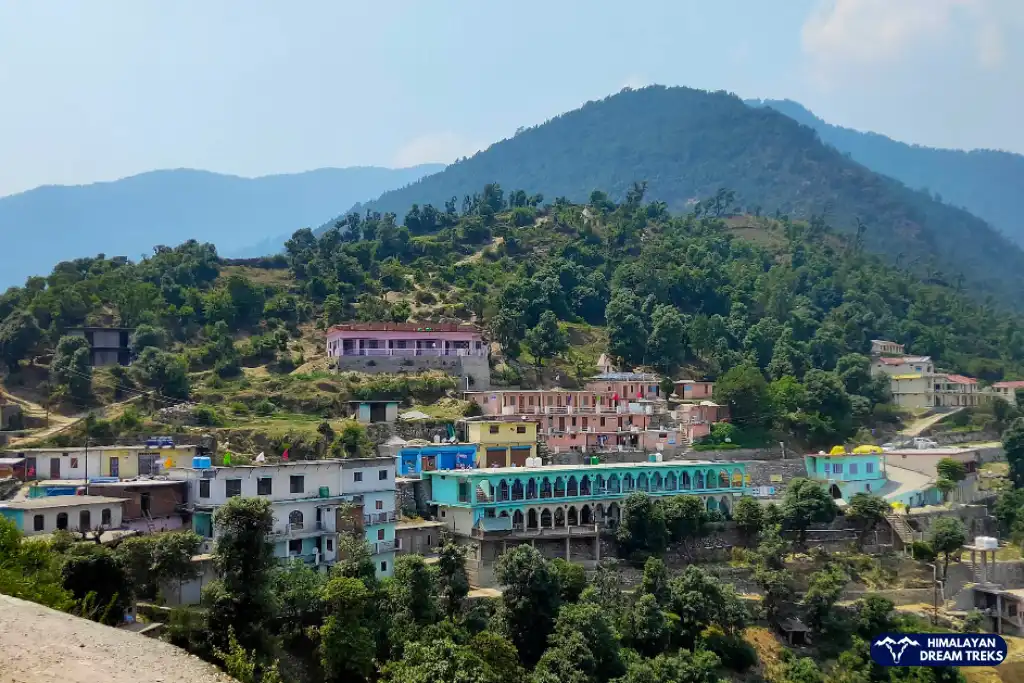
Table of Contents
Life in Lohajung Village
Lohajung is small Himalayan village. Houses are built close together, designed to retain heat. Most families rely on agriculture, animal husbandry, and seasonal trekking work.
During trekking season, homestays open their doors. Meals are simple and filling. Stories are shared quietly, usually around a fire.
There is no rush here. Evenings come early. Mobile networks work intermittently. That silence often becomes the most memorable part of the stay.
Treks That Start from Lohajung
Lohajung is often called a trekking hub, and rightly so. Several well-known Himalayan trails branch out from here, each with its own character.
Brahmatal Trek- One of most loved winter treks in Uttarakhand
- Difficulty level: Easy
- Suitable for: Beginners with basic fitness, experienced trekkers
- Duration: 5 to 6 days including travel
- Trek distance: Around 24 to 28 km
- Maximum altitude: Approx. 3,700 meters or 12,150 feet
- Major highlights: Frozen Brahmatal and Bekaltal lakes, oak and rhododendron forests, snow-covered meadows, wide views of Mt. Trishul and Nanda Ghunti, and one of most loved winter treks in Uttarakhand
Ali Bedni Bugyal Trek – Asia’s largest Alpine Meadow
- Difficulty level: Easy-Moderate
- Suitable for: Beginners with good fitness and experienced trekkers
- Duration: 6 to 7 days (including travel to and from Lohajung)
- Trek distance: Approximately 30 to 35 km
- Maximum altitude: Around 3,350 meters (about 11,000 ft)
- Major highlights: Vast alpine meadows of Ali and Bedni Bugyal, long forest walks, seasonal shepherd trails, Bedni Kund, one of the most rewarding treks in Uttarakhand, and wide views of Trishul, Nanda Ghunti, and surrounding Himalayan peaks
Roopkund Trek – The Mystery and Skeleton Lake
- Difficulty level: Moderate
- Suitable for: Experienced trekkers with high fitness and prior high-altitude experience
- Duration: 7 to 8 days (including travel to and from Lohajung)
- Trek distance: Approximately 53 km
- Maximum altitude: Around 5,029 meters (about 16,500 ft)
- Major highlights: Roopkund Lake, high-altitude alpine meadows of Ali and Bedni Bugyal, remote camps like Bhagwabasa, panoramic views of Trishul and Nanda Ghunti, and the stark, isolated Himalayan landscape near the summit
How to Reach Lohajung from Rishikesh or Kathgodam
Lohajung can be reached from Rishikesh or Kathgodam.
Route 1: Rishikesh to Lohajung via Karnprayag, Tharali, and Deval
First, reach Rishikesh from Delhi, and then proceed to Lohajung the next day.
Reaching Lohajung takes patience. Roads wind slowly, distances feel longer, and the mountains set their own pace. Starting early is always a good idea.
Rishikesh is the most practical starting point. The distance from Rishikesh to Lohajung is about 280 km one way. The road journey passes through towns like Devprayag, Srinagar, Karnprayag, Tharali, and Deval.
Route: Rishikesh → Devprayag → Srinagar → Karnprayag → Tharali → Deval → Lohajung.
- Nearest airport: Jolly Grant Airport, Dehradun
- Railway station: Yog Nagri Rishikesh
- Well connected by road from Delhi and other major cities
Start from Rishikesh early in the morning. Take a state transport bus or shared cab towards Joshimath or Badrinath and get down at Karnaprayag. Regular buses or taxis depart early in the morning from Rishikesh and typically drop passengers at Dewal or Mandal. From there, one can continue to Lohajung by shared taxi. Schedules may change, so it is very important to confirm departures at the Rishikesh bus stand.
Step 1: Rishikesh to Karnprayag Drive
- Distance: ~170 km
- Time: 6 to 7 hours
- The route passes through Devprayag, Srinagar, and Rudraprayag, following the Alaknanda and Ganga valleys.
Step 2: From Karnaprayag, take a shared jeep to Tharali.
- Distance from Karnprayag to Tharali: ~47 km
- Time: 1.5 to 2 hours
- The road runs alongside the Pindar River and through small hillside villages.
Step 3: From Tharali, continue by shared taxi to Deval.
- Distance from Tharali to Deval: ~45 km
- Time: 1.5 to 2 hours
- Deval is the last main market town. This is the best place for any last-minute supplies.
Step 4: From Deval, take a shared or private taxi to Lohajung.
- Distance from Deval to Lohajung: ~14 km
- Time: 30 to 40 minutes
- On clear days, views of Trishul and Nanda Ghunti appear along the climb.
Route 2: Kathgodam or Haldwani to Lohajung via Baijnath
From Kathgodam or Haldwani, take a bus or taxi to Almora.
- Distance: ~90 km
- Time: 3 to 4 hours
- The route passes through pine forests and along the Kosi River.
From Almora, travel via Baijnath to Gwaldam, then continue towards Deval by shared cab.
- Baijnath is known for its ancient Shiva temple.
- Gwaldam offers clear mountain views on good days.
From Deval, proceed to Lohajung by shared or private taxi.
This route suits travelers coming from the Kumaon side and offers landscapes different from the Garhwal approach, without adding much extra travel time.
Weather and Temperature at Lohajung
The village is at high-altitude and the climate is mostly cool throughout the year. Temperature remains mild during the warmer months and sharply drops once winter sets in so weather plays an important role in planning a visit to Lohajung.
Seasonal Weather Breakdown
Winter (December to March): Cold and mostly dry, with frequent snowfall, especially in January and February. Night temperatures can drop to around -5°C, while daytime temperatures hover near 5°C.
Spring and Summer (April to June): Pleasant, clear, and sunny. Daytime temperatures at Lohajung generally range between 10°C and 20°C, making this period ideal for trekking and travel.
Autumn (September to November): Clear skies and comfortable weather conditions return after the monsoon. The landscape turns green, and temperatures remain cool and pleasant, especially in October and early November. Daytime temperatures in Lohajung usually range between 12°C and 20°C, while nighttime temperatures fall between 5°C and 10°C.
Best Time to Visit Lohajung Village
The best time depends on what you are looking for.
- For snow and winter trekking: late January to early February
- For clear trails and views: April to June
- For quiet village life and photography: October to November
November is beautiful but unpredictable. Snow may arrive late or not at all.
Places to Visit In and Around Lohajung
- Bekaltal: A small alpine lake often frozen in winter. Still, reflective, and surrounded by forests. Most people visit it as part of the Brahmatal trek, but its calm presence stays with you.
- Wan Village: It is another base village, connected to Lohajung by road. Traditional homes, open fields, and a slower pace define it. Many Roopkund trekkers begin their journey here.
- Latu Devta Temple: Located near Wan, this temple is deeply respected by locals. Entry rules are strict, and photography is restricted. Even without entering, the surrounding atmosphere feels grounded and old.
- Local Temples and Forest Trails: Short walks around Lohajung lead to small shrines, forest trails, and ridges that offer quiet views of surrounding valleys.
Where to Stay in Lohajung
Options are limited but adequate.
- Basic guesthouses
- Local homestays
- Trek operator camps during season
Facilities are simple. Hot water may be limited.
Final Thoughts
Lohajung is not a destination you rush through. It prepares you slowly. It teaches patience before the trek even begins.
Whether you arrive in deep winter or clear autumn, the village stays the same. Quiet. Grounded. Unassuming.
Most people come here thinking about the trail ahead. Many leave remembering the stillness they did not expect.


Leave a Comment