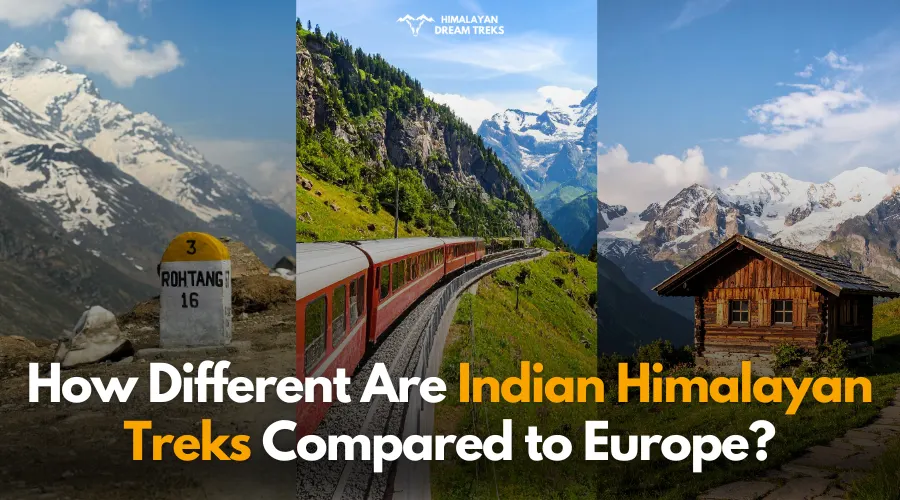
An honest, experience-based guide to understanding what sets these two iconic trekking worlds apart
Trekking has become one of the most rewarding ways to explore nature, test your limits and connect with culture. But not all treks are created equal and few comparisons are as striking as those between Indian Himalayan treks and European trekking experiences.
Let’s look at these differences to help you understand what makes each one unique and why they appeal to different types of adventurers.
Table of Contents
1. Altitude and Mountain Character
One of the most obvious differences between Himalayan and European treks is altitude. In the Indian Himalayas whether it’s Ladakh, Uttarakhand, Himachal or Sikkim many treks take you through high passes above 4,000-5,000 m and sometimes much higher.
Routes such as those in Ladakh involve sustained high-altitude terrain where even base camps can start above 3,500 m, often higher than many European summits.
In Europe’s Alps, even the highest peak Mont Blanc at 4,810 m is comparable to Himalayan high passes, but the average trekking altitudes are generally lower, often below 3,000 m for most multi-day hikes.
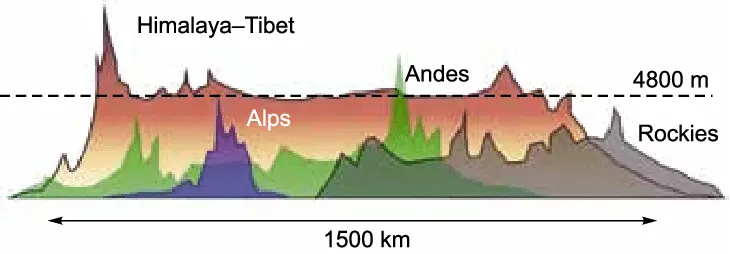
This means
- Himalayas: Greater risk of altitude sickness, more pronounced acclimatisation needs, longer climbs to remote high passes.
- Europe: Lower elevations with less physiological risk, perfect for longer seasons and for trekkers of varied skill.
2. Infrastructure and Trail Support
Perhaps the most noticeable difference for first-time trekkers lies in trail infrastructure.
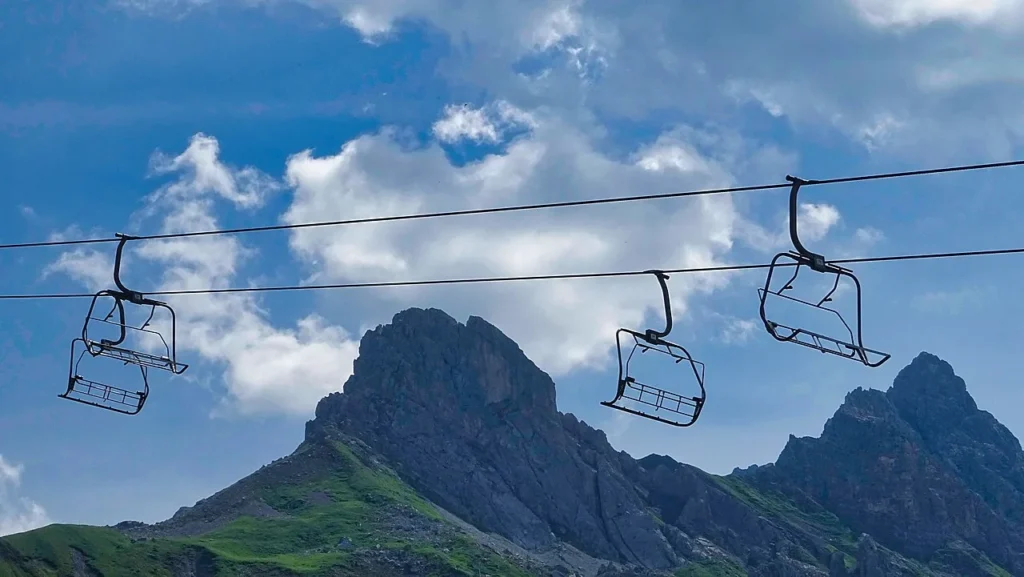
In Europe, especially in the Alps, trails are extremely well-marked. Mountain huts, cabins with meals and beds, clear signposts, and even cable cars make multi-day hiking accessible and comfortable.
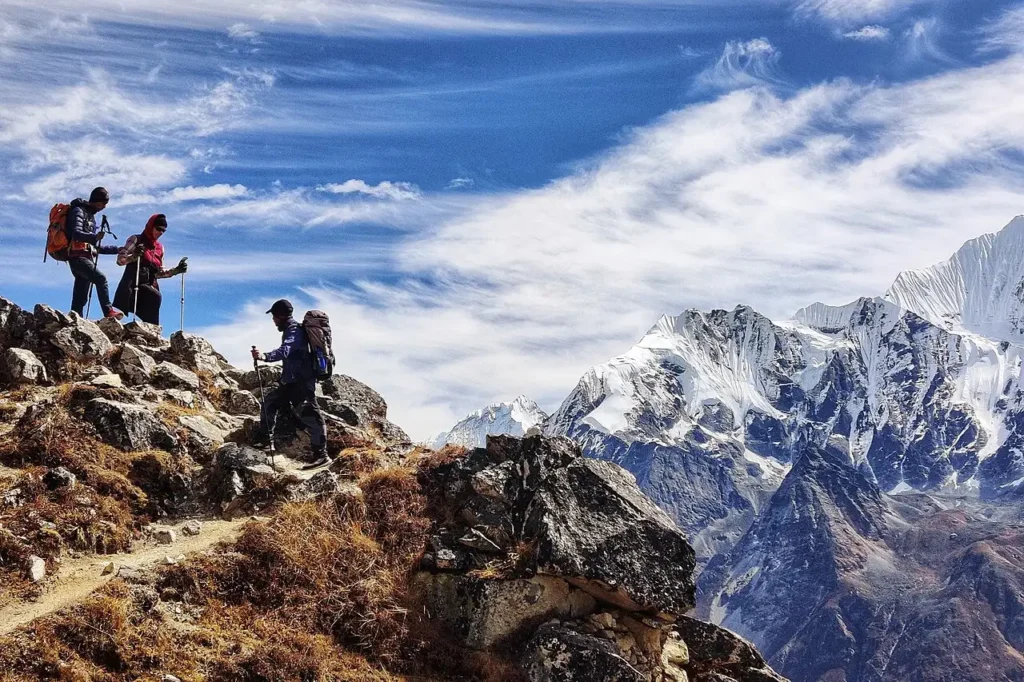
In contrast, Indian Himalayan trails typically offer minimal markings, especially in remote areas. Use of natural or shepherd paths, sometimes untracked
This makes Himalayan trekking feel more like real exploration, but also more demanding in planning and logistics.
3. Cultural Immersion vs. Scenic Charm
One major reason people trek in the Himalayas is culture. Indian Himalayan routes pass through villages that have existed for centuries. Trekkers encounter prayer flags, ancient gompas, chanting monks and local traditions that feel alive and personal.
By contrast, European alpine trekking is steeped in villages, flower-filled meadows, and rustic stone huts but the cultural layer tends to feel more tourism-oriented than living tradition.
In the Himalayas:
- Villagers may join you for chai
- You stay in homestays or basic lodges
- Food is local and rooted in tradition
In Europe:
- You enjoy well-built refuges
- Food is gourmet and service-oriented
- Culture is present but often “packaged” for travellers
4. Cost and Accessibility
When comparing costs, Europe usually ranks higher.
Trekking in the Alps often includes:
- Higher accommodation costs (huts and lodges)
- Expensive meals
- Transport costs within Europe
By contrast, Himalayan treks especially in India and Nepal tend to be more affordable on the ground, with lower accommodation and food costs and strong value for services.
However, anyone travelling from India to Europe should also consider international flights, which can add significant expense.
5. Nature and Remoteness
Both regions offer stunning landscapes, but the feel is very different.
Himalayan landscapes tend to feel vast, raw, and untamed. In places like Ladakh or Spiti Valley, you’ll walk high-altitude plains, glacial valleys and desert-like plateaus with few signs of infrastructure or crowds.
Europe’s mountains feel more cultivated and pastoral. Forests, rolling meadows and well-kept huts create a network of accessible wilderness that, while gorgeous, can feel more “managed” than wild.
6. Seasonal Dynamics and Weather
Seasonality plays a larger role in the Himalayas. Routes can become inaccessible or dangerous during Indian monsoon (June–September), with landslides common on several trails.
Europe’s trekking seasons are well-defined as well summer for high routes and shoulder seasons for lower ones but the infrastructure allows more predictable accessibility, even if off-season lodges close.
In short:
- Himalayas: trekking windows are narrower, and the weather can change abruptly
- Europe: easier seasonal planning and wider accessibility
7. Sense of Community and Group Dynamics
Himalayan treks are often done with small groups and local guides. The lack of infrastructure and trail support makes guides invaluable not just for safety but for cultural insight and logistics.
In Europe, many hikers go self-guided without support, relying on well-signed paths, maps, and huts to navigate. This changes the social mood of the trek.
8. Environmental and Sustainability Considerations
Both regions face ecological pressure, but the challenges differ. In the Indian Himalayas, trails and meadows suffer from waste and overuse, partly due to limited waste management and large batches of trekkers.
Europe’s systems are more regulated, with active trail maintenance, guided hut systems, and stronger infrastructure aimed at protecting nature.
These differences impact:
- Trail condition
- Visitor behavior
- Conservation outcomes
Where Do Trekkers Go More? (Approximate % Split)
Based on: UNWTO Adventure Tourism reports, European Alpine Club (EAC) data, Indian & Nepal Adventure Tour Operators Association (ATOAI / TAAN), Operator-level booking trends (India, Nepal, Alps), Global Trekker Preference12
| Region | % of Global Trekking Tourists |
| Europe (Alps, Dolomites, Pyrenees) | 55-60% |
| Himalayas (India, Nepal, Bhutan) | 30-35% |
| Other regions (Andes, Rockies, etc) | 10-15% |
Europe attracts more overall numbers, mainly due to accessibility and comfort and Himalayas attract fewer but more purpose-driven trekkers
Why does Europe attract ~60% of Trekkers? Accessibility & Short Holidays (Key Reason). Around 65–70% of European trekkers choose the Alps because:
- Treks start close to cities
- No permits or guides required
- Well-marked trails
- Fits into 3-7 day holidays
“I can land in Geneva on Friday and be on a trail by Saturday morning.” German hiker, Alpine Club survey
Why do the Himalayas attract ~30–35%? Purpose-Driven Travel
Among Himalayan trekkers:
- 74% say they come for challenge & depth
- 66% want cultural immersion
- 58% want remote, non-commercial landscapes
- Repeat Rate Is Higher in the Himalayas
Interestingly:
Europe has more first-time trekkers but Himalayas have higher repeat visitors. Approximate repeat trekker rate: Europe: 35-40% | Himalayas: 55-60%
Why are Indian trekkers increasingly choosing Himalayas?
Among Indian trekkers specifically, 82% choose Himalayan treks, only ~12–15% consider Europe, mostly for leisure hiking
Reasons:
- Cost difference (Europe = 3-4× expensive)
- Cultural familiarity
- Growing awareness of Indian trails
- Social media exposure post-COVID
Cost vs Experience value
| Aspect | Himalayas | Europe |
| Avg cost (8-10 days) | 18k-40k INR | 1.2-2.5 L. INR |
| Guide required | Yes | Optional |
| Comfort | Basic-Moderate | High |
| Dept of experience | Very high | Moderate |
Despite lower comfort, 68% of Himalayan trekkers feel they get “more value per effort”.
Crowd Perception (Very Important Difference)
Survey insight:
Europe: 55% say trails feel busy but organised
Himalayas: 48% complain about overcrowding only on famous treks, 70% say offbeat Himalayan treks feel empty and pure
Conclusion
Two Worlds of Trekking
So, which is better? It depends on what you seek.
Both have their own magic. But if you want pure Himalayan experience, trekking in the Indian Himalayas offers something truly distinct and unforgettable a journey not just through landscapes, but through living traditions and mountain life.

Leave a Comment