
A temple situated in the Himalayan mountains which has become a symbol of the world’s most beautiful love story is the Triyugi Narayan temple. A flame that made Lord Shiva and Maa Parvati each other for seven lives, binding them in the sacred bond of lifelong togetherness.
Triyuginarayan is not just a temple but a symbol of a love story that was, is, and will remain immortal. Couples visit here to strengthen their relationship, while devotees and travelers come to explore a new place, destination wedding in Uttarakhand or find a moment of peace.
This guide will provide you with information about the temple’s ancient history, beliefs, location, timings, and how to reach it, helping you understand this destination better.
Table of Contents

Legends That Shaped Its History
According to Hindu mythology, after Goddess Sati sacrificed herself in the fire, she was reborn as a daughter of Himavan and Mainavati and was named Parvati. Her love and devotion for Lord Shiva was so intense that she performed penance near Gauri Kund for many years, which is the base camp for Kedarnath temple.
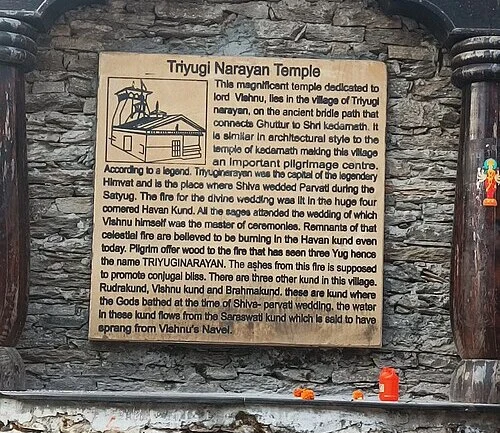
The temple’s name Triyugi comes out from tri (three), yugi (yugas or eras), and Narayan (Lord Vishnu), honoring the eternal fire in the havan-kund that pilgrims have been offering for last three yugas- Satya, Treta, and Dvapara yuga.
According to Shiva Purana, Lord Vishnu made all the wedding arrangements and acted as Pravati’s brother, while Lord Brahma officiated as the priest. The place where the wedding took place is marked by a stone known as Brahma Shila.
The Akhand means (eternal) and Dhuni (flame) is the highlight of the temple. It is believed that the sacred fire was lit during their wedding and has been burning ever since. Devotees take the ashes to ensure a blessed married life and to receive the blessings of all gods and goddesses.
Peaceful Location with Calm Surroundings

Shiv Parvati marriage temple is situated at an altitude of 1,980 meters (6,500 feet) above sea level in the Rudraprayag district of Uttarakhand. With a neighborhood of dense forest, bloom-covered fields, and magnificent views of Kedarnath peaks. It is highly believed that bathing in four holy kunds: Brahma, Saraswati, Vishnu, and Rudra cure infertility.
The eternal flame in the Havan-kund invites devotees to offer wood and carry ashes as prasad, a tradition that has continued for centuries and will continue for generations to come. The quaint village of Triyuginarayan impresses everyone with its charm making every pilgrim feel the devotion.
How To Reach
Visiting Triyugi Narayan feels like a journey of the heart, with the path winds through Grahwal hills with 453 km and 10-12 hours from Delhi passing through Haridwar, Rishikesh, Devprayag, Rudraprayag, Guptkashi, and Sonprayag.
- Nearest Airport: Jolly Grant Airport, Dehradun (253 km away, 7+ hours drive).
- Nearest Railway Station: Rishikesh (212 km), with buses and taxis available to Sonprayag.
From Sonprayag, it’s a 7-13 km drive, and you can also reach the temple via a short trek from Sitapur. If you enjoy adventurous trekking, you can trek Gauri Kund (5 km downhill) to Kedarnath. Alternatively, you can take the 69 km Rudraprayag-Kedarnath circuit, where gentle wind will offer a sense of sobriety.
Timeless Architecture and Unique Details
Designed in Grahwali style using stone and wood, it offers a touching glimpse of Kedarnath. The silver idol of Lord Vishnu, the eternal Havan-Kund, and the Brahma Shila add more significance to the temple. It is believed that the temple was built by Adi Shankaracharya, who also built many famous temples of the state. People bathe in the sacred kunds:
- Vishnu Kund: Purification
- Rudra Kund: Strength
- Saraswati Kund: Libration
- Brahma Kund: Blessings
Daily Worship and Visiting Essentials
This temple, dedicated to the marriage of Lord Shiva and Maa Parvati, opens at 04:00 am. The pooja (prayer ceremony) takes place from 06:00 am to 07:00 am.
The darshan (viewing of the deity) is available throughout the day. Following this, bhog (offering of food) is served from 12:00 pm to 01:00 pm, and the temple closes at 07:00 pm. The evening aarti (ritual of worship with lamps) is performed at 08:30 pm.
The best time to visit is April-June, when the temperature is between 15-25 degrees Celsius and the skies are clear. You can also visit between September and November when the crowds are much smaller. Whereas winter brings snowfall which blocks roads and the monsoon season brings the risk of landslides.
During the August Ekadashi Mela, the pooja timings may change. Devotees can visit the temple in simple attire and have darshan free of charge; photography is also permitted. However, shooting with drones is not allowed without permission. Don’t forget to carry some cash, trekking essentials, water, and light snacks to keep your spirit fueled.
Nearby Pilgrimage Attractions
You can make your visit even more special by exploring nearby places.
- Gaurikund (15.7 km away): Where Goddess Parvati performed penance and Kedarnath base camp (27 km in total).
- Guptkashi (38 km): Famous for its caves where Lord Shiva is believed to have hidden.
- Chopta (92 km) and Tungnath (79 km): The highest Shiva temple in the world, offer views of Chaukhamba and Nanda Ranges.
- Vasuki Tal (34 km, at 4,100 meters) or Deoria Tal (62 km): The clear waters reflect peaks like Shivling, creating a peaceful atmosphere.
- Places like Madhyamaheshwar (23 km) and Kalimath (48 km), Panch Kedar Yatra add to the spiritual journey.
Do’s and Dont’s for Triyuginarayan Temple Visit
To truly connect with the aura of Triyuginarayan, here’s a quick guide to the do’s and dont’s:
Do’s
- Respect the temple rituals and maintain silence inside the sanctum.
- Carry cash, as ATMs are limited in this remote area.
- Pack warm clothes, trekking gear, water, and snacks for comfort.
- Take part in the sacred rituals, like collecting ash from the eternal flame, with reverence.
- Interact with locals to learn fascinating legends and enjoy Garhwali hospitality.
- Plan your trip during the best seasons (April–June or September–November) for safe travel.
- Keep your surroundings clean—dispose of waste responsibly to preserve the natural beauty.
Dont’s
- Avoid visiting during peak winter (December–March) when heavy snowfall restricts access.
- Do not litter or disturb the serene environment around the temple. Follow Leave No Trace.
- Refrain from loud behavior or disrespectful actions inside the temple premises.
- Don’t rely solely on digital payments; connectivity may be poor.
- Avoid photography inside the sanctum unless permitted by temple authorities.
- Don’t ignore altitude effects—stay hydrated and pace yourself during treks.
Conclusion
Triyugi Narayan temple is far more than a place to pray—it is a journey into the heart of earliest stories, deep spirituality, and everlasting love. It softly reminds you that love and deviation are not bound by time, but are powerful forces that live on forever, just like the fire that has burned here for ages.



Leave a Comment