
Haridwar is one of the seven holiest places in Hinduism, attracting millions of devotees every year. Located in Uttarakhand, at the foothills of the Shivalik range, this city marks the point where the Ganga River enters the Indo-Gangetic plains. Haridwar literally translates to ‘Hari’ (Lord Vishnu) and ‘Dwar’ (gateway), meaning ‘the gateway to god.’
Other than spirituality, Haridwar is also a major hub for tourism and trekking activities. Most travellers come here to take a holy dip in the Ganga and attend the Ganga Aarti at Har ki Pauri. And for those heading into the higher Himalayas, Haridwar serves as the first stop on the road to Kedarnath, Badrinath, Gangotri, and Yamunotri. It is also the starting point of the Char Dham Yatra.
This guide covers everything you need to know before visiting Haridwar, from its history to travel tips for using the city as your base for Himalayan treks.
Table of Contents
Haridwar: Historical and Spiritual Significance
As one of the oldest and most revered cities in India, Haridwar’s roots can be traced back to the country’s ancient past. In the olden times, the city was known as Mayapuri (after Maya Devi temple), Kapilsthan, and Gangadwar. To understand Haridwar’s rich history, let’s explore it in detail:
Historical Mentions
The city is mentioned in sacred texts like the Mahabharata, the Vishnu Purana, and the Skanda Purana.
- The 1st-century text, the Garuda Purana, positions Haridwar among the seven cities in India (Sapta Puri) that grant Moksha, or liberation from the cycle of birth and death.
- The 7th-century Chinese traveller, Hiuen Tsang, wrote about Haridwar. He referred to the region as Mo-Yu-Lo or Mayapur, showing its significance during the rule of King Harshavardhana.
- In the 16th century, under Mughal rule, Raja Man Singh is credited with restoring the temples and ghats. It is said his ashes were immersed in the Har Ki Pauri, and ‘Man Singh ki Chhatri’ was built as his samadhi.
- Haridwar also holds significance in Sikhism. Guru Nanak visited the city in the 16th century and took the holy dip at the Kushawart Ghat.
The Legend Behind Har Ki Pauri
Har Ki Pauri finds its place in Hindu mythology. According to legends, its name means ‘steps of Hari or Lord Vishnu.’ It is said that the lord himself visited the banks of the Ganges River here, making the spot an important place for pilgrims. To this day, travellers can find the stone that is believed to have been stepped on by Lord Vishnu, leaving a footprint.
As per another legend, at the time of Samudra Manthan, the cosmic ocean was churned by the gods and demons. When a demon tried to deceive the gods and run away with the Amrit (nectar of immortality), a few drops fell at four places on Earth. One of the places was Har Ki Pauri in Haridwar, making it a destination for Kumbh Mela every twelve years.
The Kumbh Mela
Haridwar hosts the Kumbh Mela every 12 years and the Ardha Kumbh every 6 years. During the Maha Kumbh Mela, the city welcomes tens of millions of pilgrims within a span of weeks. Many saints, sadhus, seers, and devotees arrive here from every corner of India and the world. They all come to take a dip in the Ganga at Haridwar, as doing so during the Kumbh washes away all sins and grants Moksha.
Places to Visit in Haridwar
If you are planning a trip to Haridwar, make sure your itinerary covers the famous temples, ashrams, and shrines so that you can enjoy a wholesome retreat in the mountains. From taking the cable car to the sacred temples to enjoying a safari in the quiet forests, the city has something for every type of traveller.
Here are the top spots you should not miss:
1) Har Ki Pauri
- Location: Central Haridwar, about 3 km from the railway station
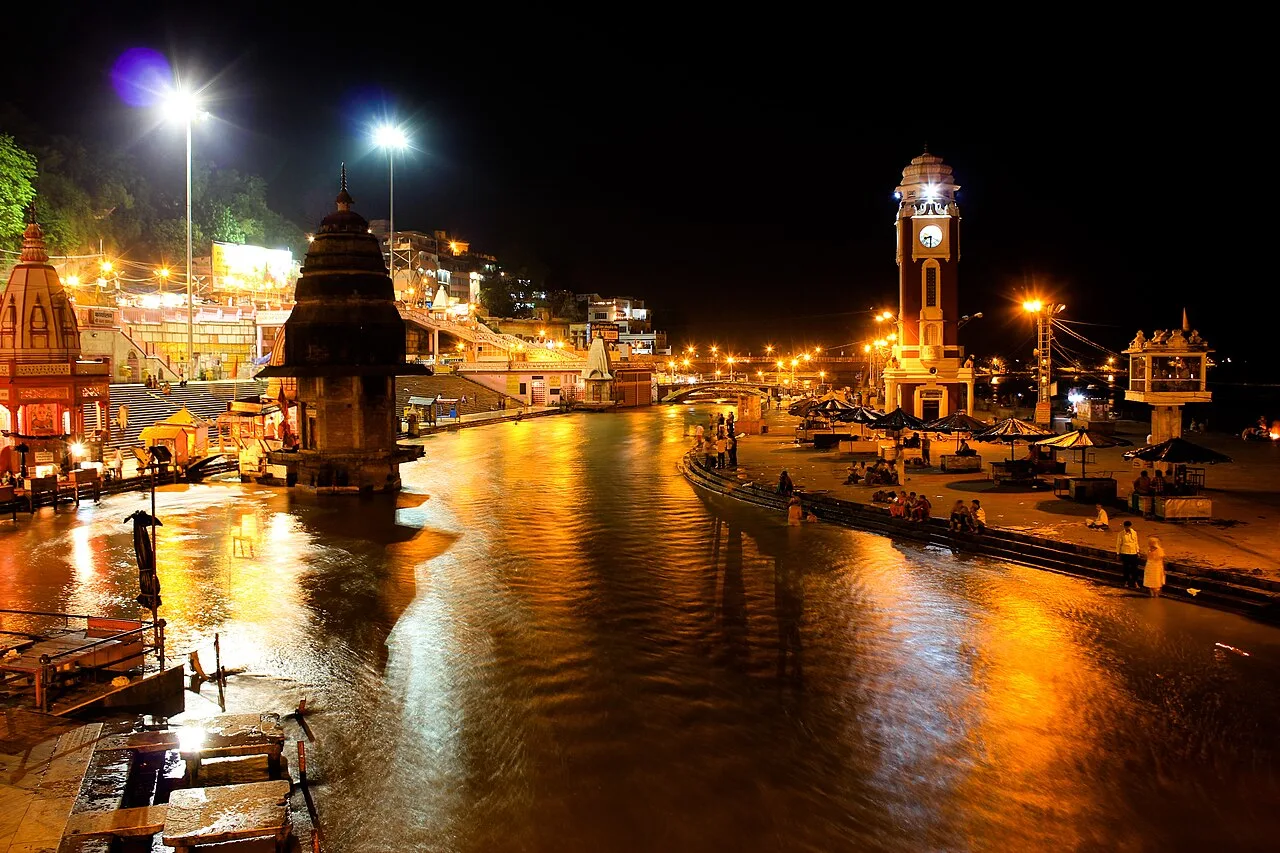
Har Ki Pauri is the most sacred ghat in Haridwar. Here, the central bathing area is called Brahmakund, and it is believed that taking a bath here grants Moksha. The ghat stretches along the Ganga with broad stone steps descending to the river. At the top of the steps, you find temples, dharamshalas, priests offering puja, and flower and diya sellers. The Ganga Aarti takes place at Har Ki Pauri every morning and evening.
2) Mansa Devi Temple
- How to reach: Take the ropeway or a 20-minute trek uphill.
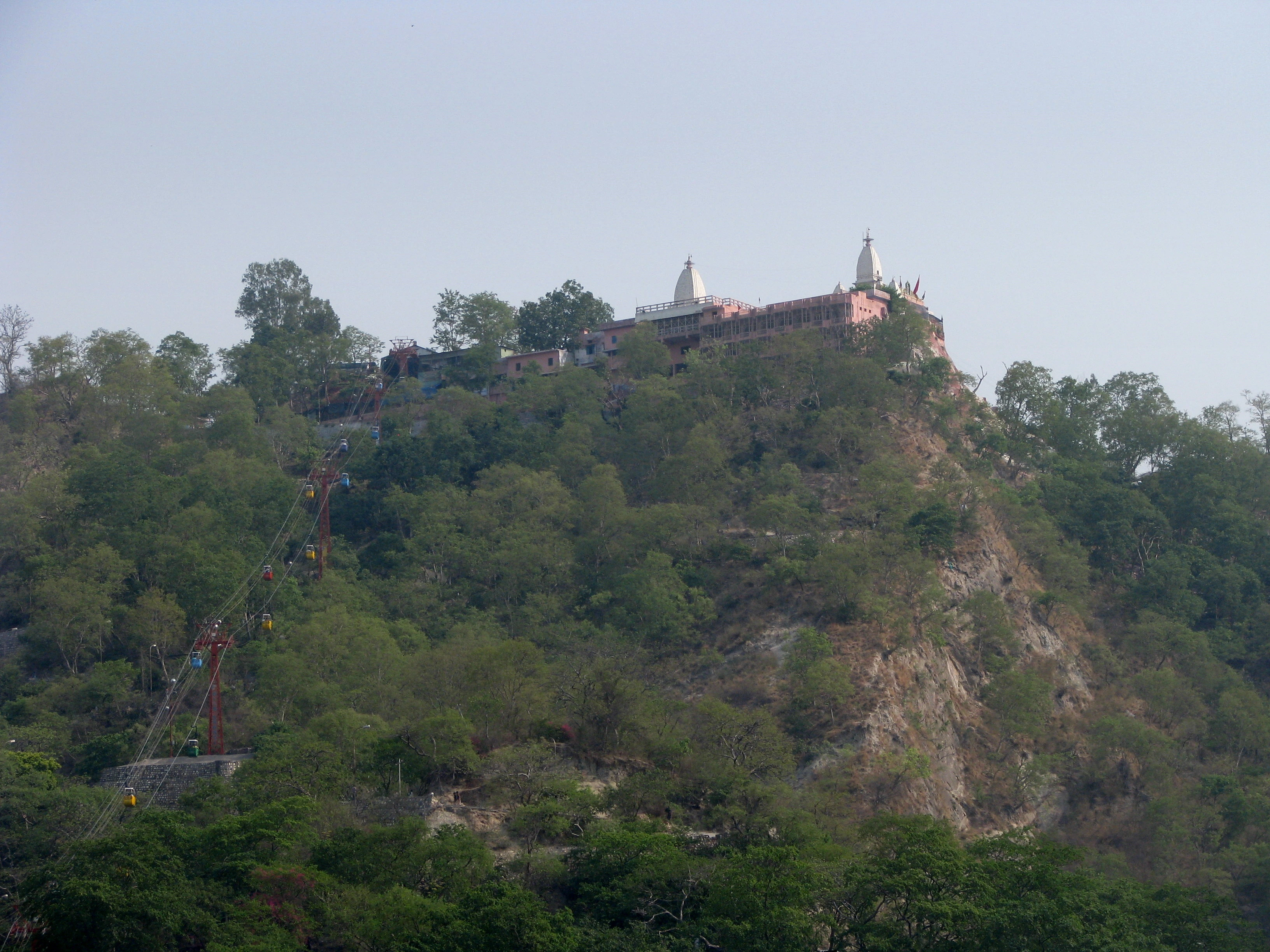
Mansa Devi Temple sits atop Bilwa Parvat, a hill that overlooks Haridwar from the northeast and to the west of Har ki Pauri. The name “Mansa” means wish or desire, and devotees believe that Mansa Devi fulfils the wishes of those who pray to her sincerely. It is one of the three Siddha Peethas of Haridwar, along with Chandi Devi and Maya Devi. The temple is busy year-round and gets very crowded during Navratri.
3) Chandi Devi Temple
- How to reach: Ropeway from Chandighat or a 3 km moderate-level trek.
Chandi Devi Temple is situated on Neel Parvat, a hill on the eastern side of the Ganga River. This is the second of the three Siddha Peethas in Haridwar. The idol of Chandi Devi here is believed to have been established by Adi Shankaracharya in the 8th century. However, the current temple structure was built by the King of Kashmir, Suchat Singh, in 1929 AD.
4) Maya Devi Temple
- Location: About 3.5 km from Har Ki Pauri
Maya Devi Temple is one of the oldest temples in Haridwar. It was built in the 11th century and is dedicated to Goddess Maya Devi, a three-headed and four-armed form of Shakti. This temple is a Shakti Peetha, which means it marks the spot where the heart and navel of Goddess Sati fell when Lord Vishnu’s Sudarshana Chakra cut her body into pieces.
5) Rajaji National Park
- Location: 10 km from Haridwar city.
- Opens: 15 November to 15 June
- Entry fee: INR 150 for Indians and INR 600 for foreign nationals
- Activities: Jeep safaris, elephant safaris, bird watching, nature walks
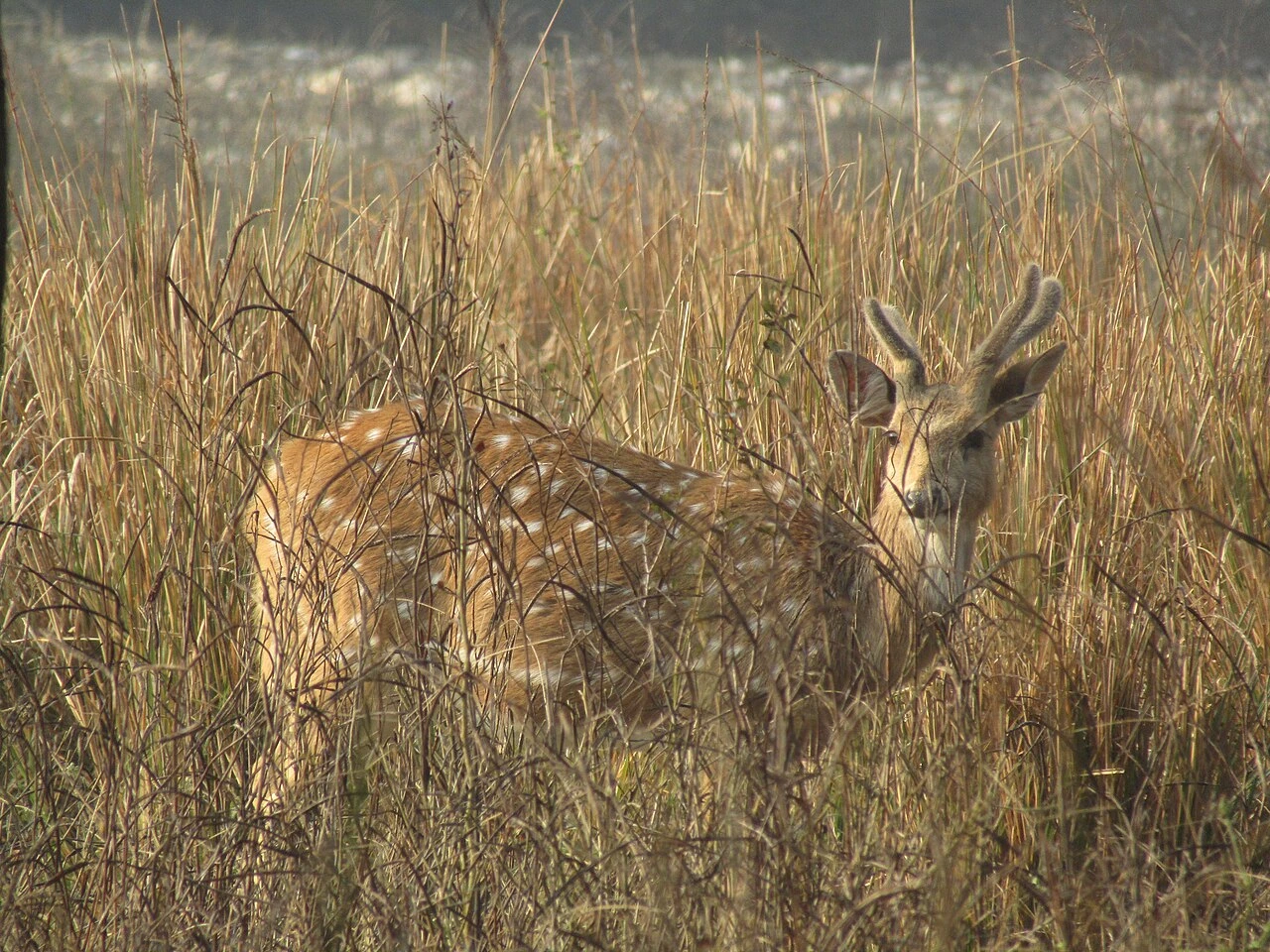
Rajaji National Park covers parts of the Haridwar, Dehradun, and Pauri Garhwal districts. It is home to Asian elephants, tigers, leopards, crocodiles, and over 300 species of birds. The Chilla Range, which is the section closest to Haridwar, is the most accessible part of the park.
6) Bharat Mata Mandir
- Location: About 5 km from Har Ki Pauri
- Timings: 7:00 AM to 7:00 PM
Bharat Mata Mandir is a multi-storey temple dedicated to Mother India. It was inaugurated on May 15, 1983, by Prime Minister Indira Gandhi. Unlike any other temple in the country, it includes no deity in the traditional sense. Instead, each floor celebrates a different aspect of India, from freedom fighters and national heroes to spiritual masters and goddesses.
7) Daksh Mahadev Temple (Kankhal)
- Location: About 6.3 km from Har Ki Pauri
Daksh Mahadev Temple, also known as Daksheshwar Mahadev Temple, is in Kankhal. It is one of the five sacred sites (Panch Tirthas) in the Haridwar area. The temple stands at the place where King Daksha Prajapati held the Yagna, and where Sati gave up her life. The site includes the Sati Kund, the fire pit where the event occurred. The walls of the temple complex are covered with paintings and sculptures depicting the entire story from the Shiva Purana.
8) Sapt Rishi Ashram (Sapt Sarovar)
- Location: About 6.5 km from Har Ki Pauri
- Entry: Free
- Activities: Sit by the river, meditation sessions, spiritual programmes.
The name Sapt Rishi means “seven sages.” According to Hindu mythology, seven great sages, namely Kashyapa, Vashishtha, Atri, Vishwamitra, Jamadagni, Bharadwaja, and Gautama, meditated here on the banks of the Ganga. The river, unwilling to disturb their meditation, split herself into seven streams to flow around them quietly. These seven channels came to be known as Sapt Sarovar.
2-Day Haridwar Itinerary
This schedule helps you experience the best of the city without feeling rushed:
Day 1: Temples and the Ganga Aarti
- Start your day early. Head straight to the ropeway station to visit the Mansa Devi and Chandi Devi temples.
- Have lunch after darshan in the main city. After eating, visit the ancient Maya Devi Temple nearby.
- Walk to Har Ki Pauri by 4:00 to 5:00 pm. To find a good spot, arrive early. Watch the Ganga Aarti as the sun goes down.
- Have a quiet dinner and rest.
Day 2: Safari, Kankhal, and Markets
- Wake up before sunrise. Book a morning jeep safari in Rajaji National Park.
- Return to Haridwar. If time permits, head to the Kankhal area to visit the Daksh Mahadev Temple.
- Spend your last evening walking through Moti Bazar or Bara Bazar.
How to Reach Haridwar
Excellent road, rail, and air networks connect Haridwar to the rest of India. Here are your best travel options for travelling to the city:
By Air
Jolly Grant Airport in Dehradun is the nearest airport to Haridwar. The total distance is about 39 km, at around 1 hr drive away. Several flights from Delhi, Mumbai, Chennai, Hyderabad, Bengaluru, Kolkata, and other cities are received at the airport.
By Train
The Haridwar railway station is one of the most preferred ways of travel for travellers in India. Railways connect Haridwar to many major Indian cities, including Delhi, Dehradun, Lucknow, Mumbai, Kolkata, and others.
Some popular trains that connect Haridwar are:
- Delhi to Haridwar: Jan Shatabdi Express, Dehradun Shatabdi, Mussoorie Express
- Mumbai to Haridwar: Dehradun Express (via Delhi)
- Kolkata to Haridwar: Upasana Express, Doon Express, Kumbha Express
Note: The journey from New Delhi takes approximately 4 to 5 hours by train and is most convenient during peak season.
By Road
The NH 7, NH 34, and NH 334 connect Haridwar to the rest of Uttarakhand and northern India. The city is accessible via road from Delhi, Dehradun, Rishikesh, and Roorkie. And you can cover this journey either by using public buses or a private vehicle.
- From Delhi: The distance is about 219 km, taking around 3.5 to 4 hours driving time. Buses leave ISBT Kashmere Gate and Anand Vihar Terminal (Delhi) for Haridwar regularly. You can choose between AC Volvo buses, semi-sleeper buses, or regular state transport buses. You can also hire a private taxi.
- From Dehradun: The total distance is about 51 km, and it takes about 1.5 hours to get there. Many buses run between Dehradun and Haridwar, and you can also take a shared taxi from the Dehradun bus stand.
Best Time to Visit Haridwar
Haridwar is an all-season tourist destination, and the best time to visit depends on the experiences you are seeking. The most preferred window is between October and March/April, when major Hindu festivals fall. However, each season brings a different vibe to the city, as:
Spring and Summer (March to June)
Temperature: 25°C to 42°C during the day; 10°C to 25°C at night
This is the peak season for pilgrimages. The Char Dham Yatra opens in April or May, and Haridwar becomes the base point for those heading to Kedarnath, Badrinath, Gangotri, and Yamunotri. The weather is warm and pleasant in March and April. It gets hot in May and June. Mornings and evenings near the Ganga feel comfortable even in the summer months.
Tip: Book accommodation in advance if you plan to travel during Akshaya Tritiya (April/May) or Ganga Dussehra (May/June), as hotels fill up very fast.
Monsoon (July to September)
Temperature: 30°C to 36°C during the day; 20°C to 25°C at night
The monsoon season brings heavy rain to Haridwar. During this time, the Ganga River is more likely to flood and experience road blockages due to landslides. Kanwar Yatra happens in July and August, when Kanwariyas (devotees of Lord Shiva) walk to Haridwar to get Ganga Jal and bring it back to their temples in Uttar Pradesh, Delhi, Rajasthan, and Haryana. The roads get busy during this time, as the footfall increases.
Autumn (October to November)
Temperature: 20°C to 30°C during the day; 6°C to 15°C at night
This is the best season to visit Haridwar. The monsoon is over, the air is clear, and the weather is pleasant. After the Char Dham season ends, the crowd thins out, and you can enjoy the Ganga Aarti and the temples more peacefully. The night sky remains clear during this time, and evenings become even more serene. Important festivals like Navratri and Diwali also fall in this window.
Winter (December to February)
Temperature: 10°C to 25°C during the day; 3°C to 12°C at night
Winters in Haridwar are cold but manageable. The season experiences lesser footfall, so you can experience the city without the rush of pilgrims and tourists. The Ganga Aarti gives you a completely different feel in the cold evenings, with the flames from the lamps contrasting with the mist on the river in a way that is soul-warming.
Tip: Pack woolens if you visit between December and February.
Must-Do Activities in Haridwar
While most travellers visit Haridwar to explore its temples, ashrams, and beautiful scenery, the city offers more than just that. For curious travellers, it offers a window into the spiritual life of the locals, their bazaars, and delicacies. These are some of the must-have experiences in Haridwar:
Attend the Ganga Aarti
For anyone visiting Haridwar, attending the Ganga Aarti is a must on the bucket list. Every morning and evening, priests perform the aarti on the ghats at sunrise and sunset. This is an old practice that has continued since the early 1900s. Hundreds of diyas floating on the Ganga, making the river glow with light, is truly a beautiful sight to behold.
Note: Arrive at least 30 minutes early to make sure you get the best spot to experience the aarti.
The table below breaks down the tentative aarti timings:
| Season | Morning Aarti | Evening Aarti |
| Summer (April to October) | 5:00 am to 6:30 am | 6:00 pm to 7:00 pm |
| Winter (November to March) | 6:30 am to 7:00 am | 5:00 pm to 5:30 pm |
Note: Timings depend on sunrise and sunset. Confirm the exact time when you arrive.
Visit the Ashrams
Haridwar is home to several ashrams to accommodate thousands of pilgrims, devotees, and saints gracing this spiritual city every year. Many of these are open to visitors and travellers. Staying in an ashram or spending a few hours in one gives you a completely different experience of the city. You can visit Shanti Kunj, Shankar Ashram, Ramakrishna Mission Sevashrama, Ma Anandmayi Ashram and many more.
Note: Most ashrams offer accommodation for those who wish to stay and attend programmes. Donations are the standard way of contributing.
Explore the Local Bazaars
The vibrant markets in Haridwar are one of the best parts of exploring this sacred city. Around Har Ki Pauri, there are busy lanes hosting stalls and shops selling small souvenirs. You can also buy brass puja items, herbal medicines, oils, Ganga jal, saffron, rudraksh mala, and dry fruits. Bazaars like Bara Bazar, Moti Bazar, and Kharkhari Bazar are worth exploring.
Try Street Food
Haridwar is famous for several vegetarian delicacies, and your trip is incomplete without trying them. The roadside dhabas sell delicious puri aloo and kachori for breakfast, along with thick lassi. Near Har ki Pauri, rabri and malpua are a favourite among tourists. The Chotiwala Restaurant is famous for its veg thali.
Note: Haridwar is a fully vegetarian city. The sale of non-vegetarian food and alcohol is prohibited within the city limits.
Haridwar as Your Trek Basecamp
For trekkers and adventure travellers, Haridwar is the first major city you reach when you enter Uttarakhand from the north Indian plains. And almost every major Himalayan trek begins with a bus or taxi journey that starts from Haridwar or Rishikesh.
Treks that use Haridwar or Rishikesh as the starting point include:
- Char Dham Yatra
- Rudranath Trek
- Chopta Tungnath Trek
- Valley of Flowers Trek
- Panch Kedar Yatra
- Gaumukh Tapovan Trek
What To Do The Day Before Your Trek:
If you arrive in Haridwar the evening before your trek departure, use the time wisely. Get a good rest and eat light and nutritious food. Haridwar has several gear rental and purchase shops near the main bus stand and market areas. You can buy trekking poles, water bottles, thermal wear, rain covers, and other basic gear.
Important Travel and Safety Tips for Haridwar Trip
Haridwar is an old city and a major pilgrimage hub. Due to its heavily crowded areas, it is best to visit the city with some prior preparation by understanding the local rules and customs. This will ensure your travel experience is safe and fulfilling.
Before you head for Haridwar, make sure you follow this travel checklist:
- Dress modestly: Carry a light dupatta to cover your shoulders when visiting temples and ghats.
- Carry comfortable sandals: Most ghat areas and temples require you to remove your footwear.
- Stay hydrated: Drink plenty of water as you will be walking long distances between temples.
- Keep an eye on your belongings: The area around Har Ki Pauri gets very crowded during the Ganga Aarti. Take extra care of your phone, wallet, and other valuables.
- Accommodation: If traveling during the peak season or Hindu festivals, book your hotel and tickets in advance. You can also explore guesthouses and dharamshalas near Har Ki Pauri.
- Photography rules: Photography is allowed at most locations. However, avoid using flash during religious ceremonies and always ask permission before photographing priests or devotees.
- No alcohol and non-vegetarian food: Haridwar is a sacred city where the sale and consumption of alcohol and non-vegetarian food is strictly prohibited. Respect this rule.
- Hold on to the chains at the ghat: When taking a dip, hold on to the iron chains attached to the steps. The current in the Ganga can be strong during the monsoon.
- Medical facilities: Haridwar has both government and private hospitals. Carry your own basic first-aid kit and any prescription medicines you need regularly.
Plan Your Trip to Haridwar Today!
The sound of temple bells, the smell of incense from the ghats, and the sight of the Ganga flowing strong and cold out of the mountains all create a feeling that makes Haridwar a unique experience. It is a city that has been welcoming pilgrims, saints, and wanderers for thousands of years, carrying the history in every stone and every street.
So, don’t wait. Plan your travel to Haridwar between March and April or October to February to explore the real soul of Uttarakhand!

Leave a Comment