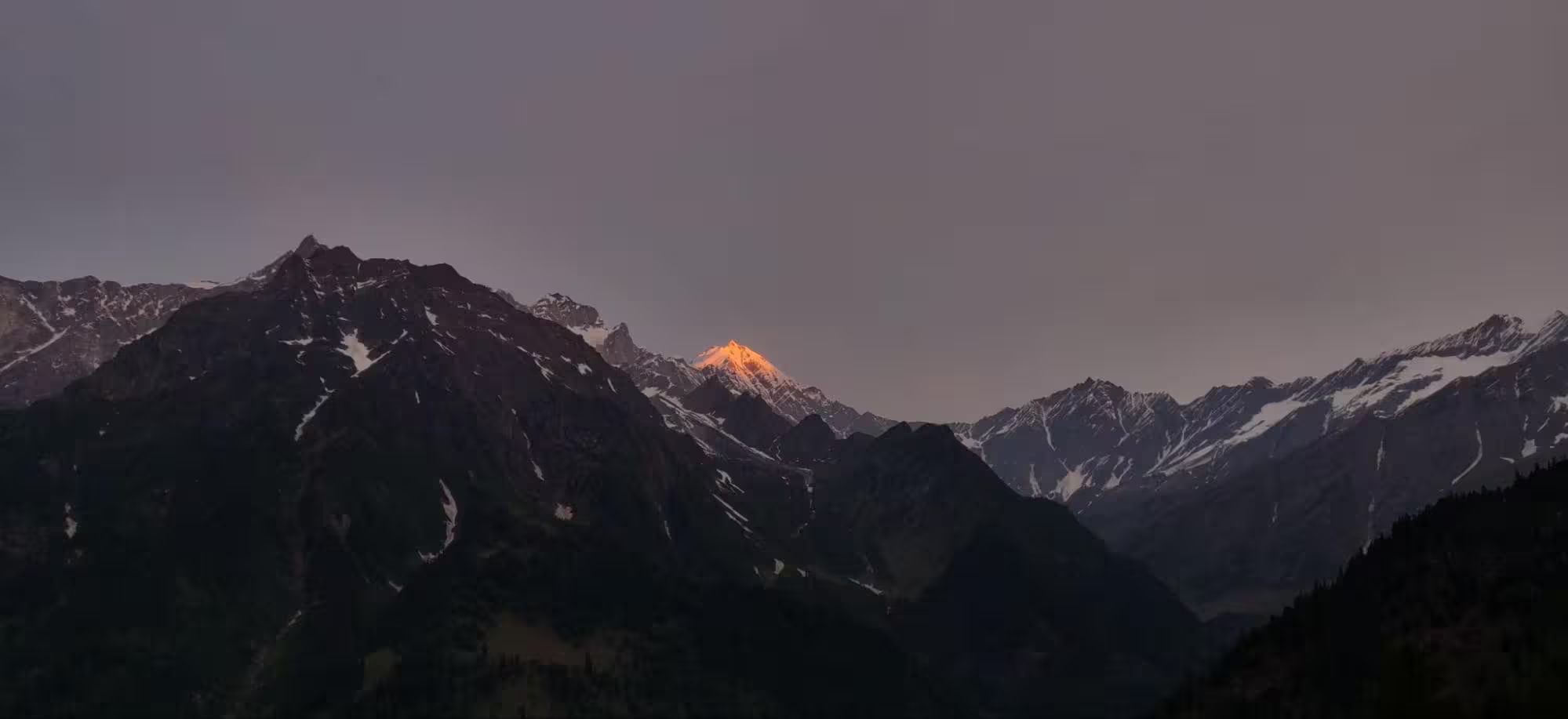
You’re standing on the edge of Solang Valley, the crisp Himalayan air filling your lungs as you gaze up at a stark white pyramid piercing the sky; that’s Hanuman Tibba, one of the most striking peaks in the Dhauladhar Range.
Your heart beats faster, not just because of the altitude, but because of what lies ahead: a demanding ascent, a summit attempt, and a story you’ll carry forever.
Table of Contents
Climbing History
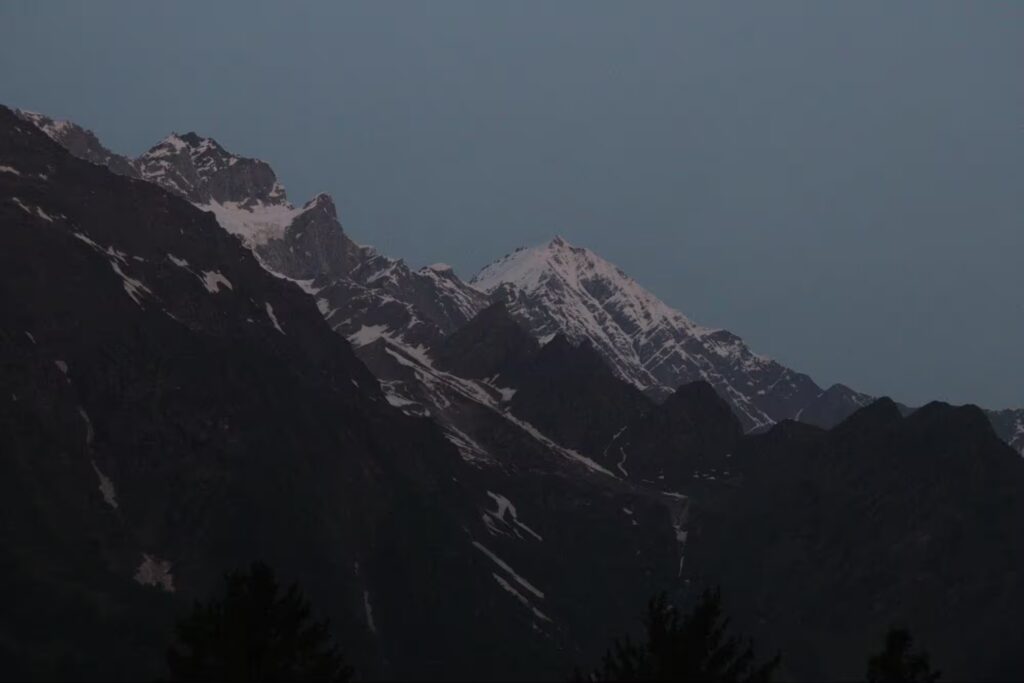
Hanuman Tibba, rising to approximately 5,982 meters (some sources mention 5,990 m) in Himachal Pradesh’s Dhauladhar Range. Often referred to as the “White Mountain” due to its snow-clad pyramid, its very shape has inspired both myth and mountaineering ambition.
The first recorded ascent of Hanuman Tibba was made in 1912 by Swiss guide Heinrich Fuhrer, Gurkha soldier Lal Bahadur, and their team underGen. C. G. Bruce. However, the peak saw little activity until a joint Indo-British expedition in 1966 led by R. G. Petigrew revived interest. Over time, technical routes, especially on the north and west faces, have drawn climbers seeking serious alpine challenges. According to Wikipedia, a direct route up the west spur remains unclimbed.
Expedition teams today follow more established lines, often navigating through the Tentu Pass (around 4,996 m), a treacherous mix of snow, ice, and rock with gradients reported up to 75–80%. From Tentu, climbers typically establish camps and make their summit push via the South-West face.
Best Time to Climb
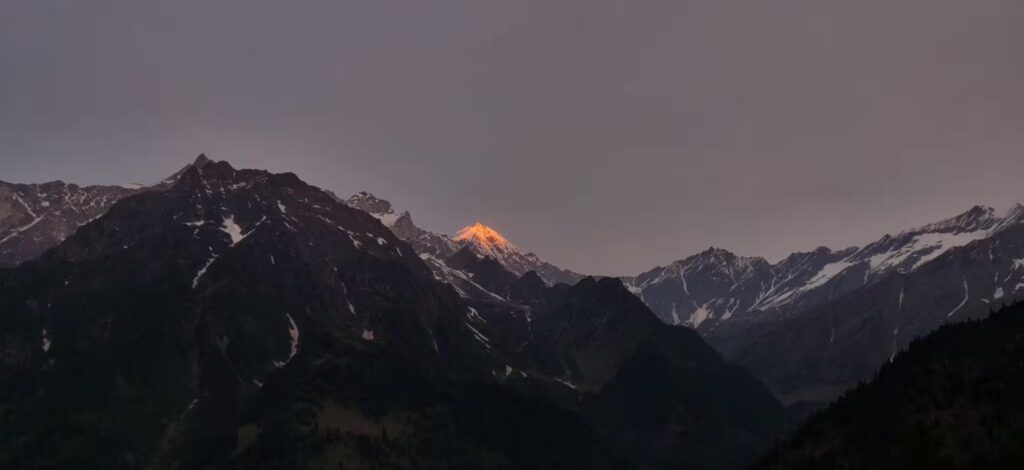
Choosing the right season can make or break your expedition to Hanuman Tibba, and you’ll notice just how crucial timing becomes the moment you step onto the glacier.
As you plan your ascent, you’ll find that the most favorable window generally stretches from June to October, when weather patterns stabilize and the snowpack settles into safer, more predictable layers.
During these months, the temperature remains cold enough to maintain firm snow and ice conditions, yet warm enough to allow steady movement across crevasses and steep sections. You might also hear about teams attempting the climb in late May, especially in years when the snow melts early.
However, early-season climbs often demand extra caution due to fresh snowfall and unpredictable storms.
If you schedule your expedition within the prime season, you maximize your chances of a successful summit, while also experiencing clearer skies, safer routes, and more enjoyable climbing days overall.
Map & Route Overview
Geographically, Hanuman Tibba is situated north of Manali, above Solang Valley, in Kullu district, Himachal Pradesh.
A typical route map would look like this:
- Start Point: Manali, you’ll likely be based here before beginning the trek.
- Approach March: Drive from Manali to Solang Valley, then to Dhundi.
- Trek: From Dhundi, trek to Bakkar Thach (grassland), then onto the Beas Kund glacier.
- Base Camp: Established near Beas Kund, below Tentu Pass.
- Advanced Camp: Cross Tentu Pass to set up higher camps.
- Summit Attempt: Climb via the South-West face or ridge.
- Descent: Return to Base Camp, then trek back to Dhundi, and drive to Manali.
Budget & Cost Range
While planning your Hanuman Tibba expedition, you’ll notice that costs vary widely depending on the operator, duration, group size, and quality of support.
Instead of chasing the lowest price, it’s smarter to understand how your budget breaks down and what you’re paying for. A typical 12–14 day climbing package usually includes the essentials, but certain expenses are still your responsibility.
What’s Usually Included:
- Accommodation during the expedition (hotels in Manali and tents during the climb)
- All meals during the expedition
- Certified climbing guides, porters, cooks, and entire expedition crew
- Technical climbing gear such as ropes, crampons, helmets, and safety equipment (shared)
- Climbing permits and environmental clearances
- First-aid support, and sometimes emergency oxygen
What’s Usually Not Included:
- Travel to and from Manali
- Personal high-altitude gear (boots, harness, gloves, ice axe, etc.)
- Individual insurance, medical expenses, or helicopter evacuation
- Food or lodging beyond the scheduled itinerary
- Tips, personal expenses, and optional rentals
- Extra days added due to weather delays or medical issues
Budget Tip:
Always keep a flexible buffer for unexpected costs, especially related to weather, personal gear upgrades, and additional safety arrangements. A reliable operator with experienced staff provides better safety and value than choosing the cheapest option.
Permit & Legal Requirements
To climb Hanuman Tibba, you’ll need permission from:
- Indian Mountaineering Foundation (IMF): Their approval is mandatory.
- Forest Department: Local clearance is often required.
Risks, Preparation & Technical Challenges
With the right training and mindset, you can take on this formidable climb. Here’s what all you need to consider:
- The climb involves ice, steep rock, and glacier travel, especially around Tentu Pass.
- Gradient near Tentu Pass can reach 75–80°, making it strenuous and risky.
- Altitude sickness is a real risk – proper acclimatization days are built into most itineraries.
- There’s rockfall exposure near specific camps, especially around the base of the gully.
- You’ll need technical gear: ice axes, crampons, harnesses, ropes, helmets, etc.
Why You Should Attempt It
- Adventure & Challenge: Hanuman Tibba is technical but accessible with the proper preparation – perfect for seasoned climbers looking to test their skills.
- Stunning Scenery: The route takes you through glacial terrain, high mountain grasslands, and dramatic ridgelines.
- Cultural Experience: Begin from the heart of Manali, pass through local grasslands, and experience Himalayan hospitality.
- Legacy & Accomplishment: You’ll be following in the footsteps of early mountaineers from 100+ years ago.
Important Tips & Precautions
- Train well: Mix cardio, strength, and altitude simulation (if possible) in your training program.
- Do not skip acclimatization: Use rest days and high camp rotations strategically.
- Gear matters: Use certified climbing gear; poorly fitted boots or crampons can ruin the attempt.
- Insurance is non-negotiable: Choose a policy that covers high-altitude rescue.
- Listen to your guides: They’ll have the experience, especially around tricky sections like Tentu Pass.
- Be flexible: Mountain weather is unpredictable; days may be reserved for rest or alternative plans.
Closing Thoughts
Scaling Hanuman Tibba is more than just reaching a summit; it’s a transformative journey through raw Himalayan terrain, rigorous physical challenge, and soulful landscapes.
Whether the pyramid-like peak draws you, the allure of technical climbing, or the sheer sense of accomplishment, this expedition promises unforgettable memories.
Plan carefully, train smart, and choose a reliable operator – and when you stand on that summit, you’ll know why every step was worth it.

Leave a Comment