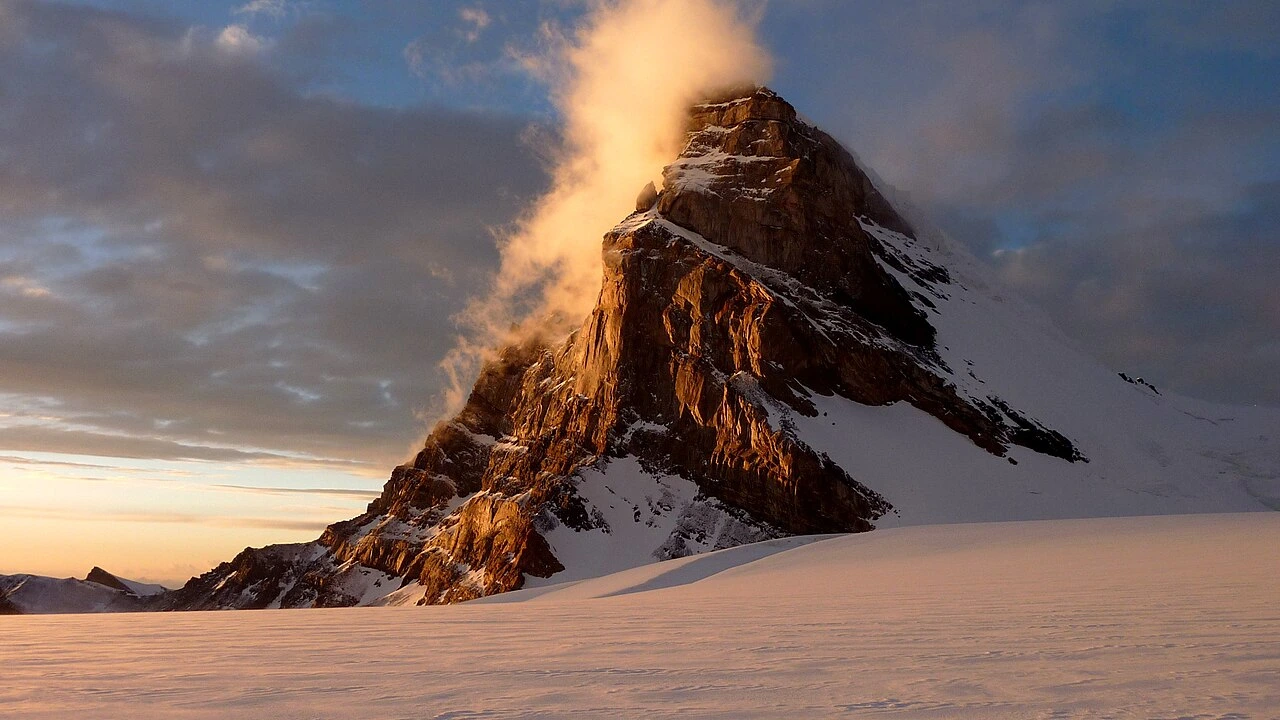
When you arrive in the Suru Valley and step out of your vehicle, the first thing you feel is the sharp, fresh mountain air. Right in front of you stands Kun Peak, part of the famous Nun–Kun twin mountains rising to 7,077 meters at 34.03°N, 75.93°E. From the valley, it looks huge and calm at the same time, with long stretches of snow, wide glaciers, and steep rock faces that catch the early light.
Kun isn’t an easy mountain. The climb involves crossing glaciers, navigating icy slopes, and dealing with thin air as you move higher. But that’s also what makes it special. There’s something about its size and silence that draws you in, as if the mountain is quietly challenging you to try. If you’ve ever wanted to push your limits and see the world from a place very few people reach, Kun offers that.
Kun Peak Expedition: Quick Facts
| Feature | Details |
| Peak Name | Mount Kun |
| Altitude | 7,077 m / 23,219 ft |
| Location | Suru Valley, Ladakh |
| Mountain Range | Zanskar Range |
| Expedition Type | High-Altitude Mountaineering Expedition |
| Difficulty | Challenging to Technical |
| Experience Required | Previous high-altitude mountaineering experience recommended |
| Technical Skills | Glacier travel, rope work, crampon and ice-axe techniques |
| Best Season | Summer climbing season, subject to weather and route conditions |
| Highest Point | Kun Peak Summit – 7,077 m |
A Kun Peak expedition combines high-altitude acclimatization, glacier travel, technical climbing and a carefully planned summit attempt. The exact climbing route, camps and schedule depend on weather and route conditions.
Table of Contents
Climbing History
Kun Peak forms part of the celebrated Nun–Kun massif in the Ladakh Himalaya, rising majestically over the upper Suru Valley. As the second-highest summit of that massif, Kun stands at 7,077 m.
The massif first came into broader view in the late 19th and early 20th centuries, when early explorers surveyed its ridges and valleys.
The first recorded successful ascent of Kun was achieved by an Italian mountaineering team led by Mario Piacenza and Lorenzo Borelli in August 1913.
Over the decades, following periods of restricted access, the massif gradually reopened to mountaineers. Since then, multiple expeditions often run by specialized adventure agencies have successfully taken climbers to Kun’s summit.
When to Climb / Best Season
- The ideal climbing window for Kun is July through September. During this period, the weather in Ladakh is relatively stable, snow conditions are more manageable, and glaciers are less treacherous.
- Outside these months, especially during winter or early spring, snowstorms, extreme cold, and unstable snow/ice make climbing extremely hazardous.
Hence, if you’re planning a climb, late summer (July–Sep) is your best bet.
Duration & Typical Itinerary
Climbing Kun is not a quick trek; it demands commitment, fitness, proper acclimatization, and patience. Typical expedition packages span 22 to 26 days (including approach marches, base-camp stays, acclimatization, the summit push, and the return).
Overall, you should plan roughly 3 to 4 weeks for a full expedition, though some operators may offer slightly shorter or longer itineraries depending on route, acclimatization strategy, and group size.
Kun Peak Camps and Altitude Gain
Acclimatization and gradual altitude gain are essential parts of a high-altitude expedition. Depending on the route, expeditions may establish several camps above Base Camp before attempting the summit.
| Camp | Approx. Altitude | Purpose |
| Base Camp | ~4,200–4,500 m | Acclimatization & preparation |
| Camp 1 | ~5,200–5,600 m | First higher camp |
| Camp 2 | ~6,000 m | Higher acclimatization |
| High Camp | ~6,300 m | Summit preparation |
| Kun Summit | 7,077 m | Final summit attempt |
Estimated Budget / Cost Range
Climbing Kun requires a significant investment of both money and time. Based on current expedition packages and what’s typically included, here’s a realistic cost picture:
- Many standard guided expedition packages cost around ₹ 2,40,000 to ₹ 2,75,000 per person (before GST or additional charges).
- A typical package spanning 23 to 26 days often includes: climbing permit, organized camps (tents, meals), high-altitude food, local transport (jeeps, overland), transfers, climb support staff (guides, porters/high-altitude porters), climbing equipment (fixed rope, tents, ropes, etc.), and base logistics.
- Exclusions generally cover personal climbing clothing/gear, personal porters (sometimes optional), any flights (to/from Leh or closest airport), optional costs like tips or personal expenses, and, importantly, insurance (especially high-altitude/evacuation coverage), which you must arrange separately.
Given the remote terrain, technical demands, and long duration, this is a serious expedition, but many climbers consider it one of the more “accessible” 7000-meter Himalayan peaks.
Why Climb Kun and What to Expect
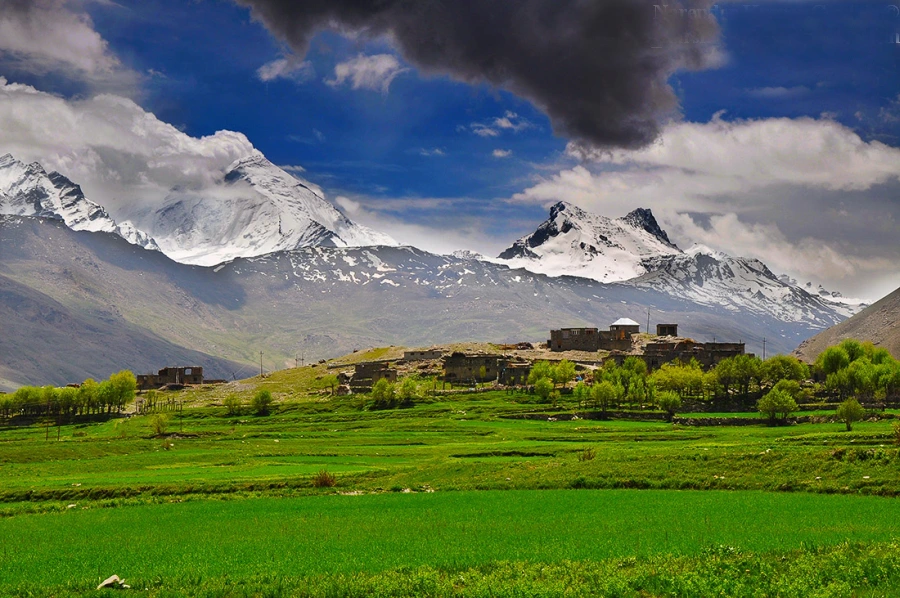
Climbing Kun is more than just a “summit tick.” Here’s what makes it unique and what to prepare yourself for:
- A true Himalayan 7000er: At 7,077 m, Kun offers real altitude, dramatic glaciated terrain, and a summit view that rewards your months (or years) of training.
- Technical challenge: The climb involves glacier travel, snow/ice slopes, fixed-rope sections, and high-altitude camps. You need basic technical climbing skills: use of crampons, ice axes, roping up, knowledge of glacier travel and high-altitude mountaineering.
- Wilderness & remoteness: The route traverses remote valleys and glaciers in Ladakh’s Suru/Zanskar region. Once you leave Leh or Kargil, you enter a world of snow, silence, and high-altitude wilderness.
- Spectacular surroundings: From base camp to summit, you will encounter imposing ridges, snow-plateaus, glaciers, Himalayan vistas stretching toward Zanskar, Ladakh and beyond.
In short: if you want a Himalayan climb that combines challenge, beauty, solitude, and accomplishment but remains (relatively) realistic, Kun is a brilliant choice.
How to Prepare & What to Do Before Booking
Before you commit to scaling Kun, here’s what you should ensure:
- Mountaineering experience: Ideally, you should have prior experience on trekking peaks (5000–6000 m) or serious high-altitude trekking; be familiar with crampons, ropes, glacier travel, and cold-weather tent living.
- Physical fitness: Good cardiovascular endurance, strong legs, acclimatization experience, and mental readiness for long days at altitude.
- Insurance & safety: Ensure you have high-altitude rescue/evacuation insurance; many packages don’t include it. Also check what the operator provides in terms of first-aid, oxygen cylinder, high-altitude food, and emergency protocols.
- Proper gear: While some group gear may be provided (fixed ropes, tents, kitchen, general climbing gear), personal gear such as mountaineering boots, clothing, sleeping bags, crampons, harness, etc., is often your responsibility. Confirm with your agency.
- Time & flexibility: Weather in the high Himalaya is unpredictable. Be ready for delays, extra rest days, or potential changes in schedule.
Bottomline
Kun is more than a mountain; it’s an invitation to push beyond what you thought was possible. As you climb higher, you gradually trade comfort for courage, and every icy step steadily strengthens your resolve.
With each passing day, the silence of the glaciers, the vast open skyline, and the thrill of true altitude begin shaping you long before you reach the summit. Moreover, with proper training, the right gear, and unwavering determination, the challenge becomes deeply fulfilling.
Ultimately, you don’t just stand on top of Kun; you earn your place there through grit and patience.
So, if you’re ready to experience the Himalaya in its most authentic form, Kun awaits your footsteps!

Leave a Comment