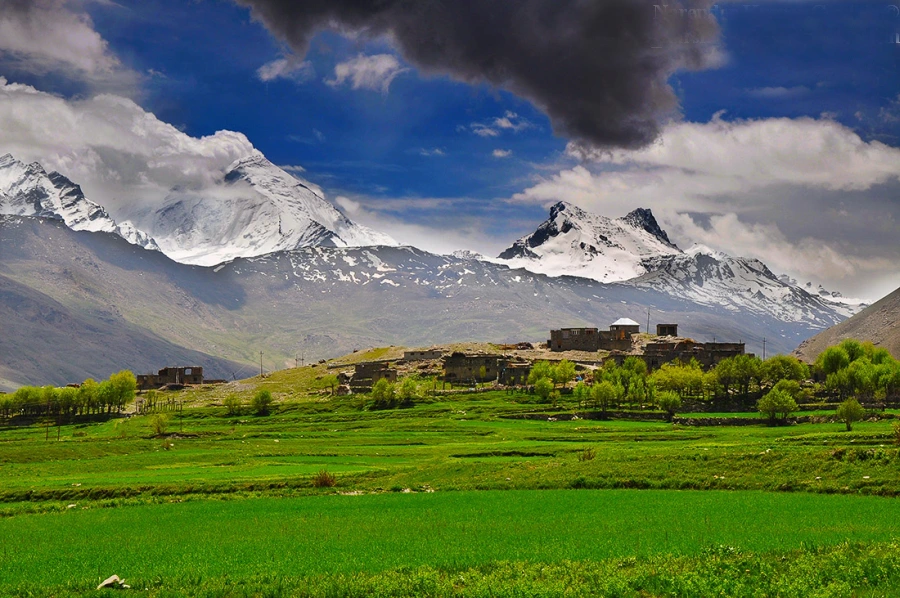
Rising from the remote Zanskar range in Ladakh, Nun (approx. 33.98°N, 75.16°E) stands as one of India’s great high-altitude sentinels.
At 7,135 meters, this massive Himalayan peak dominates the Suru Valley, its long ridges and sweeping faces catching the first light long before the valley wakes.
The terrain here is rugged and uncompromising, glaciers stretch for kilometers, weather shifts without warning, and the thinning air above 6,000 meters begins to test every decision you make. Yet there is something magnetic about Nun. As you approach its base, the scale of the mountain pushes everything else into silence.
Nun Peak Expedition: Quick Facts
| Feature | Details |
| Peak Name | Mount Nun |
| Altitude | 7,135 m / 23,409 ft |
| Location | Suru Valley, Ladakh |
| Mountain Range | Zanskar Range |
| Massif | Nun–Kun Massif |
| Expedition Type | High-Altitude Mountaineering Expedition |
| Difficulty | Challenging / Technical |
| Best Season | June to September |
| Expedition Duration | Approximately 20–25 days |
| Highest Point | 7,135 m |
| Starting Point | Leh → Kargil → Tangol |
| Base Camp | Approximately 4,500–4,800 m |
Table of Contents
A Brief History of Nun Peak
Long before mountaineers began challenging its slopes, Nun stood quietly in Ladakh, observed by explorers and geographers who passed through the Suru Valley. Early interest in the massif grew during the late 19th and early 20th centuries, when survey teams noted its impressive altitude and unusually steep walls.
Nun forms part of the Nun-Kun massif, which includes two prominent peaks:
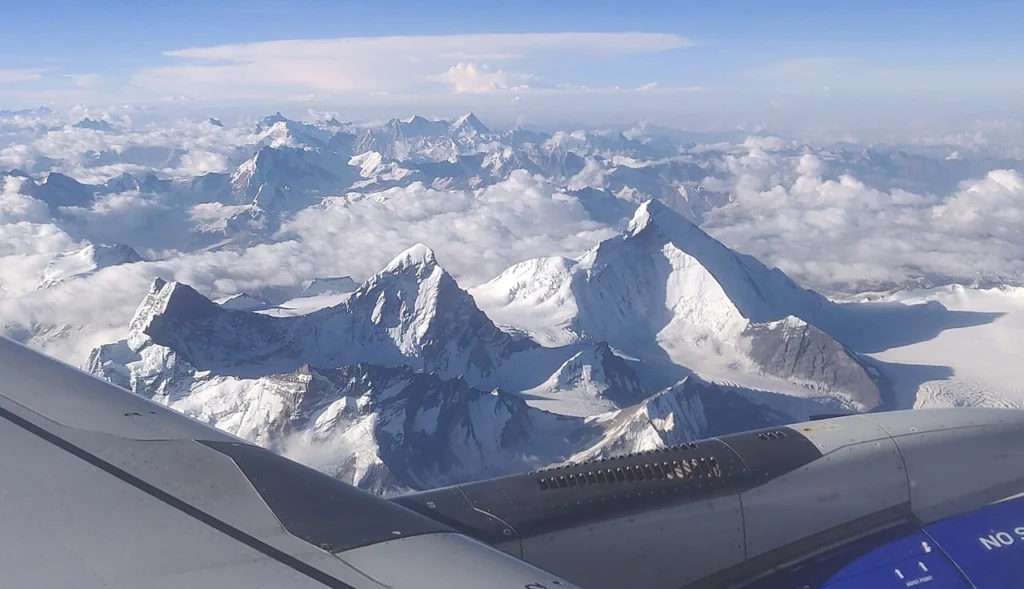
- Nun (7,135 m) — the higher, steeper, and more technically demanding
- Kun (7,077 m) — slightly lower, with a broader, more gradual approach
- A third peak, Pinnacle Peak (6,930 m), completes the cluster.
During the 1900s, several European teams attempted to climb Nun, but they were repeatedly forced back by harsh weather and limited high-altitude technology. The breakthrough finally came in 1953, when a Swiss–French expedition reached the summit. Among them was Claude Kogan, a pioneering female climber whose contribution to Himalayan expeditions remains iconic. Her role in the ascent added historical significance to the mountain, attracting elite mountaineers from across the world.
Since then, Nun has remained a sought-after “training ground” for climbers preparing for 8,000-meter expeditions. Its remote location, technical challenges, and unpredictable weather make it ideal for developing real Himalayan competence – far removed from crowded commercial routes.
Best Season to Climb Nun Peak
Choosing the right time to climb Nun can dramatically shift your success rate. The most favorable window is: June to September
During these months:
- Ladakh experiences minimal rainfall (due to trans-Himalayan positioning)
- Temperature fluctuations are manageable at base camps
- Snow conditions are relatively stable
- Roads to Leh and Kargil remain open
Attempting the climb outside this window exposes you to:
- Increased avalanche risk
- Extremely low temperatures
- Unpredictable storms
- Impassable access routes
To maximize your summit probability, you should plan early and hold at least 2–3 buffer days within your itinerary for weather delays.
Understanding the Route: A Map-Based Breakdown
Even without a physical map in front of you, it helps to visualize Nun’s normal route as a rising pathway that transitions from village fields to glacier terrain and finally into steep snow ridges.
Typical Route Progression:
- Leh (3,500 m): Your entry point into Ladakh; acclimatization and final gear requirements are handled here.
- Kargil (2,670 m): A full-day road journey through dramatic mountain scenery; last stop for major supplies.
- Tangol Village (~3,800 m): Road-accessible; the actual trekking and porter loading begins here.
- Base Camp (4,500–4,800 m): Established on moraine near the glacier’s edge; you learn rope techniques and acclimatize.
- Camp 1 (~5,950 m): Reached through boulders, mixed ice, and glacier travel; crevasse awareness is crucial.
- Camp 2 (6,300–6,500 m): Snow camping begins, with fixed ropes set across steep pitches.
- Camp 3 (6,800–6,880 m): A small, exposed ridge platform where winds can be fierce; final staging camp.
- Summit (7,135 m): Reached through steep snow and ice slopes (45°–70°); the ridge may require clipped-in traverses.
Climbing Nun often involves fixed ropes, crampons, ascenders, snow anchors, and technical tools, making it a legitimate high-altitude challenge, not a trekking peak.
Nun Peak Camps and Altitude Gain
| Stage | Approx. Altitude | Purpose |
| Leh | 3,500 m | Initial acclimatization |
| Kargil | 2,670 m | Approach & logistics |
| Tangol | ~3,800 m | Expedition approach |
| Base Camp | 4,500–4,800 m | Acclimatization |
| Camp 1 | ~5,950 m | Higher acclimatization |
| Camp 2 | 6,300–6,500 m | Technical climbing phase |
| Camp 3 | 6,800–6,880 m | Summit preparation |
| Summit | 7,135 m | Final summit attempt |
Difficulty Level & Requirements
Nun is rated as a technical high-altitude peak, requiring previous high-altitude mountaineering experience, strong physical fitness, and familiarity with technical climbing systems.
Physical Expectations
- Ability to carry personal and shared gear at altitude
- Summit push lasting 10–14 hours
- Temperatures dropping below -25°C
- Sustained effort on steep ice
- Mental endurance under cold and low-oxygen stress
Technical Skills Required for Nun Peak
| Skill | Why It Matters |
| Crampon technique | Movement on snow and ice |
| Ice-axe technique | Balance and self-arrest |
| Fixed-rope climbing | Steep technical sections |
| Jumar/ascender use | Ascending fixed ropes |
| Descender use | Controlled descent |
| Glacier travel | Movement across glaciated terrain |
| Rope management | Safe team movement |
| Crevasse awareness | Glacier safety |
If you’re aspiring to tackle big Himalayan expeditions in the future, Nun is one of the best steps you can take to build true mountaineering strength.
Budget & Cost Breakdown
1. Package Cost Range
Expedition prices for Nun depend heavily on the operator and the level of service offered. Indian companies usually provide more affordable packages, ranging between ₹4,00,000 and ₹6,50,000 per person, while international outfitters typically charge USD $10,000 to $14,000 per climber, offering premium inclusions and logistics.
2. What Does the Nun Peak Expedition Cost Include?
| Expense | Usually Included? |
| Peak permit | Depends on package |
| Accommodation | Depends on itinerary |
| Meals | Usually during expedition |
| Transport | As per itinerary |
| Base Camp logistics | Usually |
| High-altitude staff | Depends on operator |
| Fixed ropes | Depends on operator |
| Technical equipment | Package dependent |
| Personal climbing gear | Usually excluded |
| Insurance | Usually excluded |
| Emergency evacuation | Insurance/package dependent |
3. Exclusions & Additional Costs
Your budget should also account for expenses that are not included by most organizers. These may involve personal climbing gear, travel insurance, emergency evacuation, satellite phone usage, tips for the support team, and additional costs arising from weather delays or extended acclimatization.
Bottomline
Your journey toward Nun becomes more than a mountaineering objective; it evolves into a challenge that shapes your mindset, skills, and stamina.
As the altitude rises, the slopes grow steeper, yet every rope you ascend and every icy step you take builds sharper focus and deeper resolve. With each camp you reach, the mountain reveals a little more of its beauty and severity, pushing you to earn your progress rather than expect it.
By the time you stand above the vast Suru Valley, the view feels like a reward carved out of pure effort – a moment that proves you’ve truly earned the climb!

Leave a Comment