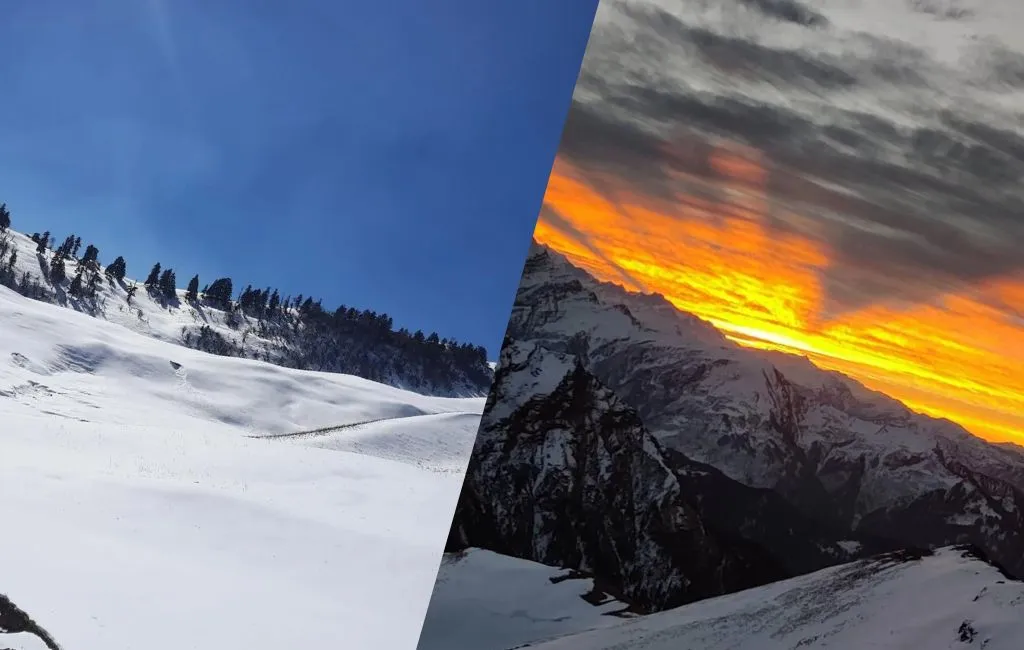
Dayara Bugyal and Kedarkantha are two popular trekking destinations in Uttarakhand, but they offer very different experiences. Kedarkantha is primarily known for its defined summit climb, snow-covered trails and classic winter trekking experience, while Dayara Bugyal is best known for its vast alpine meadows, open landscapes, forest trails and peaceful mountain surroundings.
Both treks have their own character and appeal to different types of trekkers. Kedarkantha offers the satisfaction of reaching a prominent summit along with panoramic Himalayan views, whereas Dayara Bugyal focuses more on beautiful meadows, scenic landscapes and a relaxed high-altitude trekking experience.
This comparison will help you understand the key differences between Dayara Bugyal and Kedarkantha based on scenery, trekking experience, season, difficulty, route and overall landscape, making it easier to choose the trek that best matches your interests and expectations.
But there are some differences between the treks; let’s learn about them.
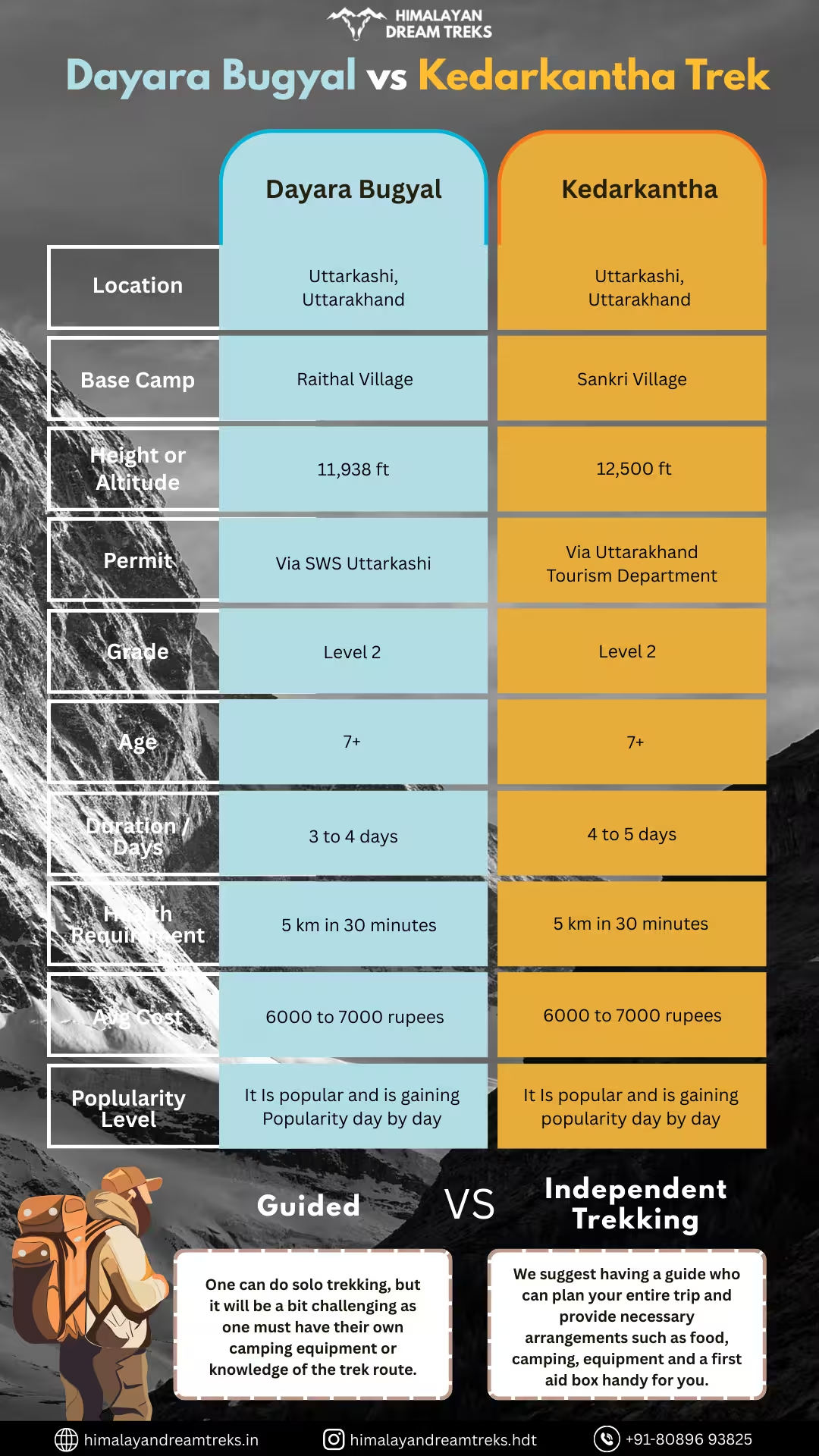
| Info | Dayara Bugyal | Kedarkantha |
| Location | Uttarkashi, Uttarakhand | Uttarkashi, Uttarakhand |
| Base Camp | Raithal Village | Sankri Village |
| Height or Altitude | 11,938 ft | 12,500 ft |
| Trek Distance | 22-24 km | 20 km |
| Grade | Level 2 | Level 2 |
| Age | 7+ | 7+ |
| Duration / Days | 3 to 4 days | 4 to 5 days |
| Health Requirement | 5 km in 30 minutes | 5 km in 30 minutes |
| Avg Cost | 6000 to 7000 rupees | 6000 to 7000 rupees |
| Popularity Level | It Is popular and is gaining Popularity day by day | Already popular |
| Permit | Via Explore Uttarkashi Portal | Via Forest Checkpost in Sankri |
Scenery & Natural Beauty
Dayara Bugyal:
Dayara Bugyal is a meadow-focused Himalayan trek in Uttarakhand, known for its vast alpine grasslands, forest trails and expansive views of the surrounding Himalayan ranges. The trek begins from Raithal, a scenic mountain village that serves as the main access point to the Dayara Bugyal trail.
The biggest attraction of the trek is its wide, open high-altitude meadows, which create a completely different experience from dense forest-based trekking routes. As the trail gains altitude, the forests gradually open into large grasslands where trekkers can enjoy panoramic views of the surrounding peaks. The route also passes through oak and deodar forests, adding variety to the landscape.
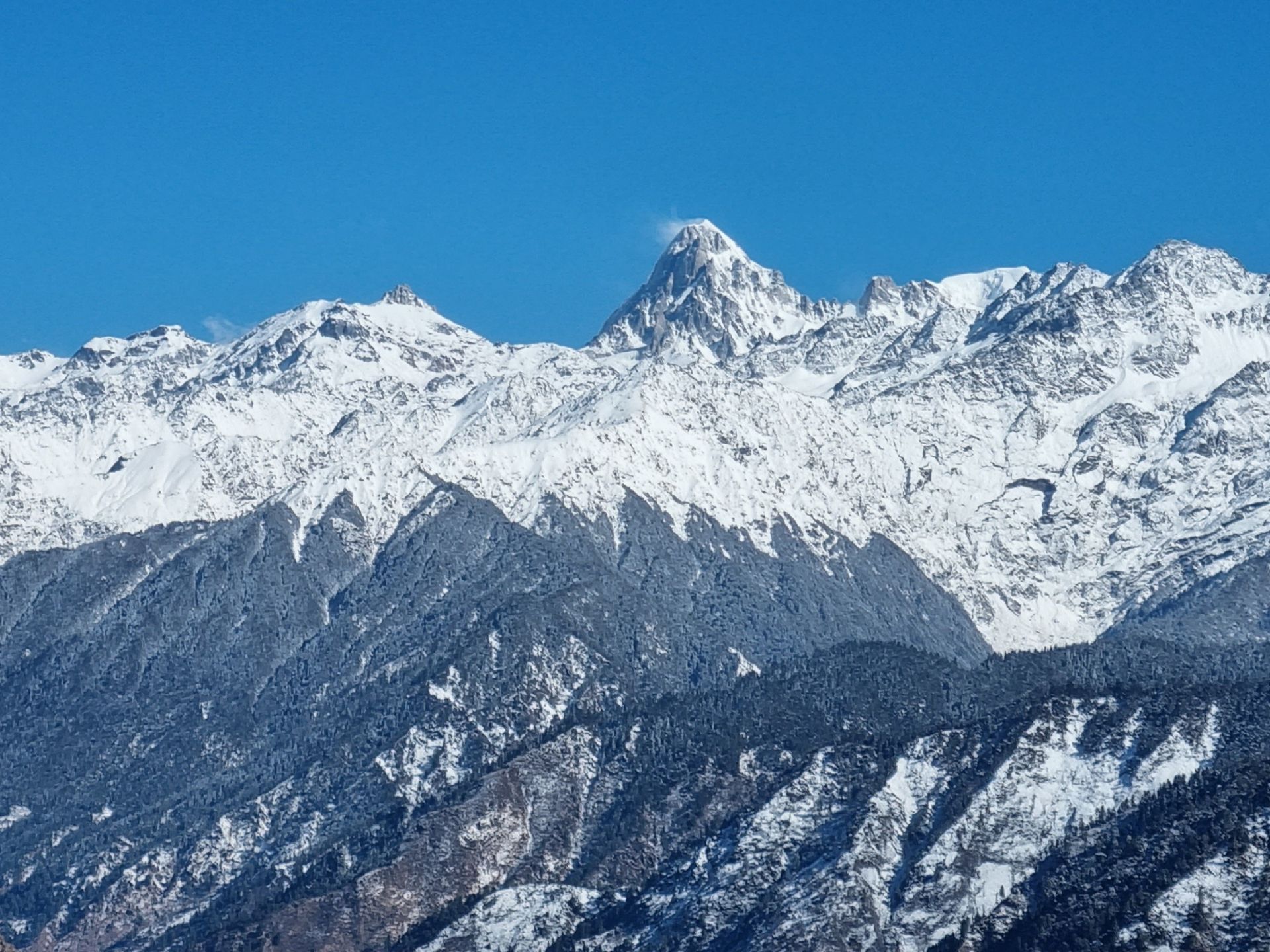
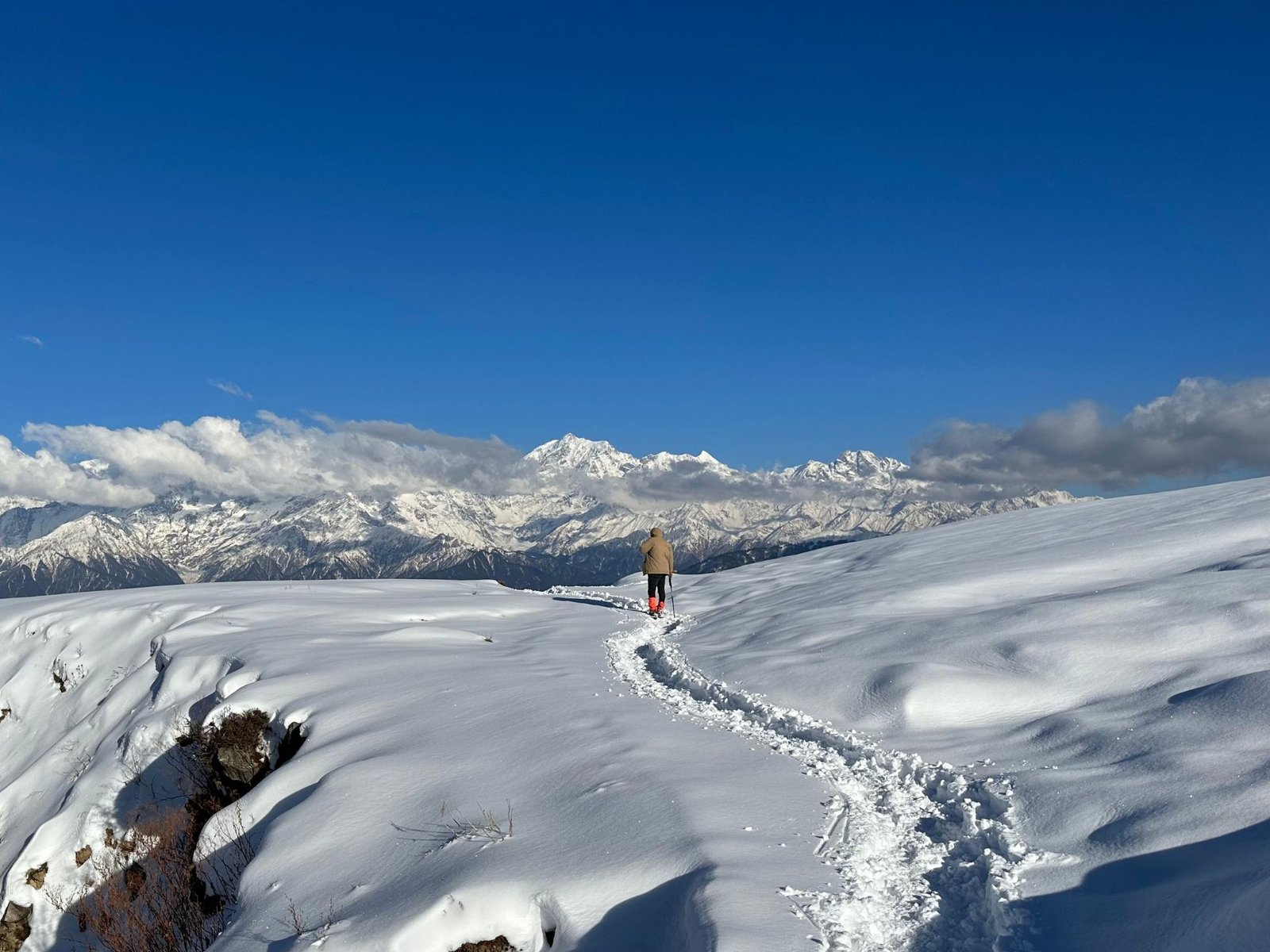
Depending on the season, the meadows can appear very different. During the warmer months, the landscape becomes greener and more open, while winter can bring snow-covered meadows and forest trails. This seasonal change makes Dayara Bugyal attractive for trekkers looking for different experiences throughout the year.
Dayara Bugyal is particularly suitable for travellers who want to spend more time enjoying open landscapes, peaceful mountain surroundings and scenic photography rather than focusing entirely on a summit climb. The combination of vast meadows, forests, mountain views and a relatively peaceful trail environment makes it one of the distinctive trekking experiences in Uttarakhand.
Compared with Kedarkantha, which is strongly associated with its summit climb and winter snow experience, Dayara Bugyal is more focused on the beauty and scale of its alpine meadows and the overall journey through the Himalayan landscape.
Kedarkantha:
Kedarkantha is a popular summit-focused trek in Uttarakhand, widely known for its winter snow, dense forest trails, Juda Ka Talab and rewarding summit experience. The trek offers a good combination of forest walking, open landscapes and high-altitude terrain, making the journey varied from the lower sections to the summit.
One of the biggest attractions of Kedarkantha is its classic winter trekking landscape. During the winter season, the trail can be covered with snow, while the surrounding pine and oak forests, open meadows and Himalayan views create a distinct mountain experience. Juda Ka Talab is one of the important landmarks on the route and is a popular highlight for trekkers.
The trek is especially appealing to those who want a clearly defined Himalayan summit objective. Unlike a trek that focuses mainly on meadows or landscape exploration, Kedarkantha builds towards a dedicated summit climb, giving trekkers a stronger sense of progression and achievement.
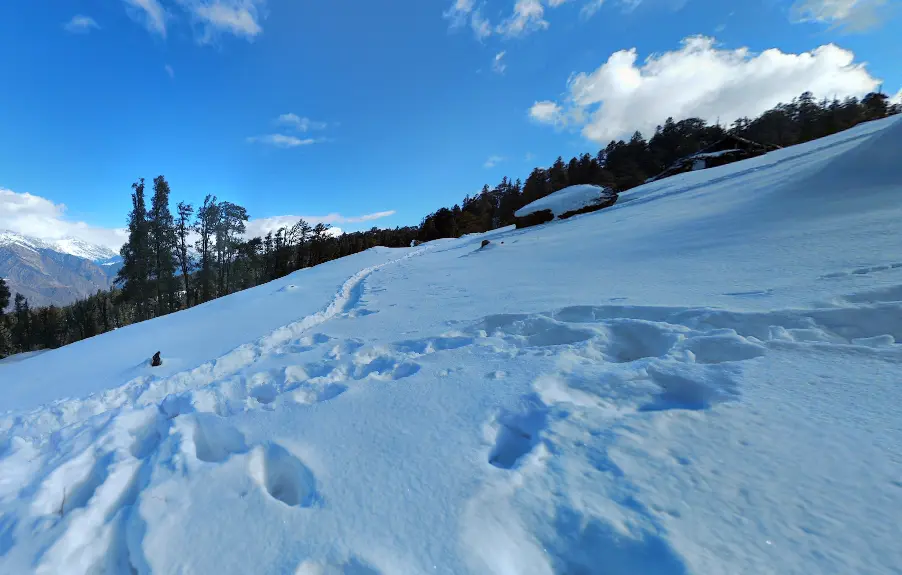
The surrounding Himalayan scenery also adds to the experience, with wide mountain views becoming more prominent as you gain altitude. The combination of snow-covered trails, forests, meadows, Juda Ka Talab and the summit climb makes Kedarkantha one of the well-known winter trekking experiences in Uttarakhand.
Overall, Kedarkantha is a strong choice for trekkers who want a classic winter trek with a defined summit experience, along with the beauty of snow-covered Himalayan landscapes and forest trails.
Dayara Bugyal or Kedarkantha: Quick Decision
| If you want… | Choose |
| Summit climb | Kedarkantha |
| Sunrise summit | Kedarkantha |
| Juda Ka Talab | Kedarkantha |
| Classic winter trek | Kedarkantha |
| More adventure-oriented experience | Kedarkantha |
| Expansive meadows | Dayara Bugyal |
| Open landscapes | Dayara Bugyal |
| Pastoral culture | Dayara Bugyal |
| Forest-to-meadow experience | Dayara Bugyal |
| Landscape-focused trek | Dayara Bugyal |
Difficulty Level
Dayara Bugyal Difficulty
Beginners or 1st time trekkers can do this trek as it is an easy trek. Dayara bugya is a great choice even for non-trekkers to start their trek journey and enjoy the scenic beauty of meadows surrounded by mountains.
Although there aren’t any difficult parts, there are a few parts of the hike that can be difficult. Dayara Bugyal is the least dangerous high-altitude trip (trembling climbing beyond 11,000 feet) on our list.
Kedarkantha Difficulty
The difficulty level is easy to moderate, except for the summit climb. The summit climb day takes longer than other days; hence, one has to be fit and active.
Trails are gradual, steady, and uneven throughout the trek, and on the summit day, one has to be careful about altitude sickness as we go towards the peak of Kedarkantha.
The hike then reaches a peak elevation of 12,500 feet. Because of this, it is perfect for novice hikers and those who want to avoid a strenuous walk.
Weather & Seasons Info
Dayara Bugyal:
| Autumn | Pleasant and cool weather. Clear skies and comfortable temperatures during the day. Ideal for trekking with colorful landscapes. Clear skies and views of Gangotri and Saraswati Ranges. |
| Summer | Mild to moderately warm temperatures. Blooming Rhododendrons add colors to the forest trail. Great for nature enthusiasts and trekking in comfortable weather. The perfect season for bird watching. |
| Rainy Season | Monsoon season brings heavy rainfall. The meadows and surroundings turn lush and green. A lot of wildflowers can be found in Dayara. Trekking during this time can be challenging due to muddy and slippery trails. This can be done during monsoon if you like greenery, rain, and flowers. |
| Winter | Cold and snowy conditions. The meadows are covered in snow, creating a winter wonderland. Attracts tourists interested in skiing and snow-related activities. Clear skies and views of Gangotri and Saraswati Ranges. |
| Spring | Transition season with warming temperatures. Snow begins to melt, revealing lush green meadows. Offers a mix of winter and spring beauty. |
Dayara Bugyal experiences significant weather changes throughout the year, offering a unique and appealing atmosphere each season. In particular, the snowy winters draw in tourists, including skiing enthusiasts, looking to enjoy the picturesque snowy landscapes.
| Seasons | Avg Temperature |
| September–October | 10°C to 20°C |
| November–February | 10°C to -5°C |
| February- March | March- May | June- July | -5°C to 10 °C | 10°C to 15°C | 15°C to 25°C |
Kedarkantha:
| Autumn | Pleasant and cool weather. Clear skies and comfortable temperatures during the day. Ideal for trekking with colorful landscapes. The foliage begins to change color, adding vibrancy to the surroundings. |
| Summer | Pleasant and moderate temperatures. Alpine meadows come alive with a burst of wildflowers. Suitable for nature enthusiasts and those who enjoy trekking in comfortable weather. |
| Monsoon/Rainy Season | Monsoon season brings heavy rainfall, especially in July and August. The meadows and surroundings turn lush and green. Trekking during this time can be challenging due to muddy and slippery trails. It is not recommended due to the risk of landslides and difficult access. |
| Winter | Cold and snowy conditions. Heavy snowfall blankets the trekking route and the surrounding landscape. Ideal for snow trekking and winter adventure enthusiasts. The mesmerizing snow-covered landscapes make it a prime destination for those seeking a winter wonderland. |
| Spring | Transition season with gradually warming temperatures. Snow begins to melt, revealing lush greenery and blooming flowers. It is a mix of winter and spring beauty, making it an excellent time for photography. |
| Seasons | Avg Temperature |
| September–October | 1°C to 10°C |
| November–February | -10°C to 5°C |
| February- March | March- May | June- July | -5 °C to 10 °C | 10°C to 15°C | 15°C to 25°C |
Kedarkantha’s claim to fame is its winter season, offering some of India’s most pristine and scenic snow trekking experiences.
Which Trek Should You Choose?
Both Kedarkantha and Dayara Bugyal offer beautiful Himalayan trekking experiences, but the character of the two treks is quite different. Kedarkantha is more summit-focused and adventure-oriented, while Dayara Bugyal is more about expansive meadows, open landscapes and enjoying the journey through the mountains.
Choose Kedarkantha if you want:
- A defined summit climb with a clear peak objective
- The experience of watching sunrise from a Himalayan summit
- To visit the scenic Juda Ka Talab along the trekking route
- A classic winter trekking experience with snow-covered forests, trails and meadows
- A more adventure-oriented trek with a dedicated summit push
- The satisfaction of reaching a prominent Himalayan summit after a challenging ascent
- A trek that combines forest trails, snow, open sections and panoramic mountain views
- A popular choice for those looking for their first Himalayan summit experience
- A trek where the summit itself is one of the main highlights of the journey
Choose Dayara Bugyal if you want:
- Expansive alpine meadows and wide-open landscapes
- A peaceful trekking experience surrounded by mountains and grasslands
- More time to enjoy scenery, photography and open mountain views
- The opportunity to experience pastoral culture and local mountain traditions
- Beautiful forest-to-meadow transitions as you gain altitude
- A trek that is more landscape-focused rather than centred around a single summit
- Broad views of the surrounding Himalayan ranges and mountain valleys
- A quieter experience where the meadows and natural surroundings are the main attraction
- A trek where you can enjoy the changing character of the landscape rather than focusing primarily on a summit climb
In Simple Terms
If your idea of a perfect Himalayan trek is snow, a defined summit, an early-morning climb and the satisfaction of reaching a peak, Kedarkantha may be the better choice.
If you would rather walk through vast alpine meadows, open mountain landscapes, forests and peaceful surroundings, with the journey and scenery being the main attraction, Dayara Bugyal may suit you better.
Expert Saying on Dayara Bugyal vs Kedarkantha

Sobhi Negi
– Founder
If I have to compare the two treks, then I will say both Dayara Bugyal and Kedarkantha are great treks; they are both famous winter treks in India based in Uttarkashi.
I will recommend Dayara Bugyal for beginners, and if you love meadows, this can be a great trek for you. For first timers and people who want to start their Himalayan Trekking journey, Dayara Bugyal is the best beginner friendly option. It’s even good for kids and families who want to experience peace.
Now, Kedarkanha is a very famous winter trek in India. Distance wise, both are the same, but difficulty wise, Dayara Bugyal is easier than Kedarkantha. There are a few factors that make it slightly harder than Dayara Bugyal;
1. Tough Terrain: The terrain of Kedarkantha is slightly more difficult than the Dayara Bugyal, which makes hiking a bit difficult.
2. Slippery Trails during Snowfall: While going to the summit in winter, the trails become slippery and tough to hike if there is good snowfall. Often, ice freezes there, making the trail more difficult. So, while trekking, we have to be very careful.
3. Also, the hiking distance is a little bit more in Kedarkantha as compared to Dayara Bugyal
But people prefer Kedarkantha more than Dayara Bugyal because people get to do the summit. As you see mountain ranges during the Dayara Bugyal trek, in the Kedarkantha trek, you do peak summits and feel that you have done proper mountain climbing. I think that’s the main factor people choose Kedarkantha over Dayara Bugyal.
Secondly, Kedarkantha is also popular for its beautiful sunrise; people start their trek early in the morning, from 3 am to 4 am, and wait for the sunrise.
On the other hand, Dayara Bugyal is done by people who have done winter treks like Kedarkantha or Brahmatal and want a new trek. People who are looking for lesser known place and meadow trek also prefer Dayara.

Guided vs. Independent Trekking
Dayara Bugyal
One can do solo trekking, but it will be a bit hard as one has to have one’s own camping equipment or knowledge of the trek route; hence, it becomes easy and hassle-free to take the help of a local trekking agent or guide to enjoy the trek and time rather putting all-time in arrangement and taking stress.
The journey becomes easier with a guide and agent; however, if one likes to do it solo, they can join fellow travelers along the route so that they don’t have to worry about the route, as the internet won’t be able to guide in hilly areas due to connectivity.
Lastly, we suggest having a guide who can plan your entire trip and provide necessary arrangements such as food, camping, equipment, and a first aid box handy for you.
Kedarkantha
It is not advisable to do 4-5 dates of the journey alone, especially when trekking in peak winter, as the situation becomes challenging when the temperature drops to -10 or 0 degrees.
One has to be very fit and have proper camping and clothing items to trek Kedarkantha. The trails become slippery during snowfall, and the terrain is tough, so solo trekking in Kedarkantha is not recommended for beginners.
Final Verdict: Dayara Bugyal or Kedarkantha?
Dayara Bugyal and Kedarkantha are both rewarding Himalayan treks, but they offer distinctly different experiences. The better choice depends on whether you are more interested in reaching a summit or spending time exploring vast alpine landscapes.
Kedarkantha is the better choice if your main goal is a defined summit climb and classic winter trekking experience. Snow-covered trails, forest sections, Juda Ka Talab and the early-morning summit push make the trek more adventure-oriented. The clear summit objective also gives trekkers a strong sense of achievement at the end of the climb.
Dayara Bugyal, on the other hand, is ideal if you want to experience expansive alpine meadows, open landscapes and peaceful mountain surroundings. The trek is more focused on enjoying the changing landscape, from forest trails to wide grasslands, rather than reaching a single prominent summit. The surrounding pastoral landscape and local mountain traditions also add a cultural element to the experience.
If you enjoy snow, summit climbs, sunrise views and a more adventure-focused journey, choose Kedarkantha. If you prefer meadows, open mountain views, peaceful trails, photography and a landscape-focused experience, choose Dayara Bugyal.
In simple terms, choose Kedarkantha for the summit experience and choose Dayara Bugyal for the meadow experience. Both offer memorable Himalayan journeys the right one simply depends on what you want to experience most during your trek.

Leave a Comment